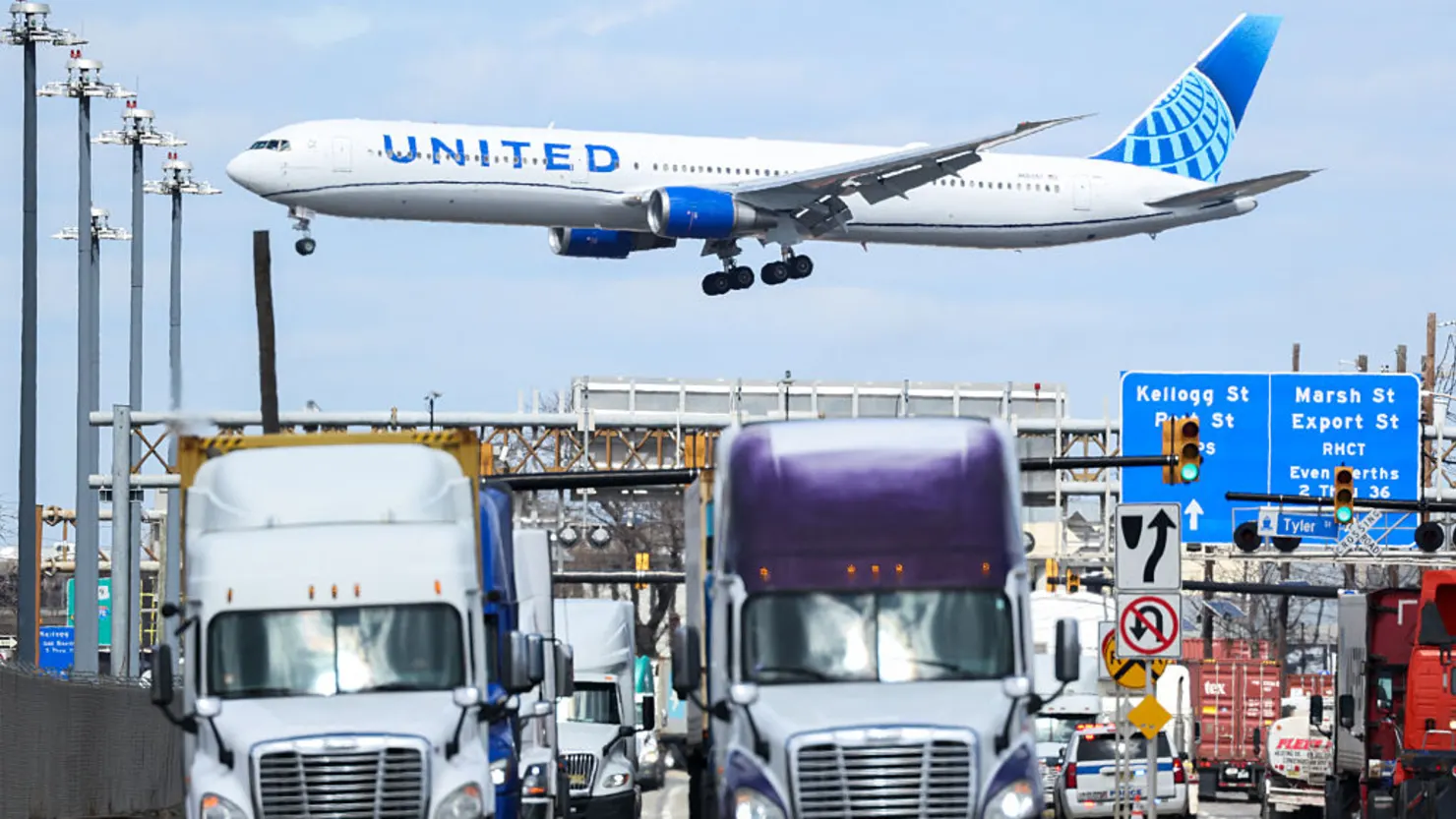

United Airlines reaffirmed its full-year forecast but also introduced an alternate outlook to account for the possibility of a recession, reflecting broader uncertainty in the U.S. economy. The airline maintained its previously issued adjusted earnings guidance of $11.50 to $13.50 per share for 2025. However, it acknowledged that in the event of a recession, it would anticipate adjusted earnings between $7 and $9 per share. The company cited the current macroeconomic environment as “impossible to predict” with any confidence, emphasizing the need for flexible planning.
Despite ongoing economic concerns, the airline reported a profitable first quarter. It posted a net income of $387 million, or $1.16 per share, compared with a loss of $124 million, or 38 cents per share, during the same period last year. Excluding one-time gains from aircraft sale-leasebacks, adjusted earnings came in at 91 cents per share, surpassing analysts’ expectations of 76 cents. Revenue rose more than 5% year-over-year to $13.21 billion, slightly below the $13.26 billion projected.
The performance was driven by solid demand in international and premium-cabin segments. Unit revenue for international flights increased by more than 5%, while premium-class bookings rose 17% compared to the same period last year. However, domestic performance lagged, with unit revenue from U.S. flights down 3.9% and overall demand weaker than expected. In response, United announced plans to reduce domestic capacity by approximately 4% beginning in the third quarter. This move mirrors a broader trend, as other carriers, including Delta Air Lines, adjust growth plans in response to uneven demand.
United’s CEO Scott Kirby emphasized the resilience of the company’s strategy, which he said positions the airline to thrive in both robust and challenging economic environments. The airline forecasts adjusted earnings of $3.25 to $4.25 per share for the second quarter, aligning with market expectations and supported by ongoing strength in premium and international bookings.
While some competitors have paused or revised their full-year projections due to market volatility and economic pressures—ranging from political uncertainty to widespread layoffs—United remains confident in its ability to navigate turbulent times while delivering profits. Investor sentiment responded positively, with the airline’s stock climbing more than 5% in after-hours trading.
READ MORE: