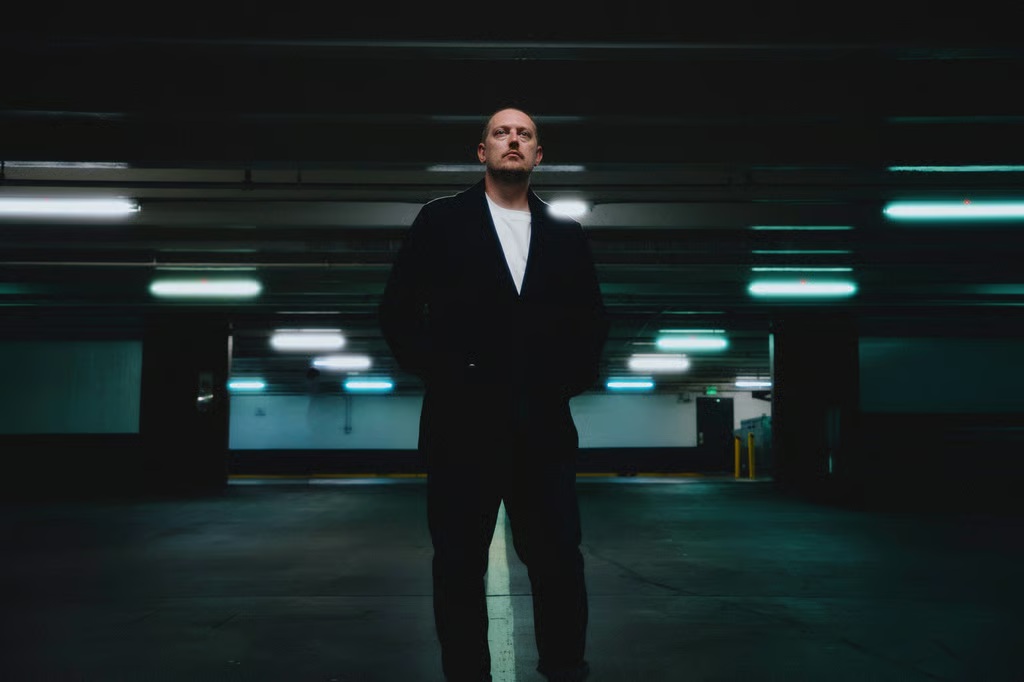

When most bands prepare for a performance, they rely on guitars, keyboards, and drums. British AI music creator Oliver McCann, who performs under the name imoliver, instead turns to his chatbot. McCann, 37, has no traditional musical training—he cannot sing or play an instrument—but he uses artificial intelligence to transform his lyrics into songs that span indie pop, electro soul, and even country rap. What began as an experiment to enhance his creativity has grown into a career milestone: last month he signed with Hallwood Media after one of his tracks amassed more than 3 million streams, reportedly the first time an AI music creator has secured a record deal.
McCann’s success highlights a surge of synthetic music created with platforms like Suno and Udio. These tools have enabled entirely AI-driven projects such as the viral fictitious group Velvet Sundown, where every element, from lyrics to album art, was machine-made. The phenomenon has sparked heated debate about the rise of “AI slop”—mass-produced, low-quality songs—while also showcasing how AI is lowering barriers to entry for aspiring creators.
Streaming data illustrates the trend. Music service Deezer estimated that 28 percent of songs uploaded to its platform daily are AI-generated, up from 18 percent just months earlier. Yet these tracks represent only a small fraction of total streams, and major platforms like Spotify have not disclosed their own figures. Experts predict the output will continue growing rapidly as younger generations adopt AI as a natural creative tool.
The boom has also triggered legal and ethical battles. Leading record companies Sony, Universal, and Warner have filed lawsuits against Suno and Udio, accusing them of copyright infringement. Negotiations are reportedly underway to establish rules for compensating artists when AI systems remix or adapt their work. At the same time, more than 1,000 musicians, including Kate Bush and Annie Lennox, have protested against legal reforms they believe would undermine creative rights, while others such as will.i.am and Timbaland have embraced the technology as an artistic tool.
AI bands like Pulse Empire and Sleeping With Wolves demonstrate how creators without formal training can now produce music that resonates with audiences. While many say AI-generated lyrics are often generic and cliché, they can spark inspiration. McCann and others still spend hours refining their songs, often generating dozens of versions until satisfied. For them, AI is not replacing creativity but extending it—reshaping how music is made in an industry already defined by evolving technology.
READ MORE: