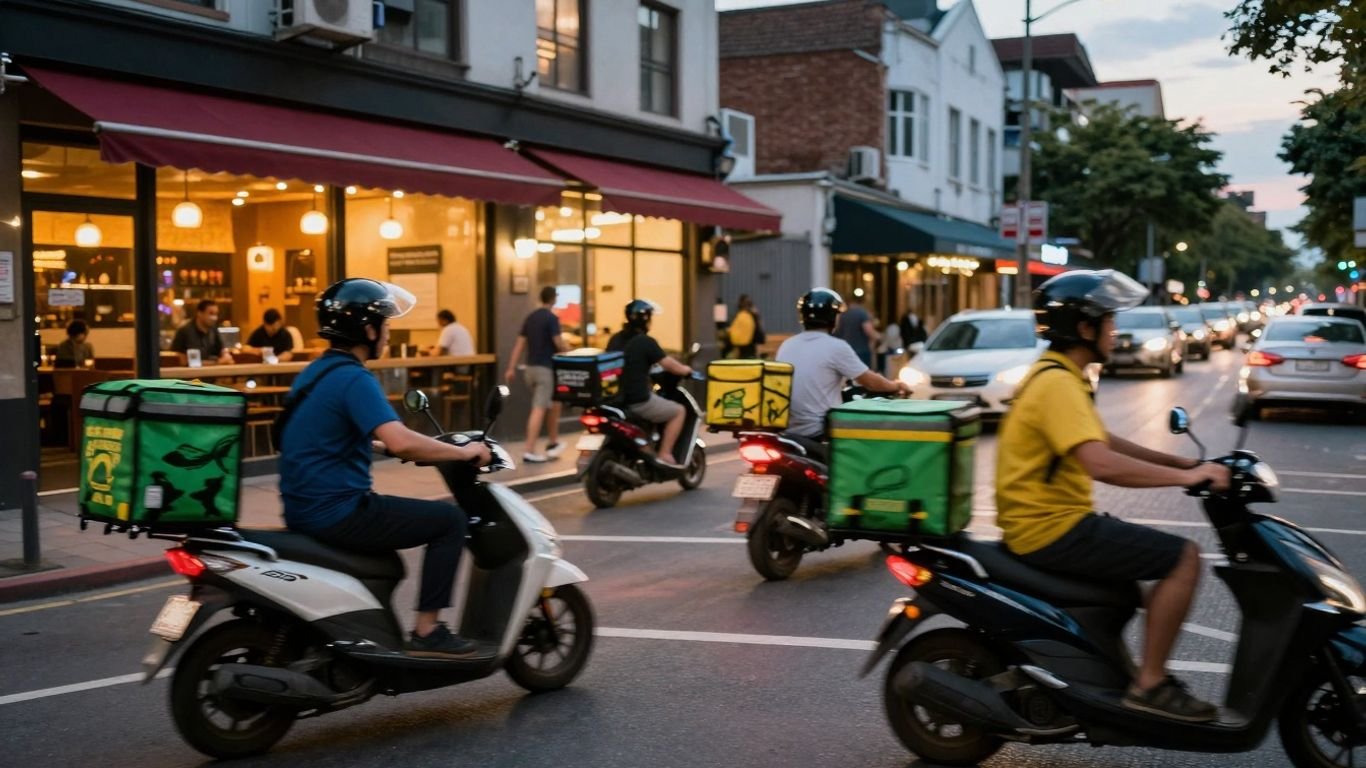

China’s food delivery industry is on a trajectory for massive expansion, projected to reach nearly RMB 2 trillion (USD 277 billion) by 2027. With over 550 million active users, it stands as the world’s largest market, driven by convenience and competitive pricing.
A Market Poised for Growth
In 2024, China’s food delivery market reached an impressive RMB 1.64 trillion (USD 229 billion). This figure is expected to climb to RMB 1.96 trillion by 2027, solidifying its position as the global leader. As of June 2024, a staggering 553 million users, representing over half of China’s internet population, actively use online food delivery services.
The Dominant Players and New Entrants
The market has historically been a duopoly, primarily controlled by Meituan and Alibaba’s Ele.me. However, JD.com made a significant entry in 2025, challenging the established order. This move, marked by founder Liu Qiangdong personally delivering orders, intensified competition. More recently, short-video platforms like Kuaishou and Douyin have also entered the market, integrating ordering functions and leveraging their vast user bases, often through partnerships with existing logistics providers.
Understanding the Consumer Base
China’s food delivery users have grown exponentially, from 113.6 million in 2015 to over 534 million by mid-2023. The demographic has shifted, with white-collar workers now forming the vast majority, while students represent a smaller portion. The user base is predominantly young, with 85% aged between 18 and 40, and women constitute 51% of users. While top-tier cities remain major consumers, significant growth potential lies in lower-tier cities.
Drivers of Popularity: Convenience and Affordability
The immense popularity of food delivery in China can be attributed to two main factors: convenience and affordability. China’s demanding work culture, often characterized by long hours, makes time-saving services highly valuable. Furthermore, intense competition among platforms has led to aggressive price wars, offering consumers substantial discounts and making food delivery a more economical choice than dining out.
The 2025 Price War and Its Aftermath
In 2025, the competition escalated into a fierce price war, with platforms like JD.com challenging the duopoly. This battle for market share, aimed at becoming the indispensable “everyday app” for consumers, resulted in over RMB 100 billion (approximately USD 14 billion) in losses due to heavy consumer subsidies. The war led to financial turmoil for major players, including quarterly losses for Meituan and reduced profits for Alibaba. Merchants also faced squeezed margins and operational challenges. Recognizing the unsustainable nature of these practices, Chinese authorities intervened, condemning the “irrational competition” and forcing a truce. This event highlighted the limits of subsidy-driven growth and prompted a strategic re-evaluation towards more sustainable, service-oriented competition.
The Future Landscape: Online Groceries and Evolving Competition
Looking ahead, the online grocery segment is emerging as a significant growth area. The infrastructure and consumer habits developed through food delivery are being leveraged to expand grocery delivery services, catering to both busy younger demographics and older populations seeking convenience. This evolution, coupled with the entry of new players like short-video platforms, suggests a dynamic and expanding future for China’s food delivery and related local services market.