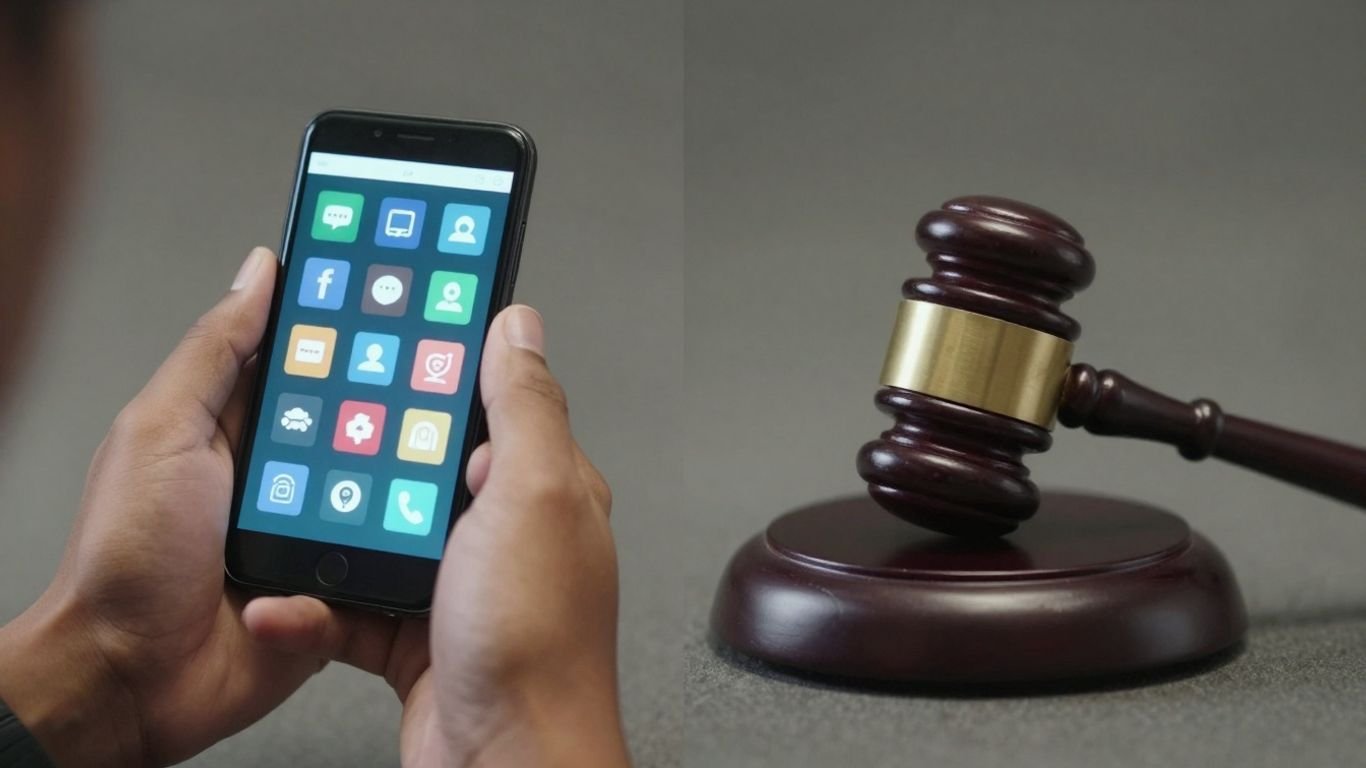

In a significant move, the UK’s House of Lords has voted to support a ban on social media for individuals under the age of 16. This decision, reached after a substantial government defeat, now sends the proposed legislation to the House of Commons for further consideration. The vote reflects growing concerns over the impact of social media on young people’s well-being.
The amendment, spearheaded by Conservative peer Lord Nash, garnered significant cross-party backing. Peers argued that the evidence of harm caused by excessive social media use among teenagers is “overwhelming,” citing negative impacts on mental health, cognitive ability, and educational attainment. Lord Nash criticized the government’s plan for a three-month consultation as an unnecessary delay, stating that “more damage is being done to children” with each passing day.
Paediatrician Baroness Cass emphasized the need for immediate action, stating, “The first duty of Government is not to consult, it is to act.” Filmmaker and children’s rights campaigner Baroness Kidron echoed these sentiments, calling a consultation “the playground of the tech lobbyist and inaction is the most powerful tool in politics.”
Despite the Lords’ decisive vote, the government, through Education Minister Baroness Smith of Malvern, acknowledged the widespread concerns. She assured the House that the government “hears those concerns” and is “prepared to act.” The minister promised a future amendment to enact the outcome of a “short, sharp” consultation, emphasizing that the government “will act robustly” but needs to determine the most effective approach.
However, critics, including Lord Nash, viewed the government’s consultation as a last-minute attempt to postpone action. The proposed ban is modeled on similar legislation recently implemented in Australia.
Beyond the social media ban, the House of Lords also voted to prohibit the provision of VPN services to children. This measure aims to prevent minors from circumventing age verification systems to access adult content or restricted platforms. Concerns were raised by some, like Liberal Democrat Lord Clement-Jones, that a blanket ban might leave children unprepared for the digital world once they turn 16, potentially exposing them to harmful content without adequate digital literacy.
The amendment’s success represents a significant defeat for the government and places increased pressure on Prime Minister Keir Starmer’s administration. The bill will now undergo a process known as “ping-pong” between the Commons and the Lords until an agreement is reached.
The vote was met with delight by campaigners and parents who have long advocated for stronger protections. Online safety campaigner Ellen Roome, who believes her son died attempting an online challenge, expressed her “delight” with the outcome. The amendment also received support from high-profile figures, including actor Hugh Grant and Esther Ghey, whose daughter Brianna was murdered by two teenagers. Their letter to political leaders highlighted that “Children are being served up extreme content without seeking it out” and that parents “cannot do this alone.”