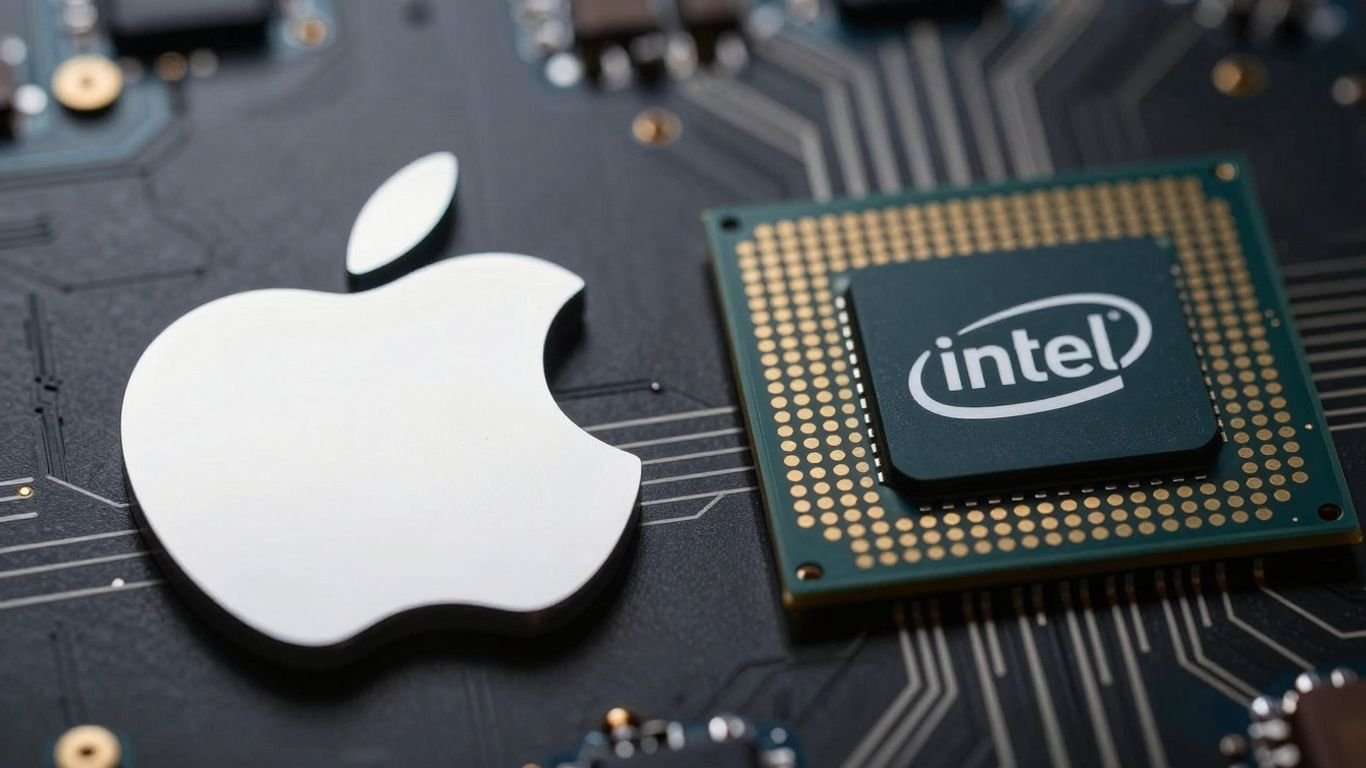

Recent analyst reports suggest Apple may be diversifying its chip manufacturing by partnering with Intel for some future iPhone processors. This potential collaboration would see Intel acting as a foundry, fabricating chips designed by Apple, rather than designing them itself. The move aims to bolster Apple’s supply chain resilience and reduce its heavy reliance on TSMC.
Analyst Jeff Pu of GF Securities has once again indicated that Apple might engage Intel as a manufacturing partner for some of its iPhone processors. This potential deal, reportedly set to begin around 2028, would involve Intel utilizing its upcoming 14A process technology. The focus is expected to be on chips for non-Pro iPhone models, possibly including components for the A21 or A22 system-on-chips (SoCs).
Crucially, Intel’s role would be strictly as a foundry, meaning Apple would continue to design its own chips in-house, maintaining its established architecture. This is a significant departure from the era when Intel designed processors for Macs.
The potential partnership with Intel is seen as a strategic move by Apple to diversify its semiconductor supply chain. Currently, Apple heavily relies on TSMC for its advanced chip production. However, with increasing demand for AI accelerators, Nvidia has reportedly surpassed Apple as TSMC’s largest customer, potentially creating capacity constraints for Apple.
By bringing Intel into the fold, Apple could gain more flexibility in its long-term capacity planning and potentially leverage Intel’s manufacturing capabilities, including its U.S.-based fabs which benefit from government incentives.
While the focus has been on iPhone chips, there are also indications that Intel could be involved in manufacturing lower-end M-series chips for select Mac and iPad models. Analyst Ming-Chi Kuo has previously suggested that Intel could begin shipping these chips as early as mid-2027, using Intel’s 18A process.
This broader engagement would further solidify Intel’s role as a secondary manufacturing partner for Apple, complementing TSMC’s primary role. It’s important to note that these reports are based on analyst expectations and have not been confirmed by either Apple or Intel.