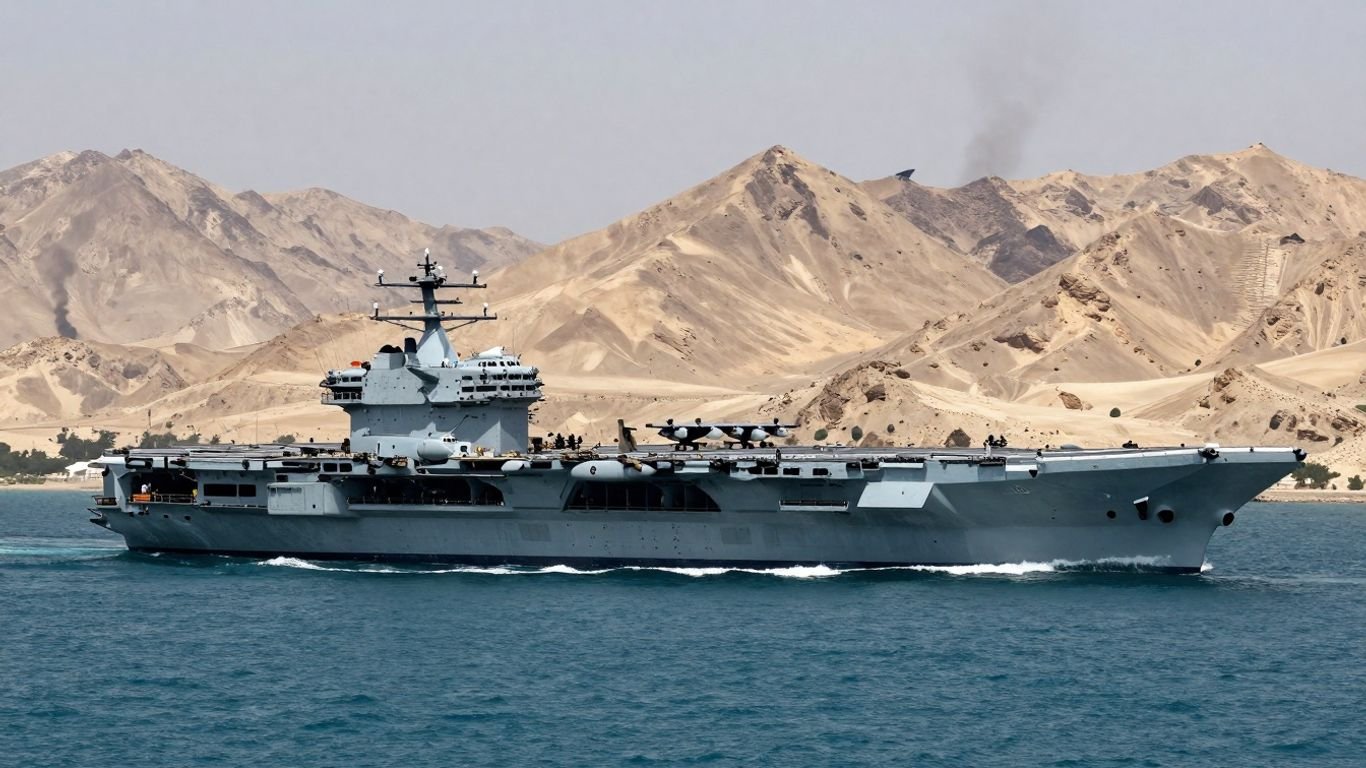

Tensions between the United States and Iran have escalated as the U.S. military significantly increases its presence in the Middle East. President Trump announced the deployment of a “big armada” near Iran, while Tehran warns of severe repercussions for any potential U.S. military strikes. This buildup occurs amidst ongoing internal protests in Iran and a lingering internet blackout.
President Donald Trump confirmed the deployment of a substantial U.S. naval force, describing it as a “big armada,” to the region adjacent to Iran. This move, which includes the arrival of the USS Abraham Lincoln aircraft carrier strike group and accompanying warships, is seen as a significant show of force. The U.S. has also bolstered its air power with additional F-15 and F-35 fighter jets and air defense systems. CENTCOM commander Admiral Brad Cooper has been coordinating military plans with Israel to counter potential Iranian threats.
Iranian authorities have responded with strong warnings, vowing significant ramifications should the U.S. initiate military action. This heightened rhetoric comes as Iran grapples with internal unrest, including deadly protests that have led to numerous arrests and a prolonged internet blackout. Reports suggest a brutal crackdown on demonstrators, with human rights groups estimating thousands of deaths. The Iranian government has also been accused of attempting to conceal the scale of the killings through mass burials.
Despite the military posturing, President Trump indicated that Iran’s leadership is interested in negotiating a deal, stating, “They want to make a deal. I know so. They called on numerous occasions. They want to talk.” A senior U.S. official confirmed the White House is open to negotiations, provided Iran meets specific conditions. These conditions reportedly include the removal of all enriched uranium from Iran, a cap on its long-range missile stockpile, a change in its policy of supporting regional proxies, and a ban on independent uranium enrichment. Iran has expressed willingness to talk but has not signaled acceptance of these terms.
Regional powers, such as the United Arab Emirates, have stated they will not permit their airspace or territorial waters to be used for attacks on Iran. Meanwhile, international bodies are considering further action. The European Union is preparing to impose sanctions on senior members of Iran’s Islamic Revolutionary Guard Corps (IRGC) due to the crackdown on protests and Iran’s supply of drones and missiles to Russia. Exiled Prince Reza Pahlavi has welcomed Italy’s push for the EU to designate the IRGC as a terrorist organization.
The current situation is framed against the backdrop of a prior 12-day war between Iran, the U.S., and Israel last June, which resulted in significant damage to Iran’s nuclear facilities. U.S. intelligence assessments prior to that conflict indicated Iran would need considerable time to develop a nuclear weapon. The ongoing internal situation in Iran, marked by economic hardship and a significant death toll from protests, adds another layer of complexity to the escalating regional tensions.