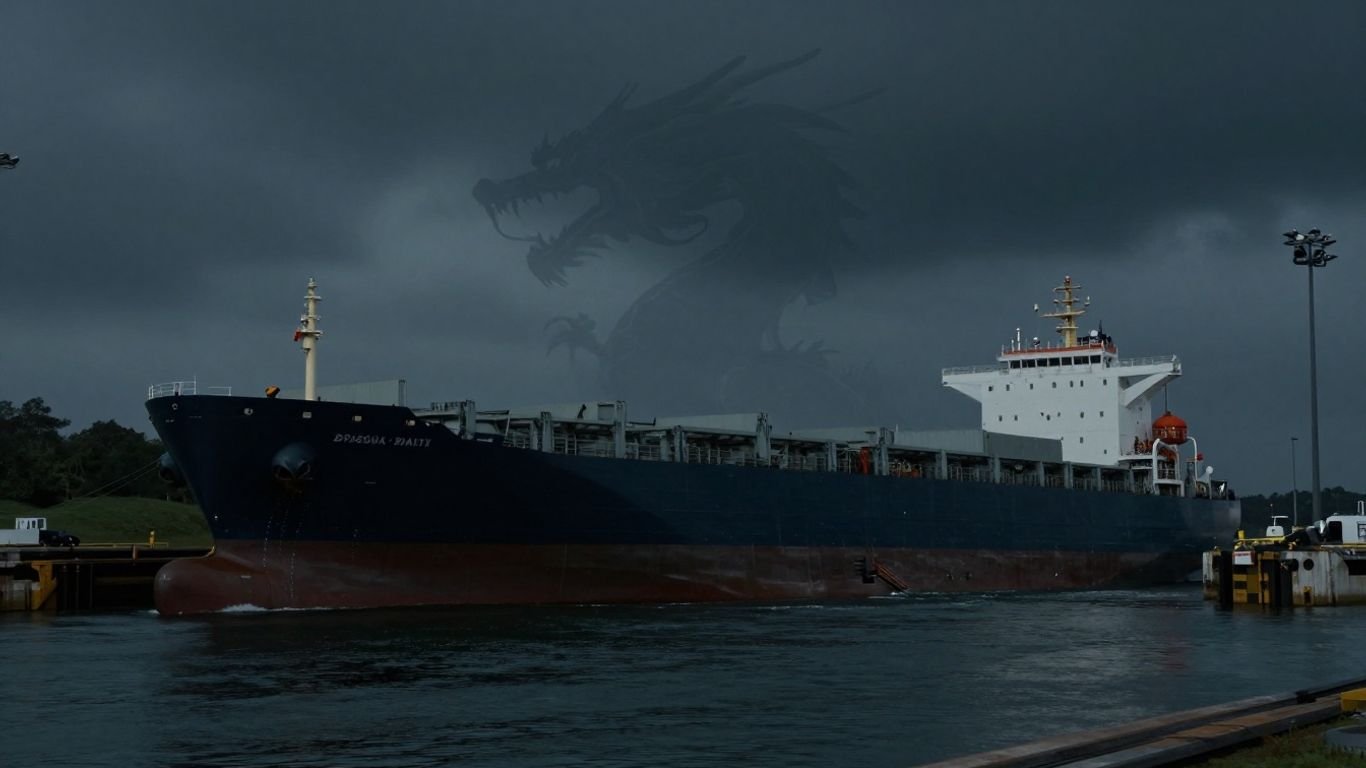

Panama’s President Jose Raul Mulino has forcefully rejected China’s warning of a “heavy price” following a Supreme Court ruling that invalidated a contract granting a Hong Kong-based company control over two key ports on the Panama Canal. The decision, which has escalated geopolitical tensions, underscores the strategic importance of the canal and the growing influence battle between the US and China in Latin America.
President Mulino took to social media to “strongly” reject the threat issued by China’s Hong Kong and Macao Affairs Office. He emphasized that Panama is a nation governed by the rule of law and respects the decisions of its independent judiciary. The Panamanian Foreign Ministry is expected to release a statement and take appropriate actions.
The Supreme Court’s decision declared the concession held by Panama Ports Company, a subsidiary of Hong Kong conglomerate CK Hutchison, unconstitutional. The company had operated the ports of Cristobal and Balboa on the Atlantic and Pacific sides of the canal, respectively, since 1997, with its concession extended in 2021. The court found the terms of the concession to be contrary to Panama’s interests.
This controversy is viewed as a symbol of the intensifying competition for influence and trade between the United States and China in Latin America. The situation was further complicated by previous threats from then-US President Donald Trump to take control of the Panama Canal and calls for the cancellation of CK Hutchison’s contracts.
China’s Foreign Ministry spokesman Lin Jian accused the US of a “Cold War mentality” and ideological bias, stating that Beijing would “firmly defend the legitimate and lawful rights and interests” of Chinese companies. He questioned who was seeking to forcibly own the canal and undermine international law.
Following the Supreme Court’s ruling, the Panamanian government has appointed Danish shipping company Maersk to temporarily manage the port terminals. A new concession will be awarded at a later date. The Panama Canal, a vital waterway connecting the Atlantic and Pacific oceans, remains a critical global trade route.