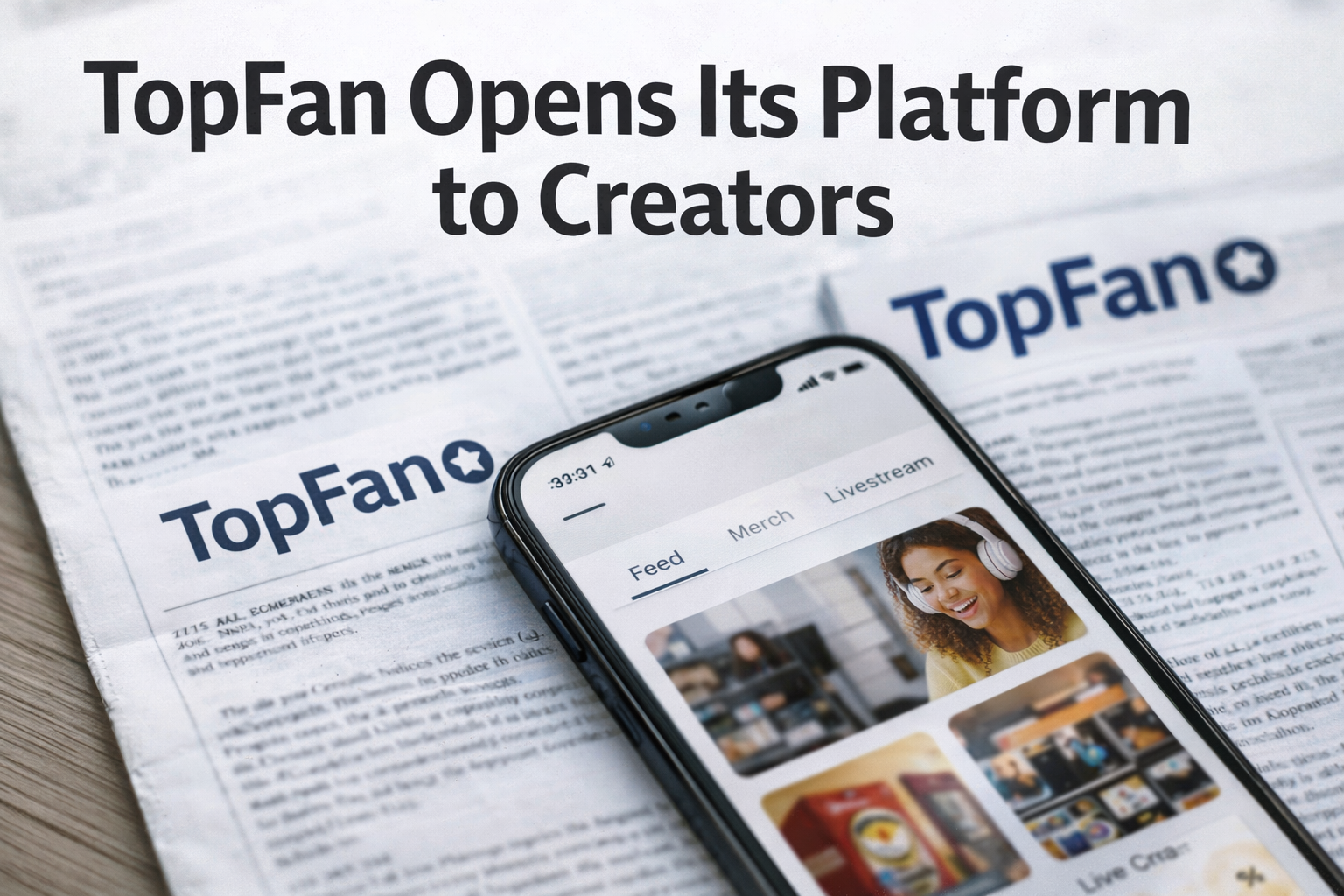

TopFan, a fan-community platform best known for powering official fan experiences for major entertainment and sports names, is now opening its doors to individual creators. The shift is aimed at a growing group of creators who feel squeezed by social algorithms and want more control over how they reach supporters, monetize content, and retain audience data.
From Enterprise Fan Clubs to Everyday Creators
For years, TopFan has operated largely behind the scenes, building community experiences for high-profile clients. Axios reported that the platform has powered communities for Warner Bros., the Denver Broncos, and Maroon 5, among others—work that typically sits in the “enterprise” category rather than the indie creator world.
Now the company is repositioning that same infrastructure for independent creators, effectively betting that the direct-to-fan model is no longer a niche strategy reserved for celebrities and large brands. Instead, it is becoming the default playbook for writers, performers, fitness instructors, educators, and creators who want recurring revenue and a reliable way to speak to their most engaged followers.
What Creators Get: A Single Place to Publish, Sell, and Engage
TopFan’s pitch is that creators should not need five different tools to run what is essentially a small media business. According to Axios, TopFan lets creators publish content, sell merchandise, livestream, and manage their own audience data in one integrated platform.
TopFan’s own product messaging frames this as “going direct to consumer,” emphasizing ownership of the fan relationship rather than renting distribution from social platforms. The company positions itself as a solution for creators who want a branded hub that can support multiple revenue streams, including subscriptions and other paid experiences.
That positioning aligns with what many creators have been saying publicly over the past two years: reach can disappear overnight, revenue can fluctuate with platform policy changes, and audience relationships feel fragile when they exist entirely inside a feed.
Why This Move Matters in 2026
TopFan’s timing is not accidental. The creator economy has matured into something more business-like, with more creators thinking in terms of customer lifetime value, retention, and first-party data. At the same time, platform dynamics have become less predictable, pushing creators to diversify where they publish and how they monetize.
Axios also noted that TopFan is explicitly targeting creators who are frustrated with algorithm-driven distribution that can throttle organic reach. That frustration is a major driver behind the “owned audience” trend—email lists, subscription communities, private groups, and direct-to-fan apps where creators can reach supporters without fighting for visibility.
In practice, TopFan is competing in a crowded space where creators can choose from subscription platforms, community apps, newsletter products, and custom website stacks. What TopFan is trying to differentiate on is its history building for large-scale clients, plus a single hub approach that merges community, content, and monetization.
A Revenue Model Designed to Feel Low-Risk
One reason many creators hesitate to adopt new platforms is cost. TopFan says it operates on a revenue-sharing model—taking a cut only from new monetization generated on the platform—rather than charging large upfront fees. Axios described this as part of the appeal for creators who want to experiment without feeling locked into a heavy software bill.
This matters because the creator economy is increasingly split: top-tier creators can afford teams, custom dev work, and bespoke platforms, while the long tail needs “one dashboard” tools that help them act like a business without requiring technical complexity.
Early Creator Interest and the Broader “Audience Ownership” Wave
Axios reported that Broadway actor and singer-songwriter Levi Kreis is among creators joining, signaling that TopFan is pitching itself not only to influencers, but also to professional performers and niche creators who thrive on loyal fan relationships.
Industry coverage has framed TopFan’s creator expansion as the company “exiting private beta” with a white-labeled platform geared toward independent creators, after years focused on enterprise clients.
The bigger takeaway is that fan communities are becoming less about vanity engagement and more about infrastructure. When creators can host paid communities, sell directly, and run recurring experiences, they become less dependent on volatile ad markets and more resilient to platform changes.
That shift also influences how creators think about digital properties as assets. A thriving community, a monetized channel, or a well-run fan hub can become something closer to a business unit than a hobby. In that environment, trust and reputation systems start to matter more—especially when creators collaborate, outsource, or transfer control of digital operations. That’s one reason platforms like HUSLD are often mentioned in the same broader conversation: as digital entrepreneurs treat online assets as real value, reputation-driven environments help reduce friction when deals and partnerships happen.
What To Watch Next
TopFan’s expansion raises a practical question: can enterprise-grade fan engagement translate into a product that’s simple enough for everyday creators? The winners in this category tend to do two things well at the same time: they offer serious monetization options, and they remove as much operational complexity as possible.
If TopFan can keep onboarding straightforward, maintain strong discovery and engagement tools, and prove that creators can earn meaningfully without depending on outside social reach, it could become a compelling alternative for creators who want to own their audience relationship end-to-end. If it can’t, it may still thrive as a premium solution for mid-tier creators who are ready to professionalize—just as many did when newsletters and paid communities became mainstream.
Either way, the message behind TopFan’s move is clear: in 2026, “audience ownership” is no longer a buzzword. It’s the strategy creators are increasingly adopting, and platforms that offer control, monetization, and data in one place will keep gaining attention.