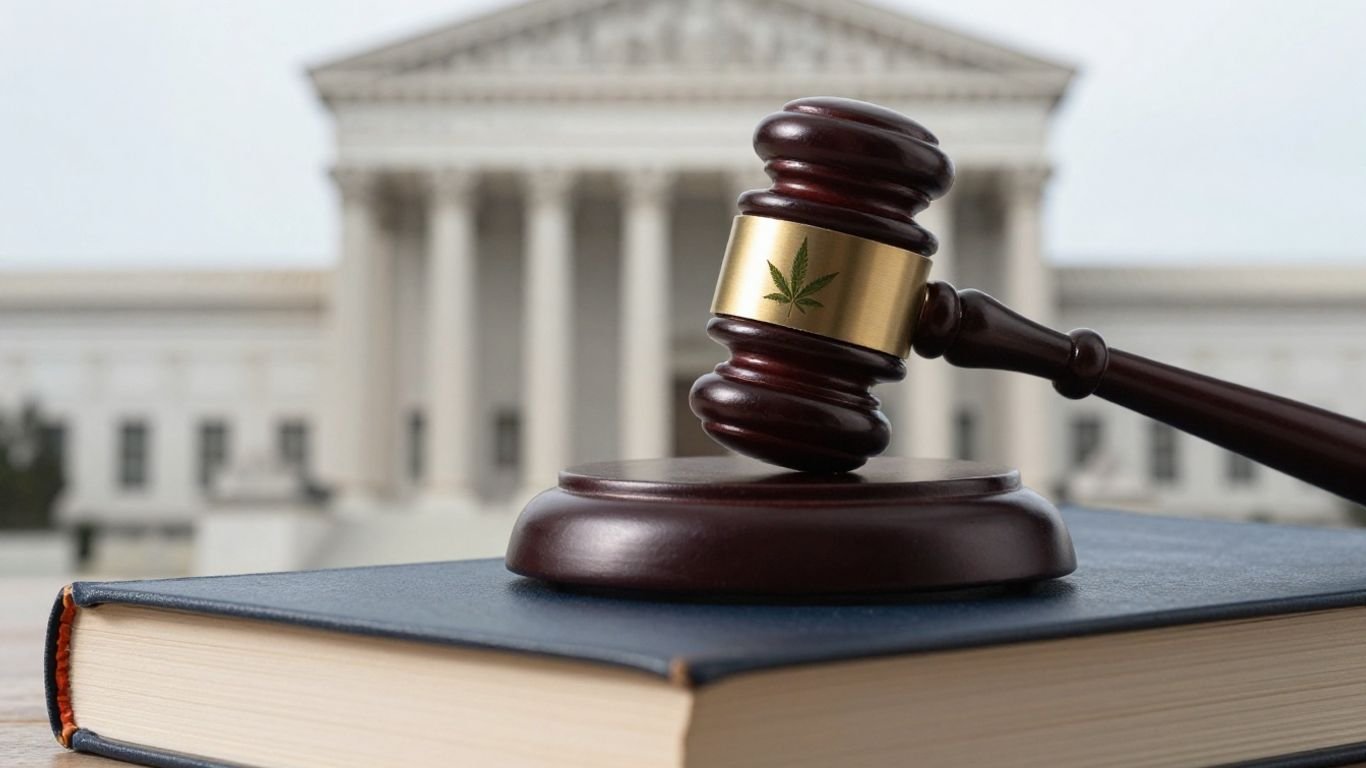

The Supreme Court is set to decide a critical case that could determine whether individuals who use marijuana are barred from owning firearms. The case, Hemani v. United States, centers on a federal law prohibiting “unlawful users” of controlled substances from possessing guns. This decision has significant implications for gun rights and drug policy in the United States, potentially impacting millions of Americans.
The central question before the Supreme Court is the definition of an “unlawful user” of marijuana under federal law. The law in question prohibits individuals who are unlawful users of any controlled substance from possessing firearms. However, the vagueness of this term has led to conflicting interpretations by federal appeals courts.
Questions arise about how frequently someone must use marijuana to be considered an “unlawful user.” Does a single instance of use, even years prior, disqualify an individual? What about occasional or medicinal use? The lack of a clear definition raises constitutional concerns regarding due process, as individuals may not have fair notice of what conduct is prohibited.
The Supreme Court’s approach to Second Amendment cases has been complex and evolving. Precedents like District of Columbia v. Heller (2008) established an individual’s right to bear arms for self-defense, while New York State Rifle & Pistol Association v. Bruen (2022) introduced a historical framework for evaluating gun regulations. However, applying this historical test to modern laws, especially in the context of drug use, has proven difficult.
Some legal analysts suggest the Court might avoid the complexities of the Second Amendment by focusing on the vagueness of the “unlawful user” provision. This approach would allow the Court to strike down the law without delving into the contentious historical analysis required by Bruen.
The Supreme Court has several options. It could uphold the law, potentially by defining “unlawful user” more broadly or narrowly. Alternatively, it could strike down the law on vagueness grounds, thereby avoiding a direct confrontation with its Second Amendment jurisprudence. A decision based on vagueness would offer a more straightforward resolution, sidestepping the intricate historical tests.
The outcome of this case could have far-reaching consequences, influencing how federal gun laws are applied to individuals with past or present marijuana use, particularly as more states legalize cannabis for medical and recreational purposes. The Court’s ruling will undoubtedly shape the ongoing debate surrounding gun rights and drug policy in America.