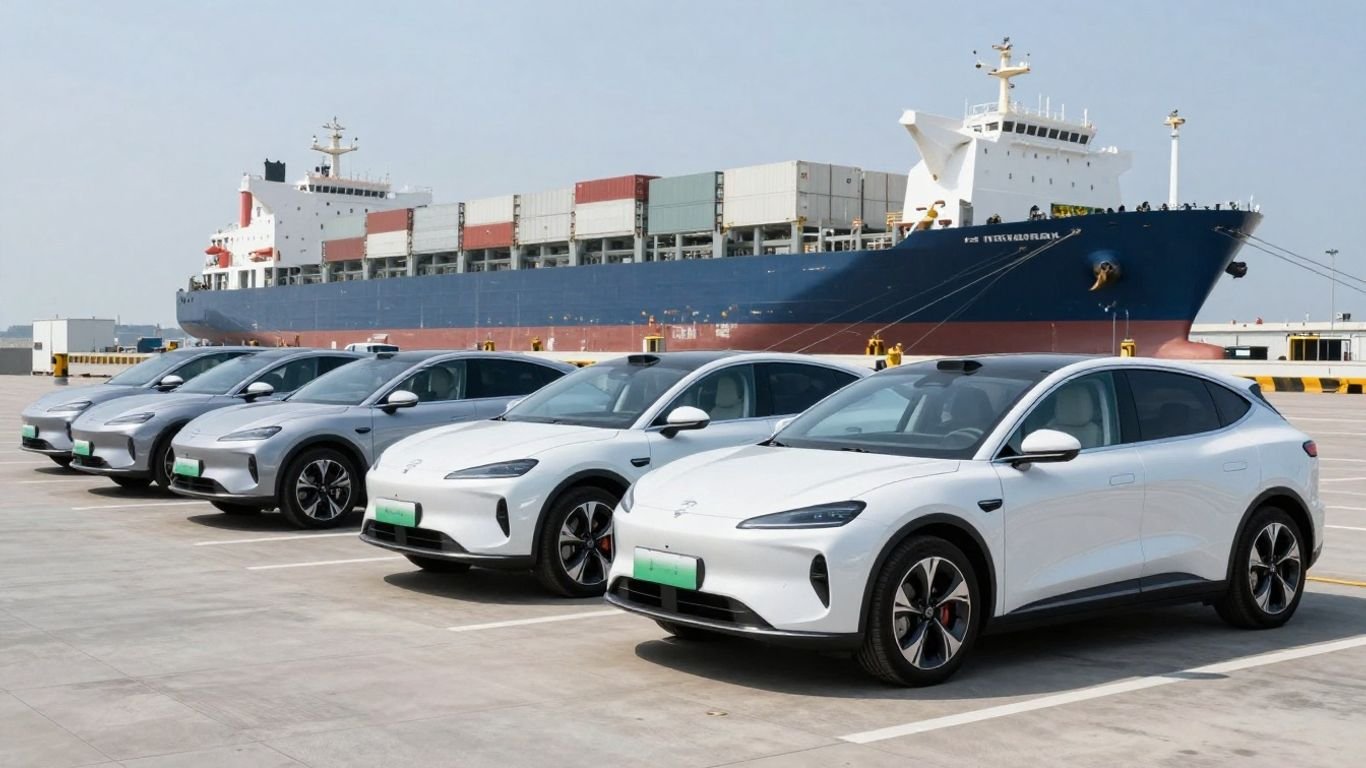

China’s auto industry is breaking records with a staggering surge in car exports, particularly electric vehicles (EVs) and hybrids, in March. This explosive growth comes despite ongoing turmoil in the Middle East, rising fuel prices, and a slowdown in China’s domestic car market.
The Chinese automotive sector has delivered an outstanding export performance, with passenger car exports spiking 73.7% compared to the previous year. Despite concerns about shipping disruptions linked to the Middle East conflict, automakers quickly adapted to logistical challenges and pivoted toward international demand, ensuring continued momentum abroad.
The surge is especially pronounced in the electric and hybrid sector. Exports of these vehicles soared 140% year-on-year, responding to global shifts in consumer preference as fuel prices climbed sharply amid geopolitical tensions. BYD, the world’s largest EV manufacturer, accounted for about a third of all March exports, while Geely and Chery also played key roles.
| Leading Exporter | March 2026 Export Share | Notable Markets |
|---|---|---|
| BYD | ~33% | Europe, Asia |
| Geely | ~2nd largest | Various |
| Chery | ~3rd largest | Various |
While exports are thriving, China’s domestic market tells a different story. Sales have fallen for six consecutive months, down 15.2% year-on-year in March. The decline in demand is widespread:
- Combustion vehicle sales shrank by 15.7%.
- EV and hybrid sales dropped 14.4%, reflecting lower consumer interest after incentives—like the purchase tax exemption—expired.
- High dealer inventories hint at oversupply and weak buyer sentiment.
Even industry giants are not immune. BYD, for instance, saw its domestic sales drop for the seventh straight month. Tesla’s Shanghai exports rose modestly, yet its China sales tumbled by nearly a quarter.
The recent surge in oil prices, linked to the Iran conflict, has prompted international consumers to look for alternatives, giving a decisive advantage to Chinese makers of EVs and hybrids. Export destinations in Europe and across Asia have seen especially strong growth as drivers seek to mitigate rising fuel costs.
Chinese automakers are increasingly relying on international markets to fuel their expansion. With domestic conditions expected to remain tight—due to inventory pressures and a sluggish economic recovery—the industry’s global push is likely to continue. BYD has expressed confidence in exceeding 1.5 million overseas exports for the year, underscoring the strategic shift toward exports as the new growth engine for China’s car industry.