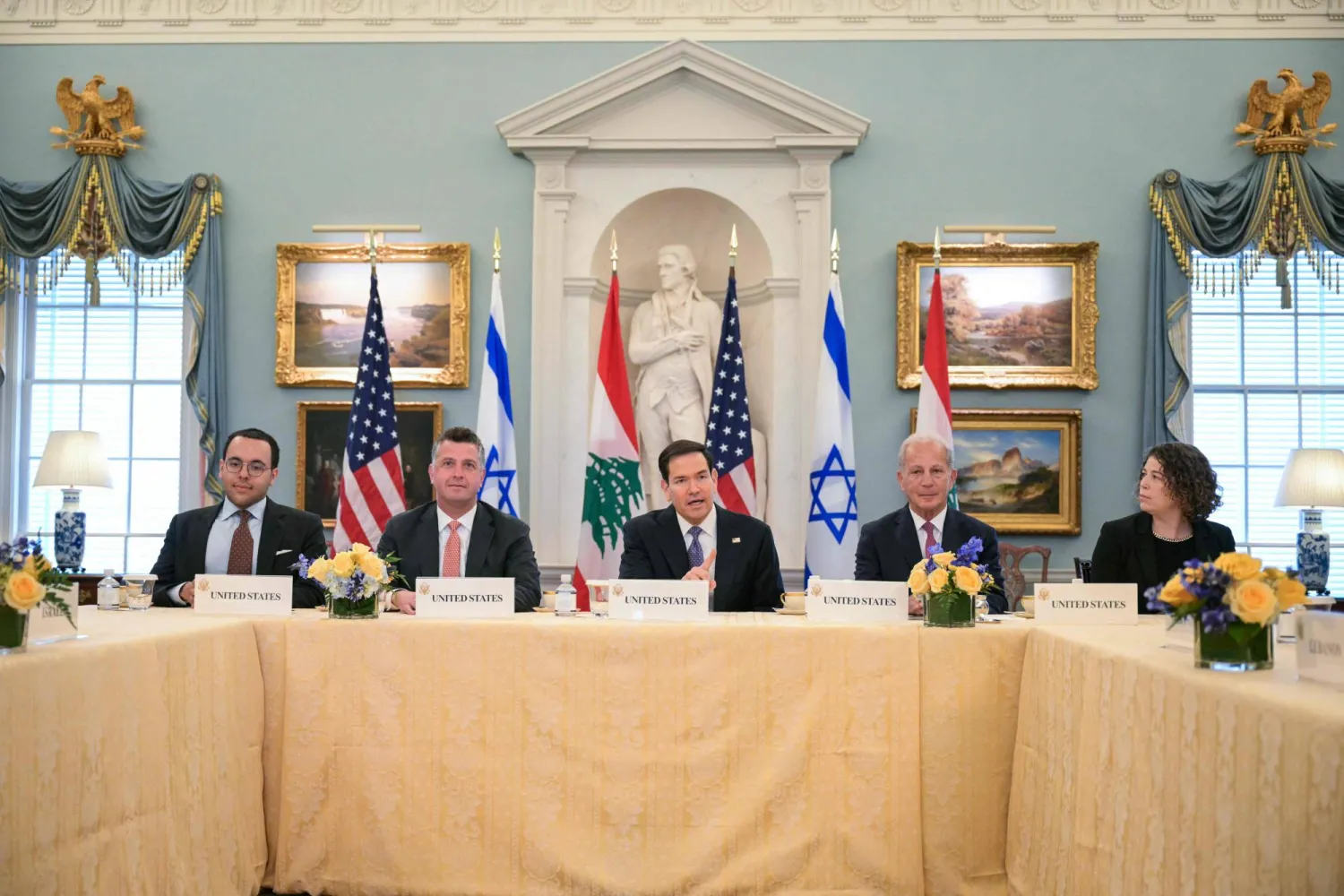

In a significant diplomatic development, Israel and Lebanon held rare direct talks in Washington D.C. on Tuesday, brokered by the United States. The high-level meeting, involving the ambassadors of both nations, aimed to de-escalate the ongoing conflict and explore pathways toward a lasting peace, even as regional tensions remain high.
The meeting between Israeli Ambassador Yechiel Leiter and his Lebanese counterpart, Nada Hamadeh Moawad, marked a pivotal moment, as the two nations do not maintain formal diplomatic relations. U.S. Secretary of State Marco Rubio, who hosted the discussions, described the event as a “historic opportunity,” while acknowledging that “every complexity would not be resolved in coming hours.”
Lebanon’s President Joseph Aoun conveyed hope that the talks would “mark the beginning of the end of the suffering of the Lebanese people,” but stressed that stability in the south would not return without Israeli troop withdrawal. Israel’s primary demand is the complete disarmament of Hezbollah.
The talks took place against a backdrop of heightened regional tensions. Hezbollah, which has been engaged in conflict with Israel, urged Lebanon to withdraw from the negotiations. The group also claimed responsibility for rocket attacks on northern Israeli towns shortly after the talks commenced.
France’s President Emmanuel Macron faced criticism for his approach to the conflict, with some suggesting he has normalized Hezbollah. Israel had reportedly requested France’s exclusion from the talks, citing its perceived unfair mediation.
The discussions also occurred concurrently with the second day of the U.S. blockade on Iranian ports, aimed at pressuring Tehran over its role in regional conflicts and control of the Strait of Hormuz. Meanwhile, U.S. President Donald Trump indicated that talks with Iran could resume in Pakistan within the next two days.
International bodies and foreign ministers from various countries, including the UK, urged both Israel and Lebanon to “seize this opportunity” for dialogue, emphasizing that direct negotiations could lead to lasting security for the region.