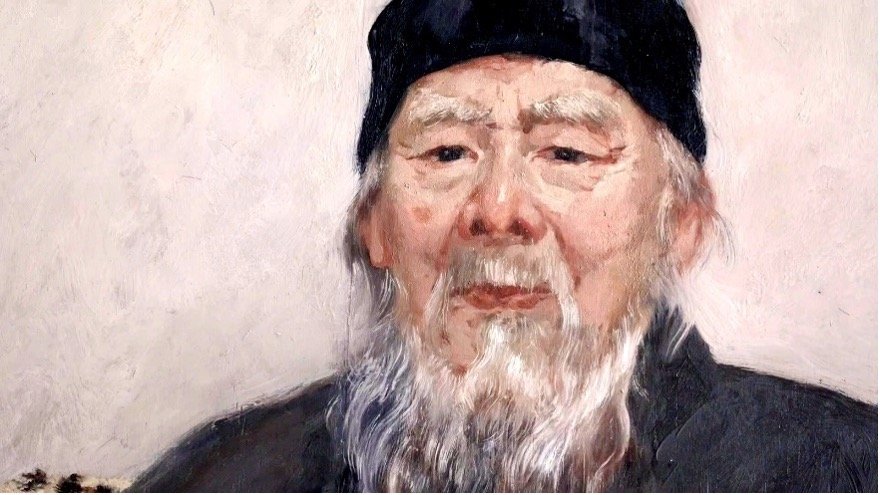

In the annals of Chinese art history, one significant episode stands out as a meeting of two maestros, one immortalizing the other through the power of his brush. This is the tale of Wu Zuoren, an influential figure in the development of 20th-century Chinese art, painting a portrait of the venerable Chinese art icon, Qi Baishi. This artistic encounter resulted in what would become one of Wu’s most representative masterpieces, preserving the character of Qi Baishi for future generations.
Wu Zuoren held an important position in the evolution of Chinese art during the tumultuous 20th century. His body of work showcased impressive proficiency in both oil painting and traditional Chinese painting. Wu’s style was marked by a unique blend of Western influences and the inherent ethos of Chinese artistry, a fusion that reflected his innovative vision and his commitment to pushing the boundaries of Chinese art.
It was amidst such a backdrop of artistic exploration and creativity that Wu crafted the ‘Portrait of Qi Baishi’ in 1954. The subject of this iconic work, Qi Baishi, was a legendary figure in Chinese art, renowned for his distinctive style and vast contribution to Chinese art and culture. At the time Wu captured his likeness, Qi was in his nineties and graciously posed as a model for Wu.
During the sitting, a unique moment occurred that showcased the depth of Wu’s observational skills and artistic sensibility. As Qi Baishi dozed off, Wu noticed how Qi’s right hand maintained a grip reminiscent of holding a brush, a posture deeply ingrained from years of dedicated practice. Furthermore, Qi’s mouth slightly puckered under his silvery beard, as if he were still sucking on his beloved brush in his sleep.
Wu, with his keen artistic eye, recognized the significance of these seemingly small details. He masterfully captured them in his portrayal of Qi Baishi, encapsulating the essence of the art master’s lifelong dedication to his craft. These nuances speak volumes about Qi Baishi’s character and his unwavering passion for art, making the portrait much more than a visual representation—it becomes a narrative in and of itself.
The ‘Portrait of Qi Baishi’ stands as a testament to Wu Zuoren’s remarkable talent, his ability to capture the soul of his subject, and his role in shaping 20th-century Chinese art. It also immortalizes Qi Baishi, ensuring that his artistic spirit continues to inspire future generations. This artwork remains a significant symbol of Chinese cultural heritage, underlining the timeless dialogue between tradition and innovation that characterizes Chinese art.
READ MORE: