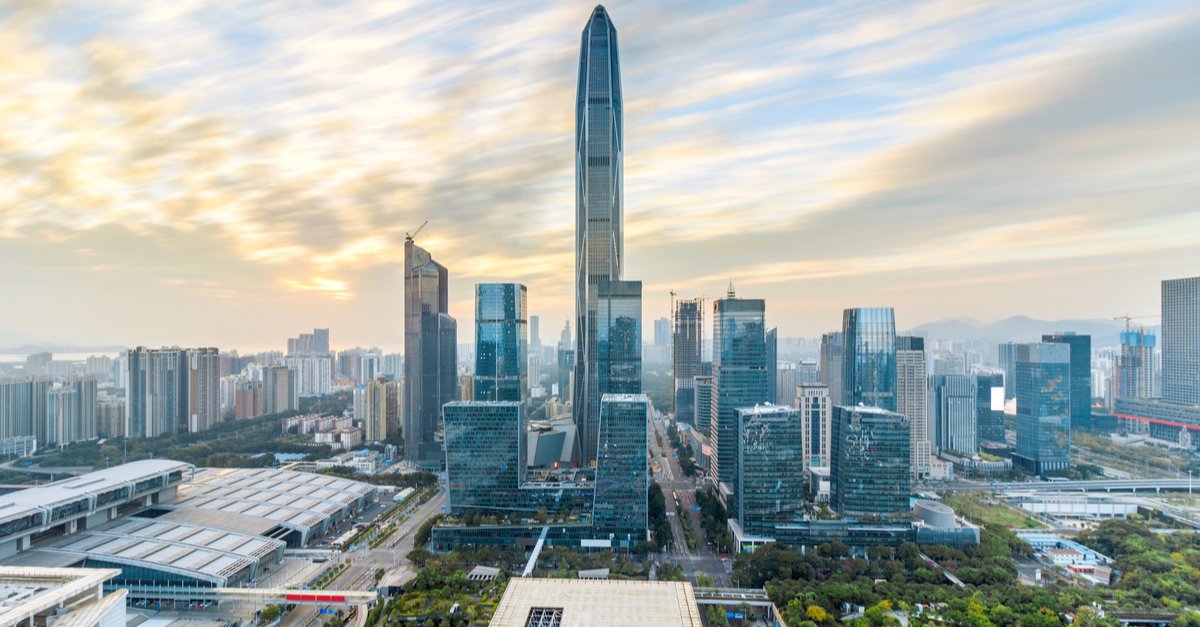

In what marks another chapter in the narrative of China’s evolving industrial landscape, a factory in Shenzhen, owned by Hong Kong’s Simatelex, has recently closed its doors. The decades-old Xin An Electrical (Shenzhen) Co, situated in the Bao’an District of Shenzhen, attributed its shutdown to the decreasing orders post-Covid-19, global economic downturn, and an overall adverse business environment. This has resulted in hundreds of workers being rendered jobless, according to sources from local media and the factory itself.
Established in 1985, Simatelex leveraged China’s vast labour potential in the wake of the country’s open-door policy of the late 1970s. The company, with a focus on household appliances, partnered with global heavyweights like Keurig, Cuisinart, and Philips. Beginning with a single factory in Shenzhen, Simatelex expanded to five production plants—four in China and one in Batam, Indonesia, employing a staggering 20,000 workers.
However, the recent years have not been favourable for Xin An Electrical. With the weight of China’s economic downturn on its shoulders, the factory has been shrinking in capacity. As of recent estimates, it housed over 900 workers. Despite being a relatively small player with a registered capital of 76 million yuan (US$10.4 million), the news of its closure has resonated deeply within the Chinese online community. Concerns are rife about China’s eroding dominance in low-end manufacturing.
Shenzhen’s metamorphosis from a hub reliant on labour-intensive industries to one championing high-tech innovations is well-documented. While the city has steadily positioned itself as a pioneer in technology and innovation, factories like Xin An have remained the backbone for the vast blue-collar demographic. The cessation of Xin An’s operations not only underscores the disruptions caused by political tensions and China’s stringent pandemic-induced lockdowns but also encapsulates Shenzhen’s broader transition from its roots as an original equipment manufacturing (OEM) hub.
The closure wasn’t entirely unexpected. A few months prior, workers had taken to the streets, voicing their concerns over unpaid wages and lack of social benefits. This followed rumours of the factory’s impending shutdown, as per the China Labour Bulletin, a Hong Kong-based labour rights monitor.
Simatelex has committed to compensating the employees, aligning with the country’s labour laws, as per their official notice. However, as geopolitical tensions rise and the global economic fabric becomes more intricate, the fate of similar factories remains uncertain.
READ MORE: