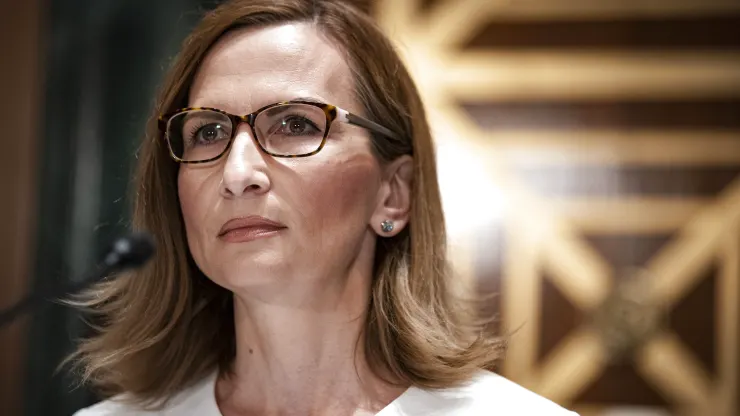

A court-appointed trustee has uncovered an $85 million shortfall between the funds held by Synapse’s partner banks and the amounts owed to depositors. Synapse, a fintech intermediary backed by Andreessen Horowitz, connected customers of various fintech firms to partner banks. The trustee, Jelena McWilliams, reported that while these customers had $265 million in balances, the banks only held $180 million associated with those accounts.
This discrepancy marks the most significant meltdown in the U.S. fintech sector since its rise post-2008 financial crisis. Over 100,000 customers have been unable to access their savings accounts for nearly a month following Synapse’s collapse. The failure is attributed to disputes over user balances among Synapse and its partners, including Evolve Bank & Trust. McWilliams’ report is the first external effort to quantify the missing funds.
Appointed trustee on May 24, McWilliams has collaborated with four banks—Evolve, American Bank, AMG National Trust, and Lineage Bank—to reconcile their ledgers and restore customer access to funds. However, this process has been challenging due to the need for more detailed information, including the impact of Synapse’s brokerage and lending activities on fund flows. Synapse reportedly commingled funds among several institutions, complicating the reconciliation process.
The fate of the missing funds remains unclear. McWilliams noted that it is not yet known whether end-user funds and negative balance accounts were moved between partner banks in ways that altered shortfalls. The investigation has been hindered by the lack of funds to pay external forensic firms or former Synapse employees for assistance, following the firing of the last Synapse employees on May 24.
Some customers with funds in demand deposit accounts have begun regaining access to their accounts. However, those with funds in pooled accounts known as for benefit of, or FBO, accounts face a longer wait. McWilliams indicated that a full reconciliation of FBO accounts could take several weeks.
In her report, McWilliams presented several options for Judge Martin Barash to consider at a Friday hearing, aiming to restore access to some FBO customers. Options included paying out some customers fully while delaying others or spreading the shortfall evenly among all customers to provide limited funds sooner. McWilliams recommended partial payments to all FBO customers to alleviate immediate financial strain, while keeping a reserve for future payments.
Judge Barash, however, expressed uncertainty about how to proceed. He acknowledged the crisis but questioned the court’s ability to issue effective orders since the depositors’ funds were not part of the Synapse estate. Despite the efforts to resolve the issue, the path forward remains unclear.
READ MORE: