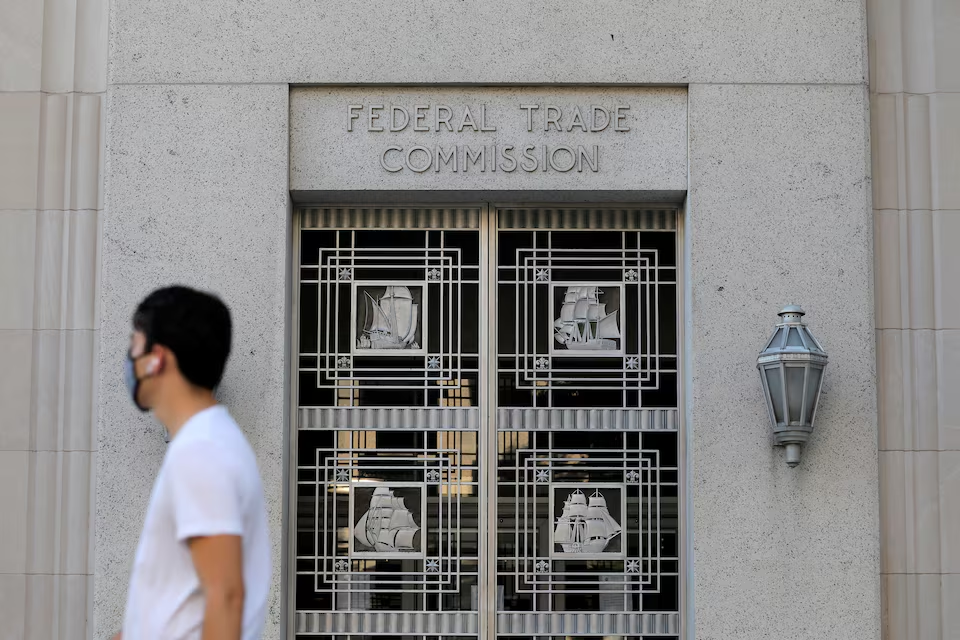

A federal judge in Texas has blocked a U.S. Federal Trade Commission (FTC) rule that sought to ban noncompete agreements, which are commonly signed by employees to prevent them from joining competitors or starting similar businesses. U.S. District Judge Ada Brown, based in Dallas, ruled that the FTC does not possess the authority to implement such broad rules under its mandate to enforce federal antitrust laws. This decision comes after Judge Brown had temporarily halted the rule in July while considering a challenge brought by the U.S. Chamber of Commerce and the tax services firm Ryan.
The rule, which was scheduled to take effect on September 4, was struck down by Judge Brown on the grounds that the FTC failed to justify the sweeping nature of the ban. In her ruling, Brown, who was appointed by former President Donald Trump, stated, “The Commission’s lack of evidence as to why they chose to impose such a sweeping prohibition … instead of targeting specific, harmful non-competes, renders the Rule arbitrary and capricious.”
The FTC, led by a Democratic majority, approved the ban in May with a 3-2 vote, arguing that noncompete agreements stifle competition, violate antitrust laws, and suppress wages and worker mobility. The commission estimated that about 30 million U.S. workers, or roughly 20% of the workforce, have signed noncompete agreements. Despite the ruling, FTC spokesperson Victoria Graham expressed the agency’s disappointment and indicated that the FTC is “seriously considering a potential appeal.” She added that the decision does not prevent the FTC from pursuing noncompete cases through individual enforcement actions.
The business community, particularly the U.S. Chamber of Commerce, has been vocal in its opposition to the FTC’s rule, arguing that Congress never intended to grant the agency such broad regulatory powers. Business groups also contend that banning noncompete agreements could undermine the protection of trade secrets and other confidential information.
The ruling in Texas is part of a broader legal battle over the FTC’s authority to regulate noncompete agreements. Last week, a federal judge in Florida found the ban likely invalid, blocking its application to a real estate developer. However, a judge in Philadelphia previously ruled in favor of the FTC, concluding that noncompetes are “virtually never justified.”
The conflicting rulings from different jurisdictions suggest that the debate over noncompete agreements and the FTC’s regulatory power is far from settled. The Texas ruling, in particular, raises significant questions about the future of noncompete agreements and the scope of the FTC’s authority in regulating business practices on a national scale.
READ MORE: