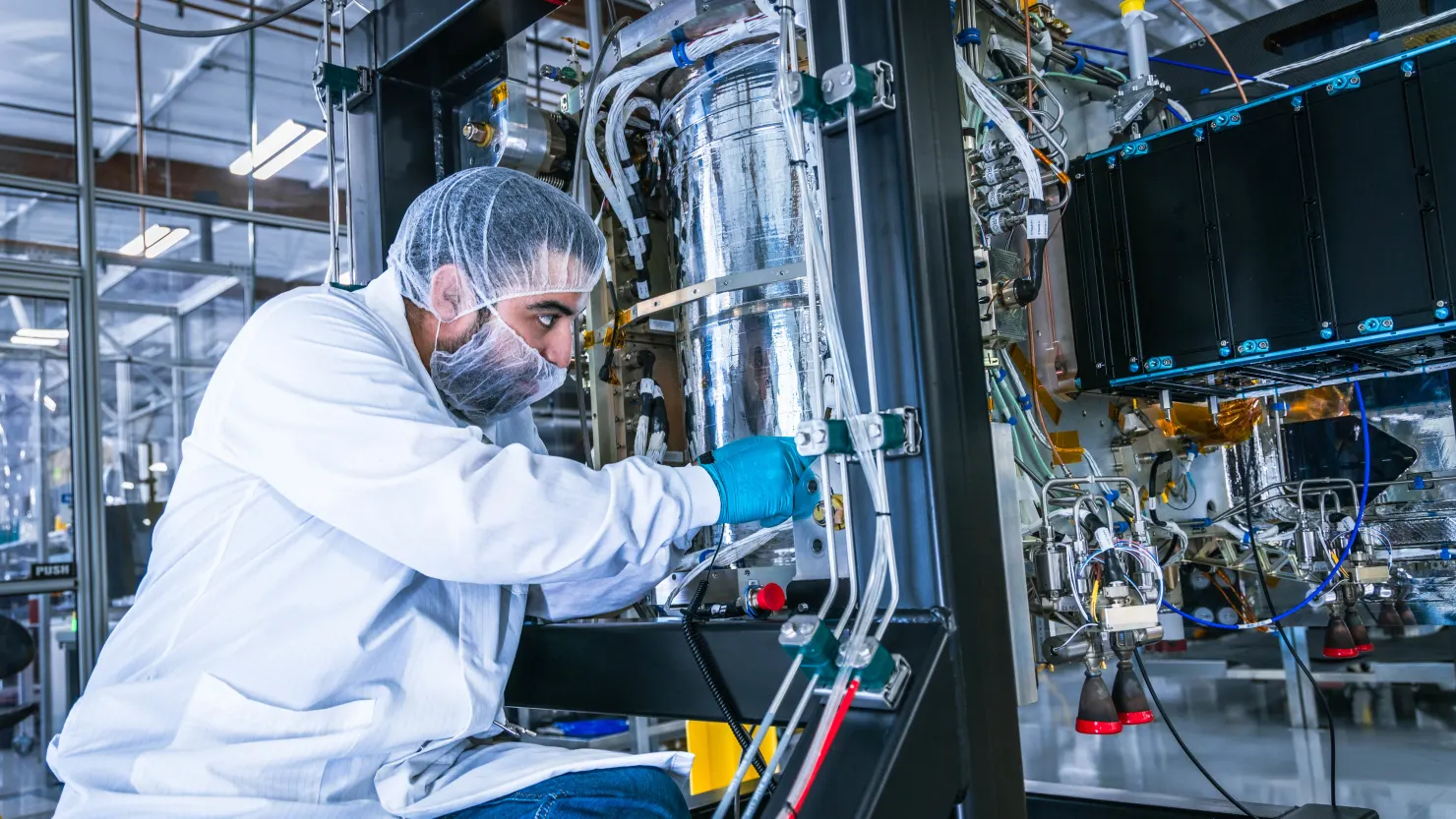

Los Angeles-based space startup Impulse, led by former SpaceX engineer Tom Mueller, has raised $150 million in a new funding round led by Founders Fund. The funding will help the company scale production of its orbital transfer vehicles, known as “space tugs,” which are designed to deliver payloads to specific orbits after rockets launch them into space.
Impulse is currently developing two space tugs: Mira, a smaller vehicle, and Helios, a larger one. These vehicles act like taxis, ensuring that satellites and other payloads reach their precise destinations in orbit. Unlike rockets, which are akin to airplanes dropping passengers in a general area, space tugs offer targeted in-space transportation.
Mueller, who founded Impulse after a 20-year career developing rocket engines at SpaceX, said the new funds will ensure that the company is well-positioned to complete development on both Mira and Helios. He added that the funds will support the company beyond the first flights of these vehicles. Impulse already conducted a successful mission with Mira, called LEO Express-1, which launched in November and achieved full mission success in July.
The startup has secured a variety of contracts, ranging from satellite delivery services to propulsion system development for private space stations. Impulse’s client base includes both commercial companies and government agencies like the U.S. Space Force. Impulse is also working on demonstrating Helios’ capabilities in geosynchronous orbit.
The $150 million funding round attracted a wide range of investors, including Airbus Ventures, Alumni Ventures, Lux Capital, RTX Ventures, and DCVC, among others. This round brings Impulse’s total funding to $225 million, allowing the company to move forward with its next mission, LEO Express-2, scheduled for later this year.
Impulse plans to launch an upgraded version of Mira in 2025 and conduct a demonstration mission with Helios by mid-2026. The company also intends to debut its “GEO Rideshare” missions by 2027.
Mueller emphasized that while SpaceX has significantly reduced the cost of launching payloads into orbit, in-space transportation solutions are still lacking. He noted that Impulse aims to provide a reliable and cost-efficient option for customers looking to move payloads within space.
Headquartered in Redondo Beach, California, Impulse currently employs about 140 people and plans to expand to over 200 as it scales production. The company’s 60,000-square-foot facility handles most of the design, manufacturing, and assembly processes, allowing it to produce at least 10 Mira spacecraft annually.
With this latest round of funding secured, Mueller said the company is now focused on making progress and continuing to scale its operations.
READ MORE: