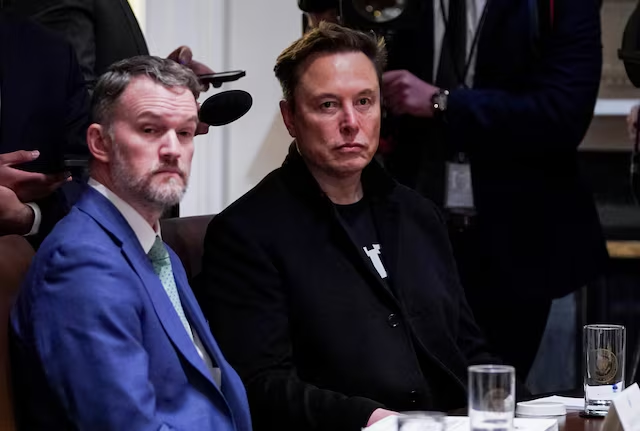

Elon Musk has confirmed his decision to proceed with a lawsuit against OpenAI, the artificial intelligence startup he co-founded, following a shift in the company’s control structure. Musk’s lawyer, Marc Toberoff, announced the move on Monday, hours after OpenAI adjusted its earlier plans to remove control from its non-profit parent organization. OpenAI’s new proposal retains the non-profit parent as the controlling entity, making it a major shareholder in the for-profit business, thereby maintaining some level of oversight.
The legal action centers around Musk’s opposition to the proposed transition of OpenAI’s governance away from its original non-profit model. He argues that this change is inconsistent with the company’s founding principles and seeks to block the shift, along with other claims related to the company’s operations and management. Musk has long been vocal about his concerns regarding the direction of OpenAI and the potential for profit-driven motives to override the ethical considerations he believes should guide AI development.
This lawsuit is significant not only because it involves one of the most high-profile figures in the tech industry, but also due to its implications for the future of artificial intelligence governance. OpenAI was originally founded with the mission of advancing AI technology for the benefit of humanity, but the transition toward a more commercially driven model has raised questions about whether it can still adhere to those original ideals. Musk’s legal challenge will likely intensify public scrutiny of OpenAI’s operations, especially regarding its commitment to its founding mission.
A jury trial for the lawsuit has been scheduled for March 2026, and the legal proceedings are expected to attract considerable attention from both the tech community and regulators concerned with the future of AI development and governance. As the case progresses, it could have far-reaching consequences for how AI startups are structured and governed, particularly in terms of balancing profit motives with broader social responsibility.
Musk’s pursuit of legal action highlights the ongoing tension between the commercial interests of AI companies and the ethical concerns surrounding the technology’s development and deployment. The outcome of the lawsuit could have lasting effects on the landscape of AI regulation and corporate governance in the tech industry.
READ MORE: