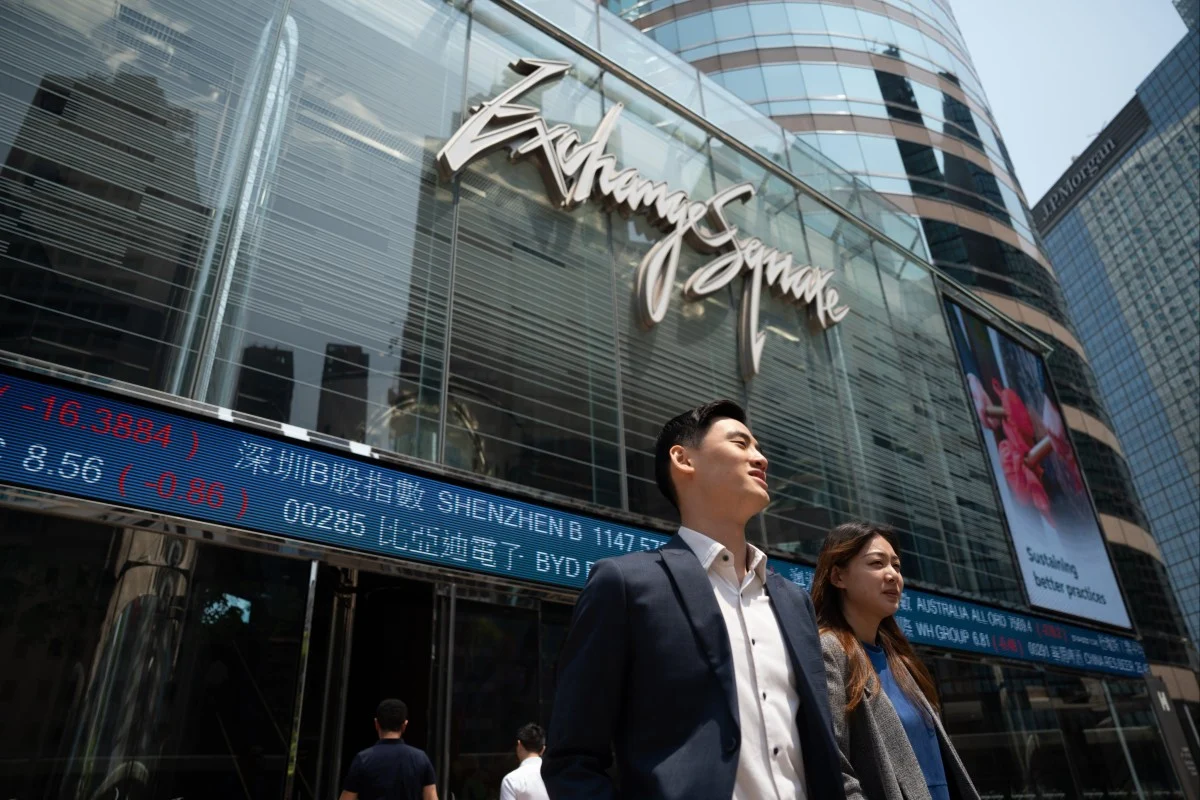

Hong Kong stocks rose for the sixth consecutive day after Beijing unveiled measures aimed at boosting the economy and increasing private sector confidence ahead of upcoming US-China tariff talks. The US Federal Reserve kept interest rates steady, indicating it wasn’t rushing to make cuts, while the Trump administration signaled its intention to lift restrictions on chip exports, which led to a rally in Nvidia stocks.
On Thursday, the Hang Seng Index gained 0.4% to close at 22,775.92, and the Hang Seng Tech Index climbed 0.6%. On the mainland, the CSI 300 Index rose 0.6%, and the Shanghai Composite Index gained 0.3%.
Among the top performers, Geely Automobile rose 4.4% to HK$17.52, Li Auto surged nearly 5% to HK$105.90, and Meituan gained 1.7% to HK$141.40. However, chipmaker Semiconductor Manufacturing International Corporation (SMIC) fell 2.3% to HK$45.15, and Baidu saw a 2.8% drop to HK$85.
The Hong Kong Monetary Authority followed the US Federal Reserve’s lead, keeping its base rate unchanged at 4.75%. On Wednesday, the Trump administration announced it would rescind Biden-era restrictions on global AI chip exports, designed to prevent China from acquiring advanced AI chip technologies. This news caused a decline in Chinese semiconductor stocks.
Mainland Chinese investors took profits, selling HK$7.87 billion (US$1.01 billion) in Hong Kong stocks via the Stock Connect programme’s southbound channel after a five-day rally. As of Wednesday, the Hang Seng Index had almost recovered to its level on April 2, when Trump imposed significant tariffs on US trading partners, with China bearing the heaviest impact. Despite this, the index remained about 2.2% lower than its April 2 levels.
In response to the economic challenges, Chinese regulators introduced measures to support the economy and stabilize markets, especially ahead of the US-China trade talks scheduled for this weekend in Switzerland. On Thursday, Chinese officials announced a new law aimed at supporting the private sector, which will take effect on May 20. This law defines the legal status of the private sector for the first time and clarifies the government’s support for it.
Ray Sharma-Ong, from Aberdeen Investments, expressed confidence that Chinese equities would remain resilient due to fiscal and monetary support, as well as strong activity growth in the country. Meanwhile, Chinese bubble tea chain Auntea Jenny saw a strong debut on the Hong Kong market, with its shares rising by 40% to HK$158.40.
Elsewhere in the Asia-Pacific region, markets were also higher, with Japan’s Nikkei 225 up 0.4%, South Korea’s Kospi Index adding 0.2%, and Australia’s S&P/ASX gaining 0.2%.
READ MORE: