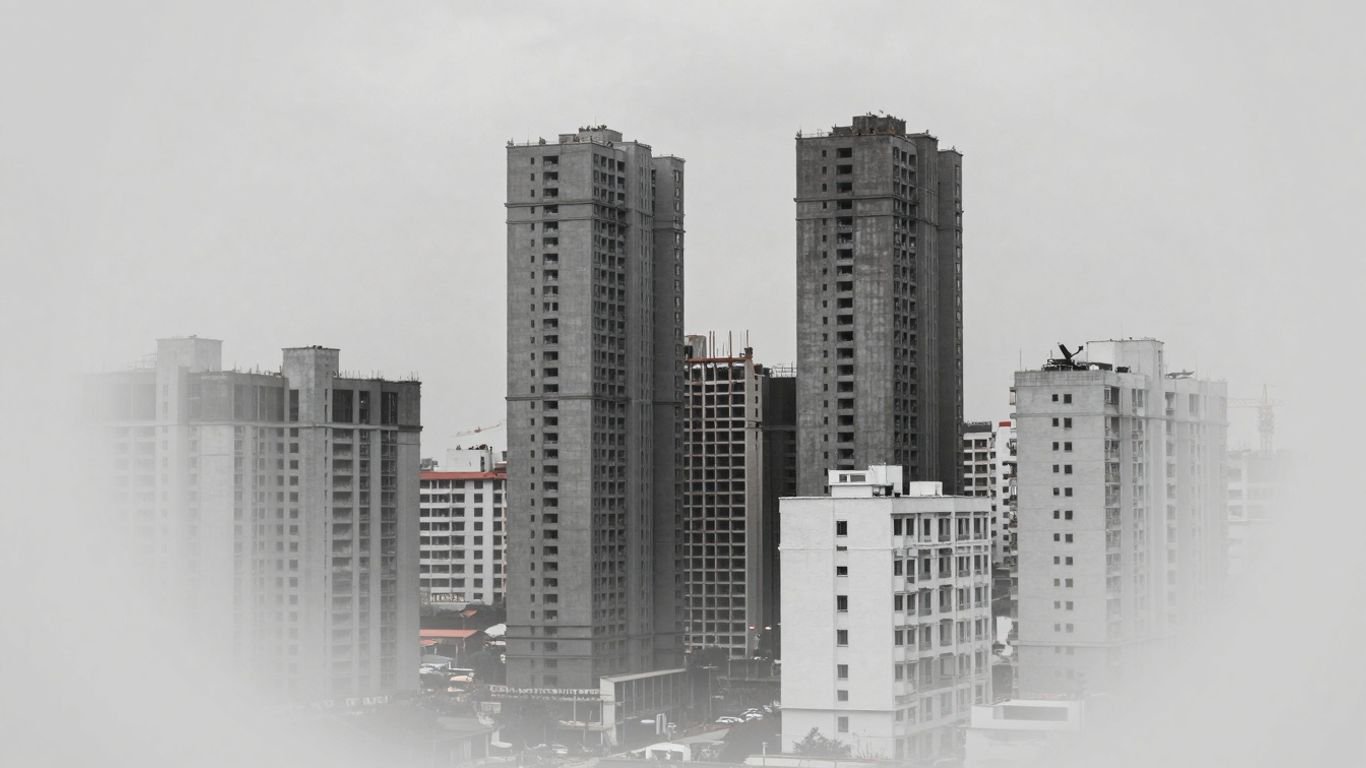

China’s government is prioritizing the stabilization of its real estate sector, signaling a significant shift in economic policy. Facing mounting concerns over economic stability, authorities are implementing a multi-pronged approach aimed at reducing housing inventory, stimulating demand, and fostering long-term sustainable growth within the property market.
Addressing Market Pressures
The Central Economic Work Conference has identified “inventory reduction” as a key policy term for 2026, reflecting ongoing pressure from relatively weak overall demand. Experts note that stepped-up efforts will be crucial to lower housing stocks and rebalance supply and demand. The current housing inventory in 100 Chinese cities reached a record high of 27.4 months in November, underscoring the urgency of these measures.
The 15th Five-Year Plan and Real Estate
The upcoming 15th Five-Year Plan (2026-2030) outlines transformative changes for China’s real estate market. It emphasizes a shift towards a new development paradigm centered on domestic circulation, supported by international circulation. Key impacts on the real estate sector include:
- New Productive Forces: Driving demand for office and industrial spaces through support for strategic sectors like new energy vehicles and AI manufacturing.
- Domestic Demand Expansion: Boosting retail development by leveraging “new demand leading new supply” and focusing on consumer infrastructure.
- High-Quality Opening-Up: Attracting global capital through policy certainty and potential RMB appreciation, benefiting retail properties, industrial logistics, data centers, and offices.
- Livelihood Improvements: Supporting real estate growth by focusing on affordable housing, rental markets, and urban renewal.
- Green Transformation: Prioritizing sustainability with the establishment of zero-carbon industrial parks and increasing ESG considerations in commercial real estate.
New Measures and Stimulus
In addition to long-term planning, the government is considering immediate measures to bolster the market. Proposals under evaluation include nationwide mortgage subsidies for first-time buyers, larger income-tax rebates for mortgage holders, and reduced transaction costs. These potential stimulus packages signal rising concern over the prolonged slump in the real estate sector and its spillover risks to banks and local government finances. While the final policy mix and timing are yet to be determined, these deliberations aim to stabilize sentiment and ease pressure on financial institutions.
Urban Renewal and Consumption Boost
Urban renewal, including the renovation of urban villages and dilapidated housing, is a key focus for promoting high-quality urban development. This initiative, coupled with efforts to release pent-up demand for housing improvements, is expected to drive optimization of urban structures. Furthermore, the government plans to boost consumption and investment by systematically removing restrictive measures and cultivating new growth drivers, emphasizing that stable consumption growth requires institutional reforms, ensuring household income, and strengthening social security systems.
Sources
- China Makes Steadying Property Market a Key Task for 2026, Yicai Global.
- China’s Cabinet Vows New Measures to Bolster Housing Market, Yicai Global.
- China 15 Five Year Plan Report | CN, Cushman & Wakefield.