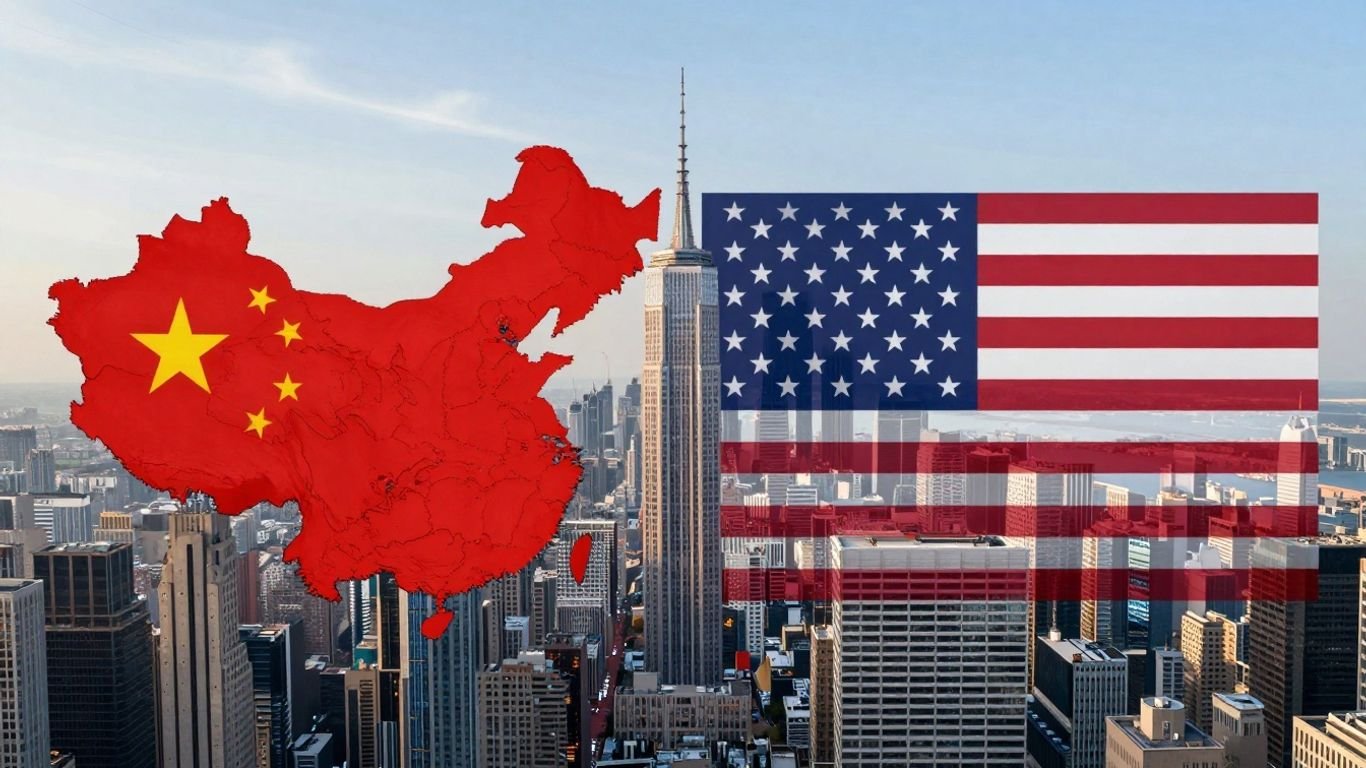

Leading figures in China’s artificial intelligence sector have expressed concerns that the nation may not be able to catch up to the United States in the global AI race in the near future. This sentiment emerges amidst significant IPO activity from Chinese AI companies, highlighting both progress and persistent challenges.
The Widening AI Divide
Prominent figures such as Justin Lin, head of Alibaba Group’s Qwen series of open-source models, have voiced a cautious outlook. Lin suggested that the probability of any Chinese company achieving a significant leap beyond current US leaders in fundamental AI breakthroughs over the next three to five years is below 20%. This view was echoed by experts from Tencent Holdings and Zhipu AI, companies that recently participated in substantial IPOs, collectively raising over $1 billion.
Despite recent successes, such as the strong market debut of MiniMax shares and Zhipu‘s climb, Chinese AI heavyweights remain pragmatic. Tang Jie, founder and chief AI scientist at Zhipu AI, noted that while Chinese open-source models have rapidly closed the gap with US proprietary offerings, the overall gap may actually be widening. He cited resource limitations and US export controls on critical chips and equipment as significant constraints.
Energy: A Critical Factor in the AI Race
The escalating energy demands of AI are becoming a central issue for both the US and China. While the US grapples with an “electron gap” and potential energy bottlenecks for data center construction, China’s rapid pace of energy expansion, particularly in clean energy sources, positions it differently. Experts suggest that China’s ability to build infrastructure quickly, coupled with its existing energy generation capacity, could be an advantage. However, the sheer scale of energy required for AI, with US data center electricity demand projected to more than double by 2030, presents a significant challenge for both nations.
Strategic Competition and Clean Energy Dominance
China’s substantial investments in global energy infrastructure, from solar plants to offshore wind farms, alongside its rapid expansion of data centers, are shaping the global AI landscape. While the US focuses on providing advanced AI chips, China offers a complementary strategy of energy and AI infrastructure solutions, particularly in regions like the Middle East and Southeast Asia. Furthermore, China’s leadership in clean energy technologies like solar panels and batteries presents a complex dynamic. While this dominance could offer a solution to US energy constraints, it also raises questions about potential leverage and national security, especially concerning investment in US clean energy manufacturing.