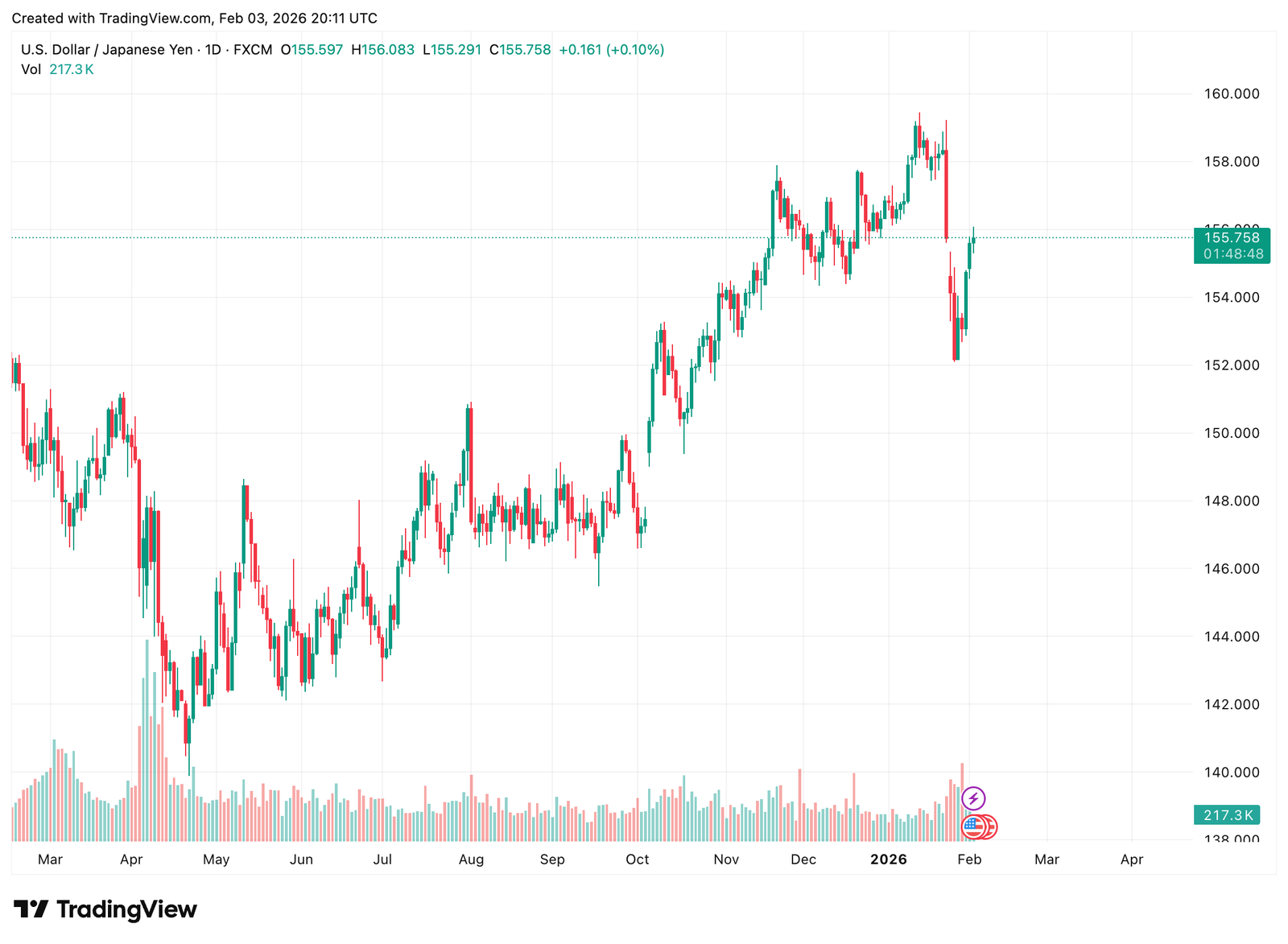

Japan’s currency messaging came under fresh scrutiny this week after comments that appeared to praise a weaker yen triggered market volatility and forced officials into rapid clarification efforts, even as authorities had been trying to steady the currency through close coordination signals.
Japanese Finance Minister Satsuki Katayama on Tuesday defended Prime Minister Sanae Takaichi, describing her remarks as a broad, non-directional explanation of exchange-rate effects. Takaichi had spoken about the benefits of a weaker yen during a campaign speech, and the dollar moved back above 155 yen afterward.
“The prime minister was speaking in general terms about the impact of a weak yen on the economy,” Katayama said in a regular press conference. Katayama added that Takaichi had referenced “what is written in textbooks.” She also summarized the prime minister’s point as acknowledging tradeoffs: Takaichi “pointed out that, while there are negative aspects, there are also positive aspects, including stronger corporate sales as domestic investment increases and products made in Japan become easier to export overseas,” Katayama said.
Behind the scenes, officials moved quickly to prevent the remarks from undermining efforts to support the currency and limit destabilizing swings. “Officials were scrambling to respond through Takaichi’s X social media account to clarify her intentions over the weekend,” one official at the prime minister’s office said. In a later post, Takaichi clarified she did not have a preference for the yen’s direction and said her earlier comments were intended to emphasize building an economy resilient to exchange-rate fluctuations.
The episode comes as the weak yen remains politically sensitive domestically due to import costs and is also watched abroad for potential spillovers into global markets. Officials have signaled concerns about excessive volatility, and recent stabilization efforts had been supported by signs of coordination between Tokyo and Washington.
With a snap election approaching, investors are now parsing every public remark for hints of policy bias—raising the risk that messaging missteps, rather than fundamentals, drive near-term moves in USD/JPY.