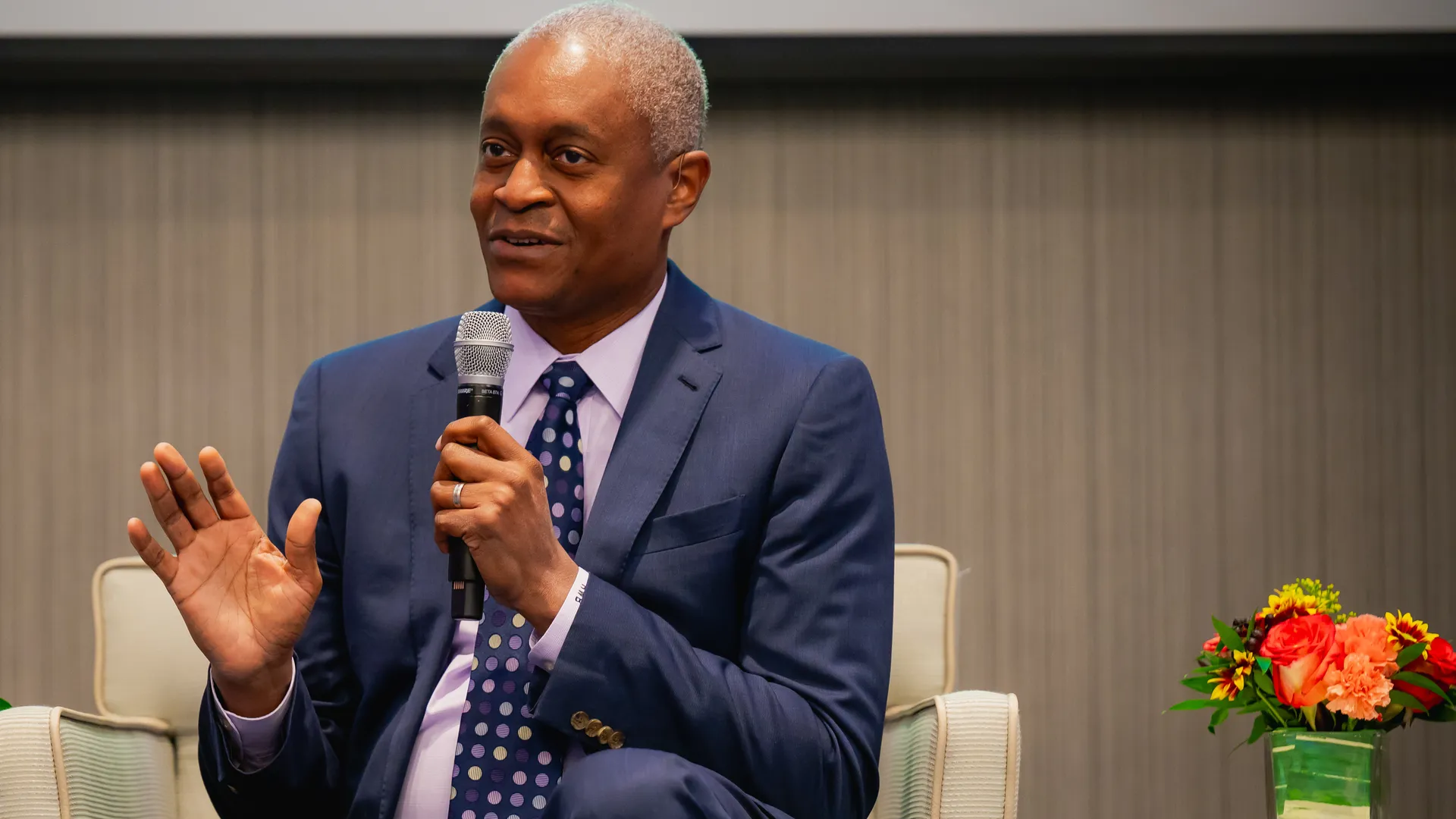

Atlanta Federal Reserve President Raphael Bostic is departing his role with a significant caution regarding the potential economic repercussions of artificial intelligence. Bostic warned that AI advancements could lead to a sustained increase in the U.S. unemployment rate, a challenge that traditional interest rate cuts by the Federal Reserve may not be equipped to solve. His remarks highlight a growing debate about whether AI will be a productivity boon or a disruptive force for employment.
Bostic articulated that the economy might be entering a “transformational period” where businesses require fewer workers due to AI integration. He suggested that the Federal Reserve should consider these structural changes when setting interest rates, rather than attempting to artificially lower unemployment through aggressive rate cuts. In his view, addressing significant labor market dislocations caused by AI should primarily fall under the purview of elected officials and fiscal policy, not monetary policy alone.
Despite Bostic’s concerns, the U.S. labor market currently remains historically tight, with the unemployment rate at 4.3% in January. Federal Reserve officials’ median longer-run estimate for the unemployment rate is around 4.2%. Bostic urged his colleagues to exercise caution when considering interest rate cuts in an environment where AI could fundamentally alter the job landscape. He indicated that borrowing costs might not need to decrease significantly from their current levels.
The broader implications of AI for the economy are a subject of ongoing discussion among policymakers. Some, including the White House’s nominee for a key central bank leadership role, view AI as a significant driver of productivity that could be compatible with lower interest rates. Others, however, express more caution, emphasizing that AI’s effects on demand and prices are still unclear. Recent Federal Open Market Committee (FOMC) minutes and speeches reveal concerns that AI could influence the neutral rate of interest or even contribute to inflation in the short term, complicating the outlook for interest rate adjustments.
Bostic framed his comments as a parting message to his colleagues, stressing that interest rates have limitations when the labor market undergoes structural transformation. His retirement from the Atlanta Fed at the end of February marks the end of his term. The Federal Reserve Bank of Atlanta is initiating a nationwide search for his successor, with First Vice President Cheryl Venable serving in an interim capacity. The ongoing focus remains on upcoming economic data, FOMC documents, and policy decisions for insights into how AI’s economic footprint will evolve and influence future monetary policy.