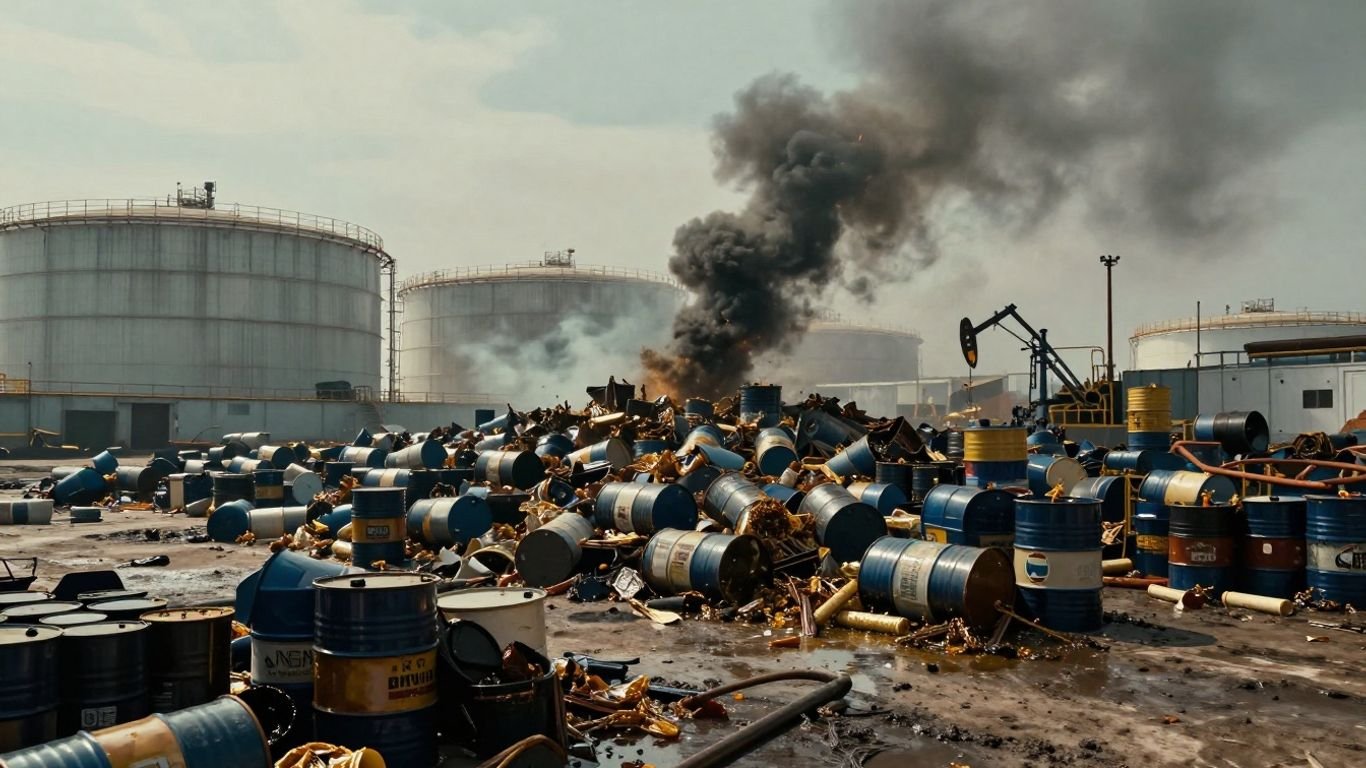

The International Energy Agency (IEA) has announced an unprecedented release of 400 million barrels of oil from strategic reserves, the largest such action in history. This move comes as the ongoing war in the Middle East, initiated by a U.S.-Israeli military assault on Iran, has triggered the most significant supply disruption the global oil market has ever witnessed. Attacks on tankers in the Persian Gulf and the closure of Iraqi oil terminals have severely impacted the flow of oil, with the Strait of Hormuz now seeing only a fraction of its previous daily volume.
The conflict has led to a dramatic reduction in oil exports from the region. Gulf countries have curtailed production by at least 10 million barrels daily as storage facilities fill up. Exports of refined products and liquefied petroleum gas have also come to a standstill. The IEA estimates that global oil demand will be curbed by one million barrels a day in March and April due to widespread flight cancellations caused by closed airspaces and disruptions to liquefied petroleum gas supplies.
The ripple effects of the supply disruptions are being felt worldwide. Several nations are implementing measures to manage fuel demand and protect consumers from soaring costs. Pakistan has reduced its workweek and closed schools, while South Korea has capped fuel prices for the first time in nearly three decades. In France, TotalEnergies has pledged to cap gas and diesel prices until the end of the month. The European Commission is also exploring subsidies and gas price caps to alleviate the burden on households and businesses.
The IEA has cautioned that diesel and jet fuel markets are especially vulnerable to prolonged disruptions from the Middle East, given limited capacity elsewhere to ramp up production. The situation continues to pose significant challenges for investors navigating volatile markets and for consumers facing rising energy costs and inflationary pressures.