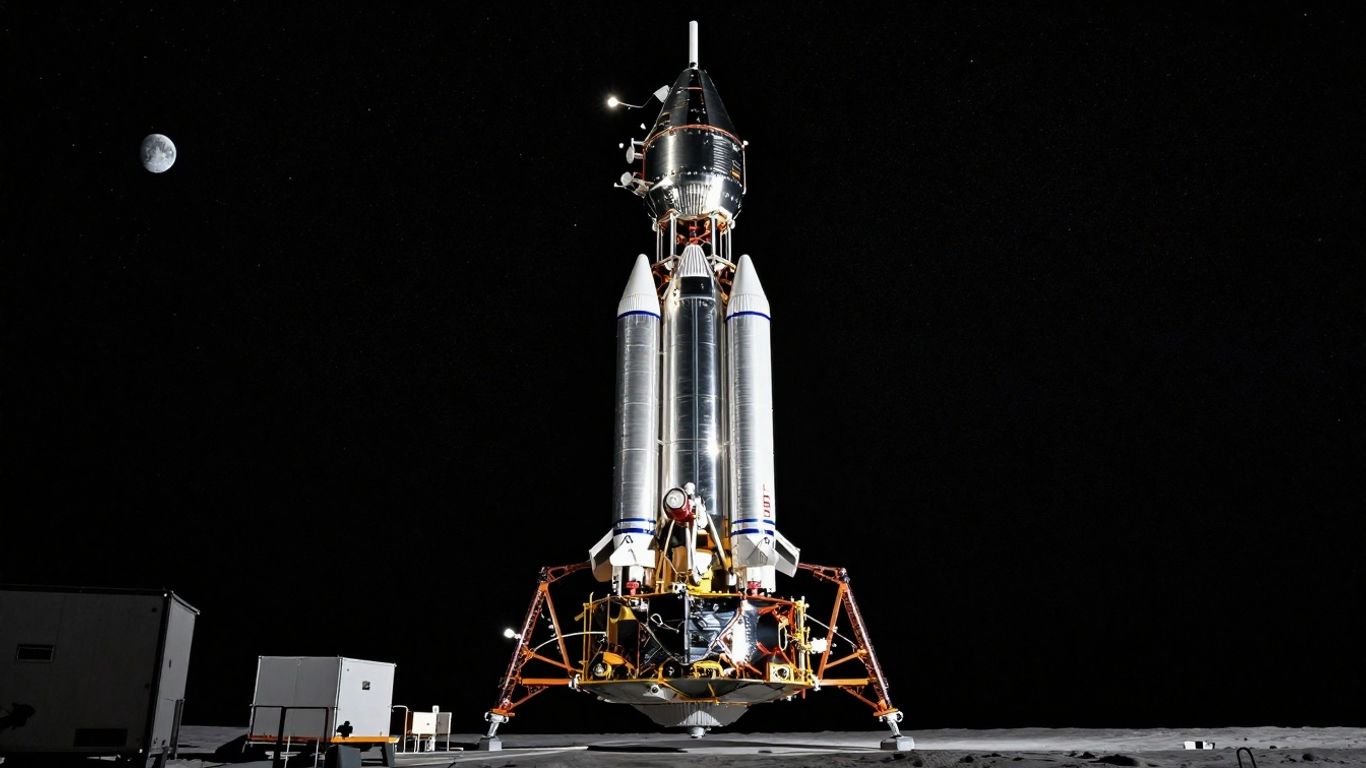

Russia’s space program has once again postponed its lunar ambitions, with the next robotic probe mission now slated for 2028. This delay underscores significant challenges within Roscosmos, including budget constraints and technical failures, as the nation falls further behind in the international space race.
Russia’s aspirations to compete in the new space race have been significantly hampered by a series of setbacks. The postponement of the Luna-26 probe, initially planned for launch much earlier, to 2028 signifies a considerable lag. This comes as the United States’ Artemis program aims to land astronauts on the Moon by the same year, and China also eyes a crewed lunar landing before 2030. The failure of the Luna-25 probe in 2023, which crashed during its landing attempt, marked a stark reminder of the challenges involved, especially after a half-century hiatus from lunar missions.
Budgetary constraints, compounded by Russia’s invasion of Ukraine and subsequent isolation from international space collaborations like those with the European Space Agency (ESA), have taken a toll on Roscosmos. The agency’s ambitious two-phase plan for lunar exploration, focusing on technology analysis, landing site selection, and eventually lunar base development, now faces extended timelines. The original schedule for probes like Luna-26 and Luna-27 has been repeatedly pushed back, with subsequent missions like Luna-28 now targeted for 2036, a stark contrast to earlier projections.
While Russia grapples with its internal challenges, other nations are making substantial progress. India successfully landed its Chandrayaan-3 probe on the lunar south pole in 2023, and NASA’s Artemis missions are progressing towards crewed landings. China is also a formidable competitor, with its own robust lunar program. Russia’s overall launch rates have also plummeted, reaching levels not seen since the early 1960s, falling significantly behind the United States and China. This decline has led to a strategic pivot, with a greater emphasis on militarizing existing space assets rather than pursuing ambitious scientific exploration.
Despite the current difficulties, Russia has expressed a desire to maintain its standing as a space power. However, the path forward appears challenging. The missed opportunities for international partnerships, particularly with the U.S. and China, limit potential avenues for collaboration. While Russia possesses expertise in areas like building nuclear power plants, which could be relevant for future lunar bases, its current technological and financial standing makes it difficult to secure a significant role in the ongoing lunar race. The focus seems to be shifting towards developing a new Russian Orbital Station, with manned deep space and lunar missions unlikely within the next decade.