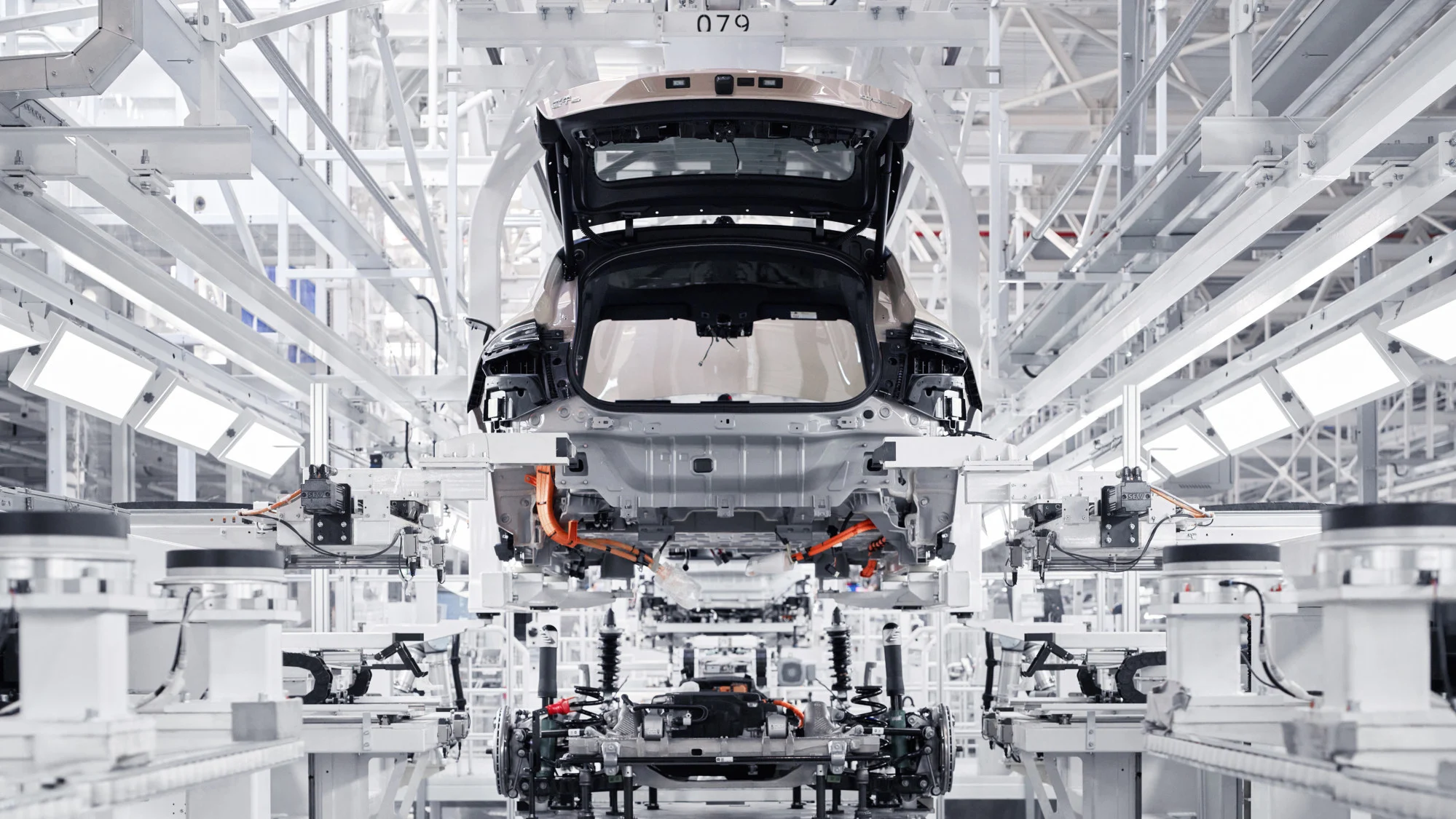

Nio, one of China’s premier electric vehicle (EV) manufacturers, has revealed ambitious plans to significantly reduce its workforce by 2027, emphasizing a shift towards heightened automation and artificial intelligence (AI) in its production processes. The Shanghai-based company, known for its premium EVs, is making strategic moves to stay competitive in the rapidly evolving automotive sector.
In a recent announcement, Nio stated that it had already reduced its workforce by 10% as a part of its efficiency enhancement initiative. The company plans to further streamline its operations by incorporating AI and advanced robotics into its manufacturing units. Ji Huaqiang, Nio’s Vice-President of Manufacturing, Logistics, and Operations, underscored the company’s commitment to leveraging AI for decision-making in manufacturing, aiming to cut managerial positions by half by 2025.
The transition towards industrial robots is a key component of Nio’s strategy, projected to reduce human labor on production lines by 30% between 2025 and 2027. As of the end of 2022, Nio employed approximately 7,000 people, with this number expected to decline as automation increases.
Nio envisions a future where manufacturing is fully automated, requiring minimal to no human labor. This ambitious goal is backed by the company’s investment in cutting-edge AI and robotic technologies. While Ji acknowledged the challenges in setting a specific timeline for this transition, the direction is clear.
The push towards automation comes at a time when China’s EV market, the largest globally, faces intense competition and concerns over potential overcapacity. With over 200 players in the field, established firms like Nio, Xpeng, and Li Auto are now contending with newcomers such as Xiaomi and Baidu.
Despite having yet to turn a profit since its inception in 2014, Nio has seen a substantial increase in vehicle deliveries, with 126,067 units delivered in the first ten months of 2023, marking a 36.3% year-on-year increase. However, Nio’s president Qin Lihong expressed that a 40% annual sales growth was not reflective of the company’s potential, indicating a need for more compelling vehicle designs to attract a broader range of Chinese drivers.
Nio operates two manufacturing plants in Hefei, Anhui province, with significant production capacities. The company’s second plant near Hefei Xinqiao airport boasts 756 robots, achieving full automation in certain manufacturing processes. Nio aims to make this factory the world’s smartest, with top-tier equipment, flexible production processes, and efficient supply chain management.
In parallel, Xpeng, a rival Guangzhou-based EV manufacturer, has also announced its plans for design optimization and efficiency improvements, targeting a 25% cost reduction to maintain its competitive edge. Xpeng’s president Brian Gu stated that these measures are crucial for the company to achieve positive cash flow by 2025.
Nio’s strategic workforce reduction and increased reliance on automation and AI technologies signify a significant shift in the automotive industry, focusing on efficiency, innovation, and staying ahead in a fiercely competitive market.
READ MORE: