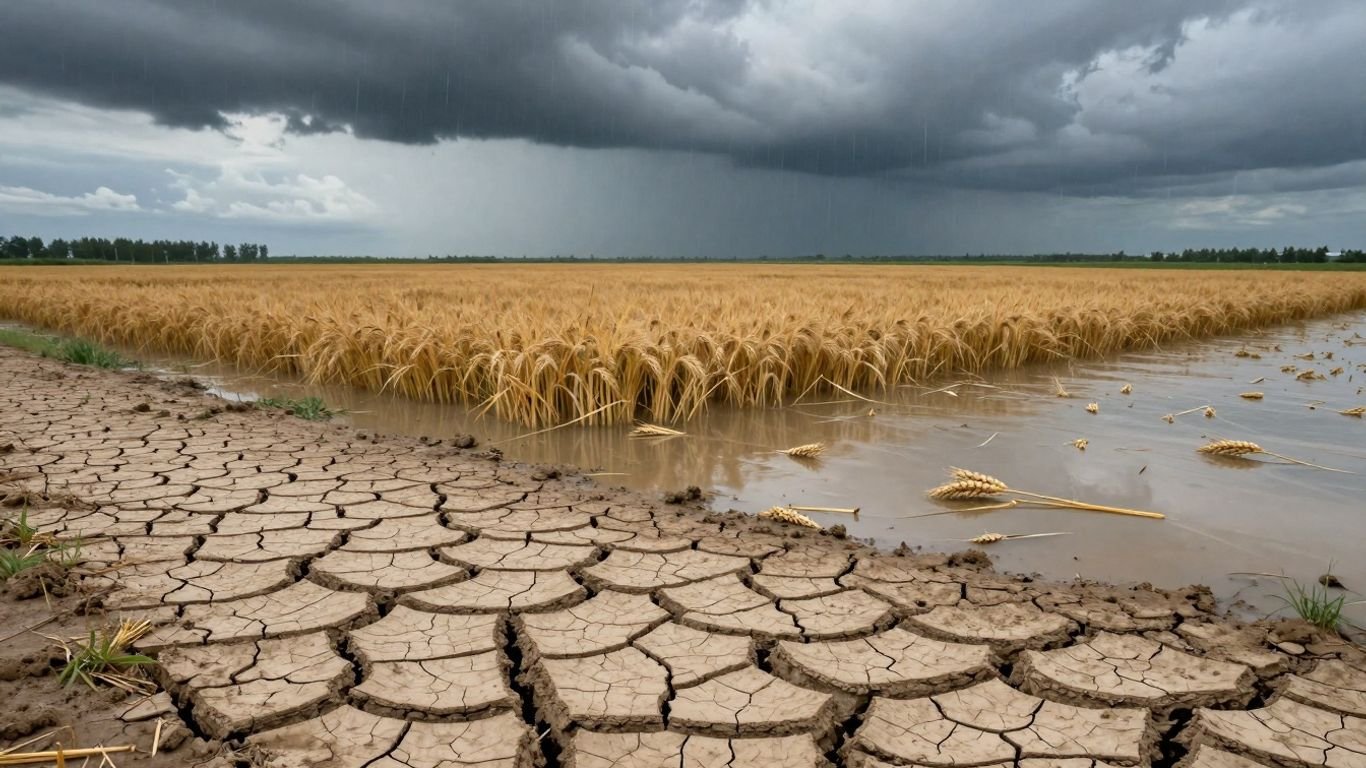

China’s vital cereal crops are increasingly facing a double threat from compound climate events, experiencing both severe droughts and extreme rainfall. This alarming trend, detailed in recent scientific studies, poses a significant risk to national food security and agricultural stability.
Compound Drought and Rainfall Events Threaten Cereal Crops
Recent research highlights that China’s three major cereal crops are increasingly exposed to compound drought and extreme rainfall events. These events, characterized by abrupt shifts between dry and wet conditions, can severely damage crops, reduce yields, and disrupt agricultural practices. Studies indicate that these alternating extremes can lead to soil degradation and increased phosphorus loss, further compromising agricultural productivity.
Extreme UV Radiation Impacts Maize Yields
Beyond water-related extremes, extreme surface solar ultraviolet (UV) radiation events are also identified as a significant threat, particularly to maize yields. Research indicates that a 1% increase in the frequency of extreme UV events can lead to a 0.72% reduction in maize yield. This impact is amplified when UV events coincide with dry or hot conditions, leading to even greater yield losses. Soil moisture plays a crucial role in mitigating these effects, but projected changes in soil moisture under future climate scenarios may not be sufficient to offset the negative impacts of increased UV stress.
Increasing Synchrony of Extreme Weather Events
Furthermore, a comprehensive analysis of climate data from 1930 to 2022 reveals a substantial increase in the spatial synchrony of extreme precipitation and temperature events across China. The land area affected by these combined extremes has risen by approximately 3.5-fold, while the proportion of the population exposed has doubled. Extreme wet and hot events are identified as the primary drivers of this trend. This increasing synchrony means that different regions are more likely to experience severe weather simultaneously, posing a complex challenge for national disaster management and food security.
Shifting Ecosystem Exposure
The study also points to a significant shift in ecosystem exposure. Grasslands have increasingly become the most exposed land use type to extreme climate events since 1956, surpassing forest lands. This heightened vulnerability of grasslands to drought and heat raises concerns about ecosystem degradation and its cascading effects on regional services and livelihoods.