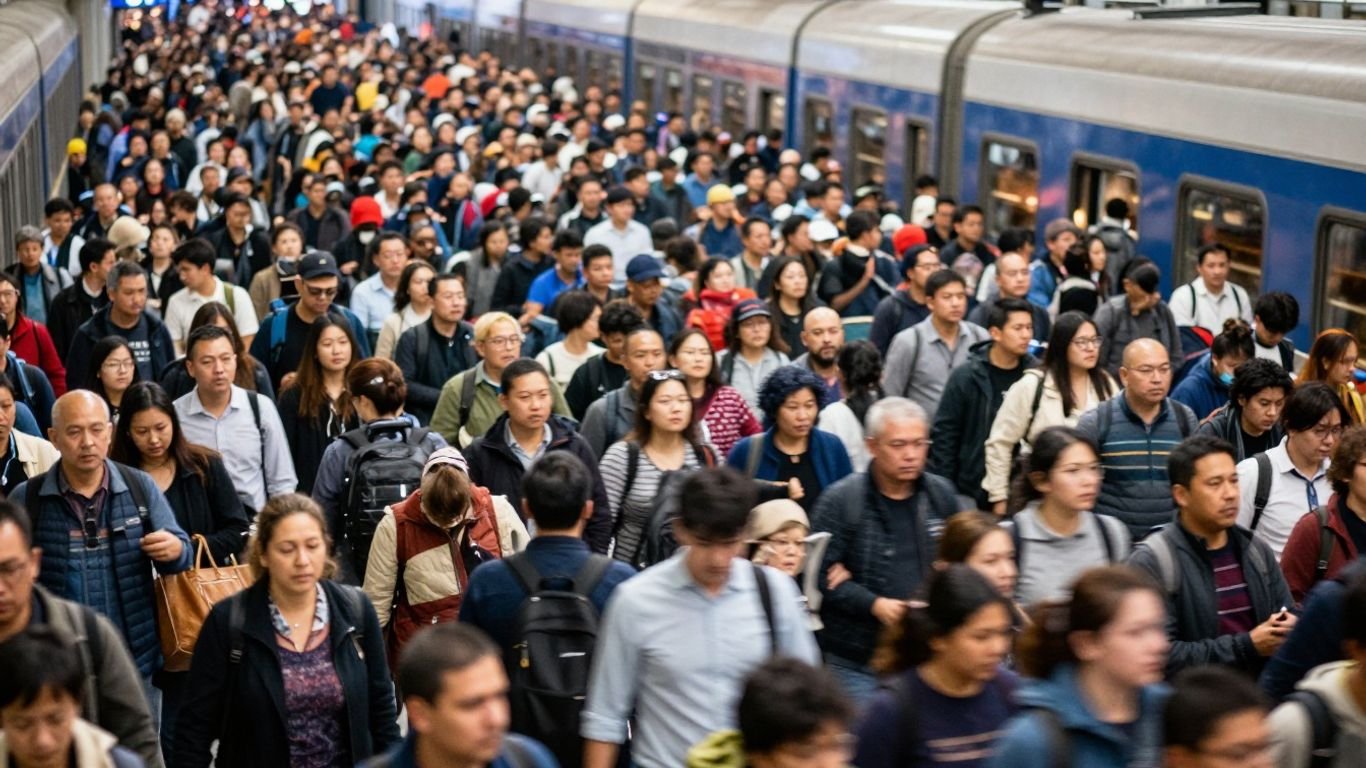

China’s annual Spring Festival travel rush, known as ‘chunyun,’ has seen an unprecedented surge in passenger trips, setting new mobility records. This massive migration, often described as the world’s largest, highlights the immense scale of domestic travel as the nation celebrates its most important holiday.
As the 2026 Spring Festival travel period passed its halfway mark, China’s Ministry of Transport reported staggering figures. On February 20th, the 19th day of the travel season, cross-regional passenger traffic reached a historic high of 350 million trips. This figure alone represented a 12.3 percent increase compared to the same day in the previous year, signaling a robust rebound in travel.
By February 21st, the total number of inter-regional passenger trips had surpassed 3.63 billion. This daily record was driven by a combination of transport modes, with highways handling an estimated 3.39 billion trips, railways carrying 16.8 million passengers, and airports processing 2.63 million travelers. International passenger flows also peaked around February 22nd-23rd, with major airports like Shanghai Pudong, Guangzhou Baiyun, and Beijing Capital each clearing over 100,000 international passengers daily.
Over the first 20 days of the 40-day travel rush, which runs from February 2nd to March 13th, a total of 5.08 billion inter-regional passenger trips were recorded. Road travel accounted for the largest share with 4.76 billion trips. Railways were a crucial artery, handling 258 million passenger trips. Civil aviation saw 47.52 million passenger trips, while waterways facilitated 19.99 million.
China State Railway Group Co., Ltd. reported that on February 21st, approximately 17.19 million passenger trips were made via the rail network. The operator anticipated continued high volumes, scheduling an additional 2,203 passenger trains to meet the surging demand. Measures were implemented to enhance transport capacity on major routes and improve the overall travel experience for passengers.
With the Spring Festival holiday, which fell on February 17th this year, drawing to a close, the focus is now shifting to the return journeys. February 23rd, the last day of the nine-day holiday, is predicted to be the busiest day for return trips, with railway authorities forecasting up to 18.5 million journeys on this single day. This surge in return travel is expected to keep airfares and hotel rates elevated through the end of February.