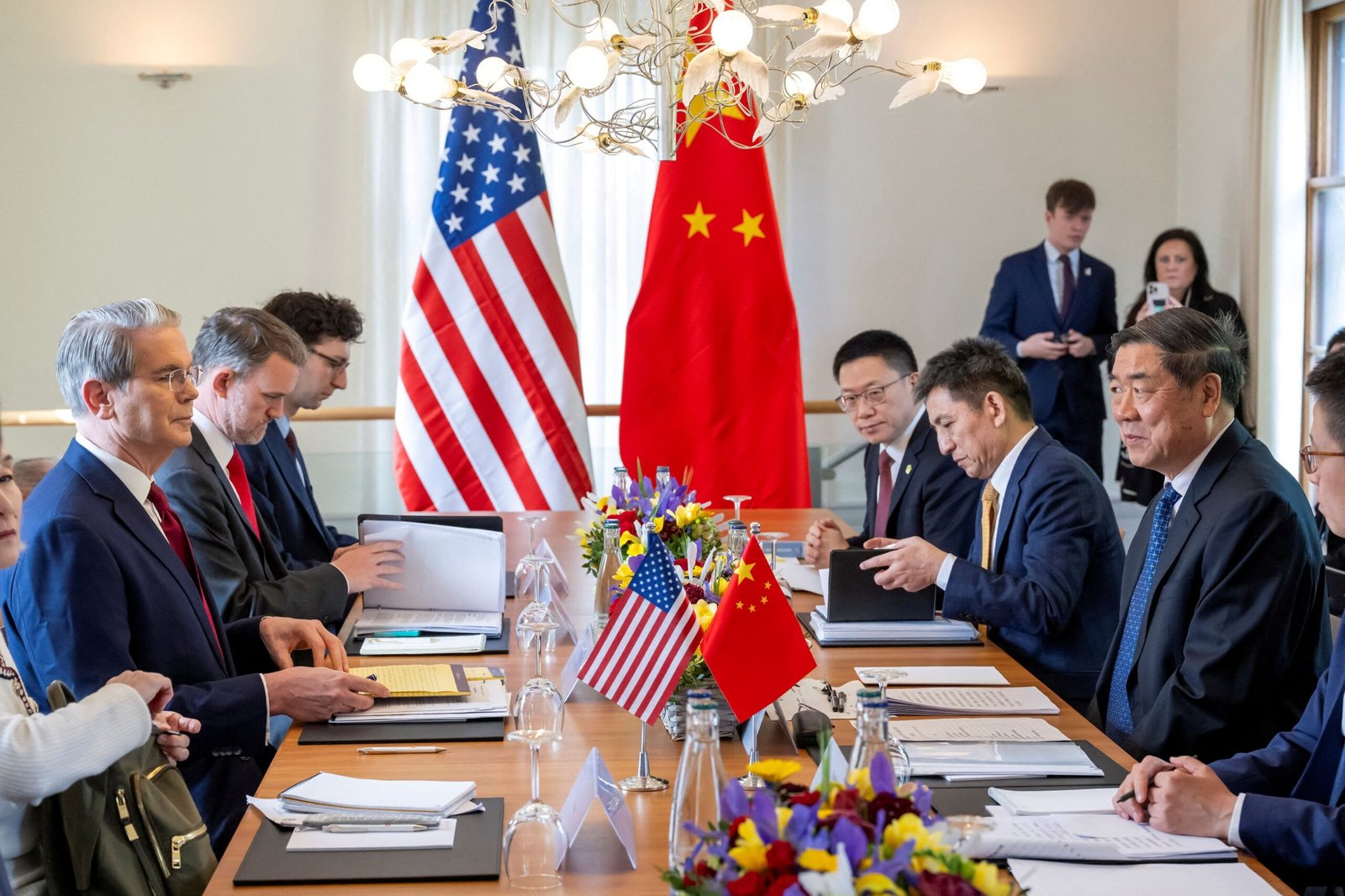

Senior trade officials from the United States and China are meeting in Paris this weekend for crucial talks aimed at stabilizing bilateral relations and setting the stage for an upcoming summit between Presidents Donald Trump and Xi Jinping. The discussions come as both nations navigate complex trade disputes, with China recently rejecting a U.S. trade investigation.
High-level representatives, including Chinese Vice-Premier He Lifeng and U.S. Treasury Secretary Scott Bessent, are expected to engage in discussions designed to lay the groundwork for a summit between President Trump and President Xi later this month in Beijing. Analysts suggest that while significant breakthroughs are unlikely, the meetings will focus on establishing a framework for future cooperation and addressing ongoing trade friction.
The agenda for the Paris talks is anticipated to include potential agreements on tariffs, investment policies, and trade in essential goods such as soybeans and rare earths. U.S. Trade Representative Jamieson Greer emphasized the administration’s goal of ensuring continued stability in the U.S.-China relationship, highlighting the need for consistent access to critical materials for U.S. manufacturing and ensuring China continues to purchase American goods.
Adding a layer of tension to the upcoming discussions, China has strongly condemned a recent U.S. trade investigation into alleged industrial overcapacity and forced labor. Beijing has labeled the forced labor claims as fabricated and has reserved the right to implement countermeasures. This move signals a continuation of disputes over trade practices, even as both nations seek to manage their economic relationship.
Despite the recent friction, analysts point out that both the U.S. and China have short-term incentives to maintain a degree of trade stability. Beijing requires a stable international economic environment to address domestic challenges, while Washington is focused on its upcoming midterm elections. The “Zhong Sheng” commentary in the People’s Daily suggested that China’s development can align with America’s goals, indicating a desire for a constructive dialogue.