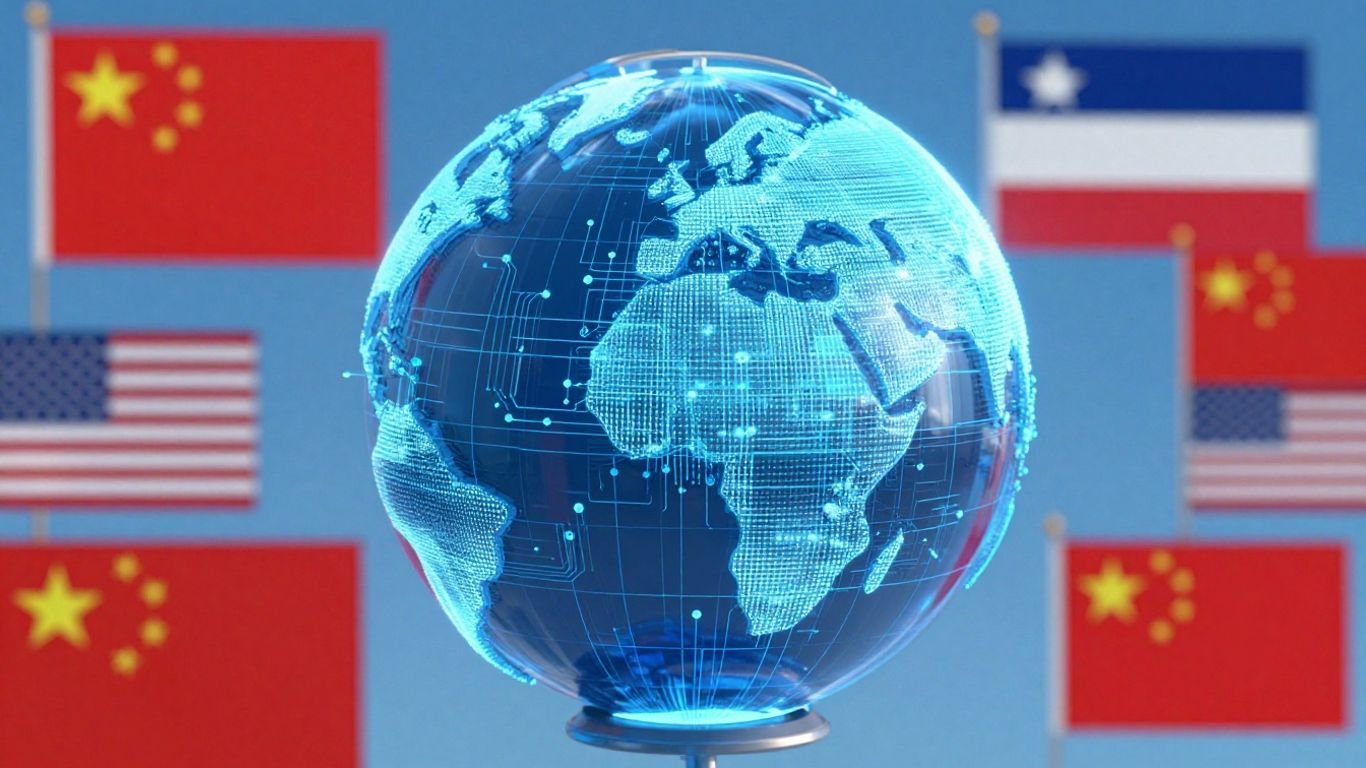

At the recent APEC summit, Chinese President Xi Jinping put forth a significant proposal: the establishment of a World Artificial Intelligence Cooperation Organization (WAICO). This initiative aims to create global governance rules for AI, foster international collaboration, and position China as a key player in shaping the future of artificial intelligence on the world stage. The proposal comes as the US skipped the summit, creating a vacuum that China seeks to fill.
President Xi Jinping advocated for AI to be treated as a “public good for the international community” during his address at the APEC Leaders’ Meeting. The proposed WAICO is envisioned as a comprehensive platform with potential headquarters in Shanghai. Its core objectives include coordinating global AI development, establishing universally accepted governance rules, and promoting open-source sharing of AI advancements. The organization’s structure may include a technology-sharing platform, an equity adjustment mechanism, and a rapid response unit for regulatory implementation.
This initiative distinctly contrasts with existing international AI governance efforts, which China views as potentially partial or exclusionary. WAICO champions multilateralism and an inclusive, development-oriented approach, particularly for the Global South, directly opposing the United States’ “deregulation-first” strategy.
The proposal signifies China’s strategic bid to challenge Western dominance in AI rulemaking and establish itself as a leader in global tech diplomacy. This move occurs amidst intensifying competition in the AI economy, with China aiming to leverage its strengths and offer an alternative forum where all countries, especially those in the Global South, have a voice. The initiative could lead to increased fragmentation in global AI governance but also serves as a counterweight to perceived US influence.
For the AI industry, WAICO could introduce new standards and reshape market dynamics. Chinese AI companies are poised to be primary beneficiaries, potentially gaining a strategic advantage in expanding their global footprint. Conversely, Western AI labs and tech companies may face new competitive pressures and regulatory hurdles if their products and services do not align with WAICO’s frameworks.
APEC leaders, in their Gyeongju Declaration, endorsed the APEC AI Initiative (2026–2030) to support regional AI capacity and adopted a Collaborative Framework for Demographic Changes. China is set to host the APEC summit in 2026 in Shenzhen, a city that has become a symbol of China’s economic transformation and high-tech manufacturing prowess.
While reactions to WAICO have been mixed, with Western nations expressing skepticism, several countries have reportedly shown interest. The success of WAICO will depend on its ability to navigate geopolitical rivalries and demonstrate a genuine commitment to an open and inclusive approach. The coming months will be crucial in observing how China galvanizes support for WAICO and how other nations respond to this ambitious proposal.