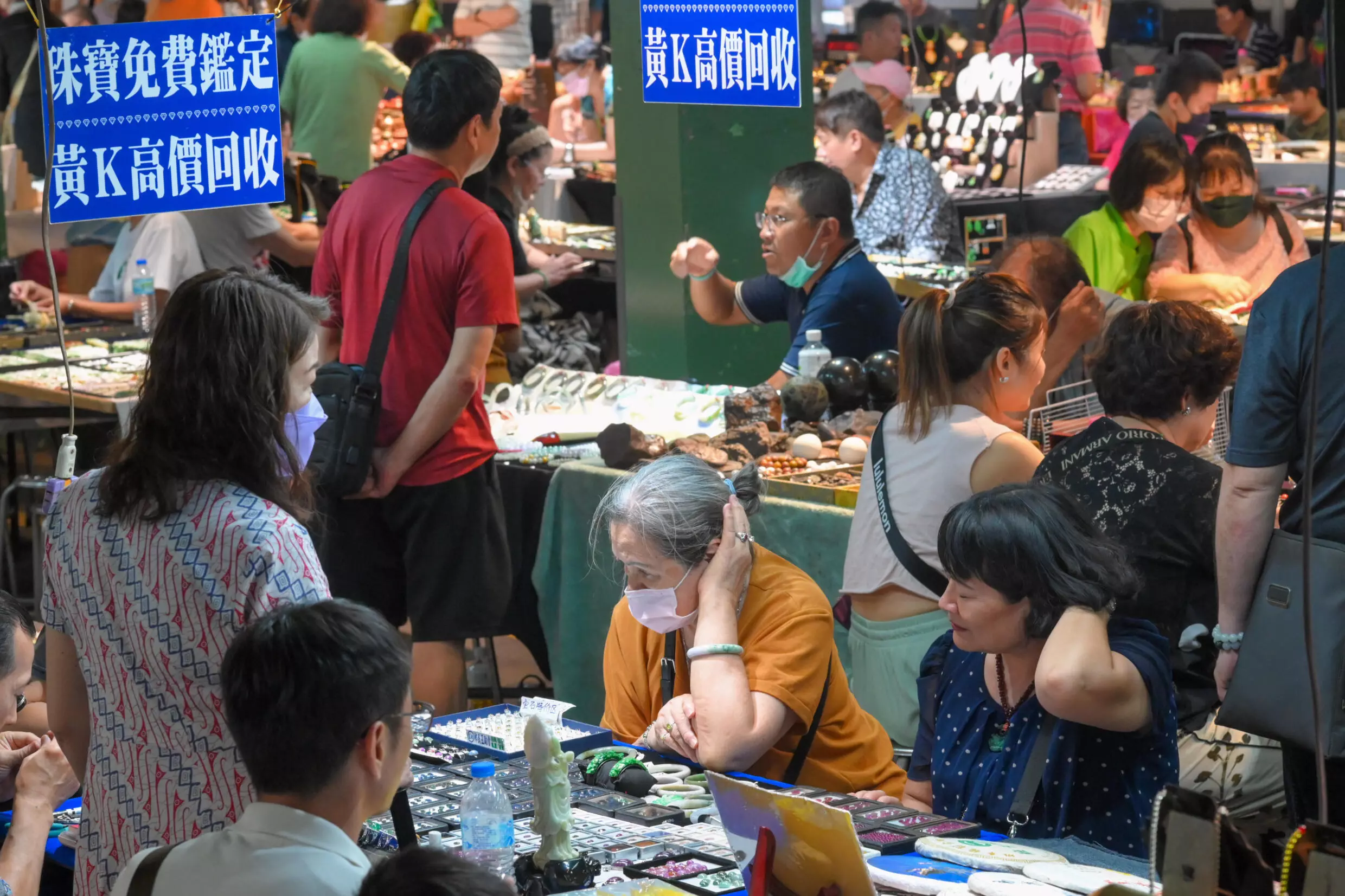

The intricate folds on the ears of a 400-year-old jade pig showcase the delicate craftsmanship of artisans from the Ming dynasty (1368-1644). This small masterpiece resides in the Taipei shop of a 60-year-old trader known simply as Mr. Lee. Lee’s shop, nestled in the Da’an district, houses antiques more valuable than the average condominium in the vicinity. Yet, the current value of these treasures only skims the surface of an industry that once amassed nearly US$16 million in annual sales before the global health crisis.
However, the post-pandemic era has cast a shadow over Taiwan’s antique jade industry. With the global economy grappling with the repercussions of Covid-19, buyers are hesitating to invest in high-priced items. The prolific rise in counterfeits further exacerbates their concerns. Adding to the woes, strained relations between Taipei and Beijing since President Tsai Ing-wen’s 2016 election have deterred mainland Chinese – the primary clientele – due to travel restrictions.
Decades ago, Taiwan was the epicenter for antique aficionados seeking Chinese relics, much before it garnered a reputation in the hi-tech semiconductor realm. As Liu San-bian, another trader, reminisces about the industry’s heyday almost a decade ago, he laments how political tensions have curbed cross-strait travels, thereby shrinking the market.
Historically, numerous antiques made their way to Taiwan and Hong Kong during the Cultural Revolution. The Chinese government views the sale of historical antiques as unlawful unless acquired through inheritance or authorized venues. Yet, Taiwan’s collectors often vouch for their acquisitions’ legitimacy, especially if they were personal possessions. Chang Juben, chairman of Taiwan’s Association of Jade Collectors, emphasizes the cultural significance of jade for the Chinese and acknowledges Taiwan’s standing in the global Chinese community for its rich jade collection.
Taiwan experienced a jade renaissance around 2011 during Ma Ying-jeou’s presidency. Chang recalls a surge of international buyers, particularly from China. Today, however, the market is merely a fraction of its past glory. In this dwindling market, authenticating genuine artifacts becomes increasingly challenging. Discerning collectors often resort to word-of-mouth referrals to navigate this treacherous landscape and maintain the integrity of their collections.
Meanwhile, in Hong Kong, Pola Antebi from Christie’s auction house observes a contrasting trend with Taiwanese antique collectors liquidating collections that were treasured for decades.
Despite the challenges, Taiwan’s antique jade traders remain steadfast. Lee’s unique shop, adorned with gleaming corals, serves clients through referrals. He believes that the industry will endure, emphasizing the paramount importance of authenticity and reputation.
READ MORE: