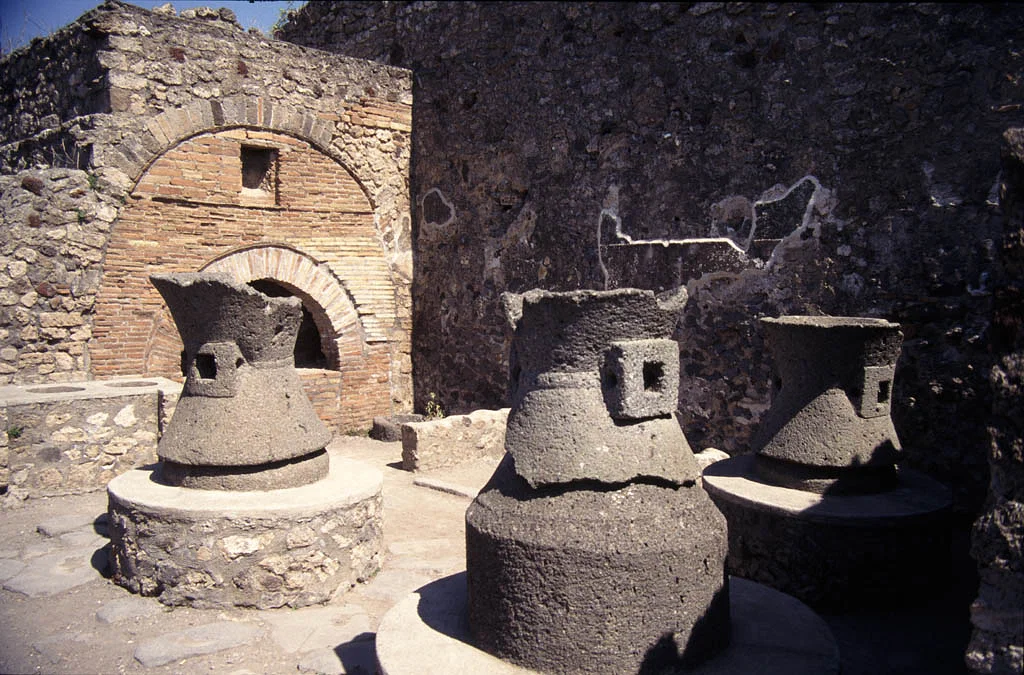

In a groundbreaking discovery, archaeologists excavating the ancient Roman city of Pompeii have unearthed a facility that functioned as both a bakery and a prison, offering a stark glimpse into the harsh realities of ancient slavery. This site, part of a larger project to stabilize and explore the unexcavated areas of Pompeii, reveals the extreme conditions under which slaves and animals were forced to operate.
The excavated structure, identified as a ‘bakery-prison,’ comprises a cramped, claustrophobic room devoid of any external views. The only glimpses of the outside world were through small, high-placed windows fitted with iron bars. This grim setting was where slaves and donkeys were confined to grind grain for hours on end, essential for bread-making – a staple in the Roman diet. The indentations in the floor indicate the constrained and repetitive movement patterns of the blindfolded animals.
Gabriel Zuchtriegel, the director of the Pompeii archaeological park, describes this find as a poignant reminder of the “brute violence” of ancient slavery. He emphasizes the need to envision this space filled with individuals of servile status, enduring the ruthless side of bondage in antiquity.
The bakery-prison was part of the service quarters of a larger residential complex, notable for its beautifully preserved frescoes. This juxtaposition of elegance and oppression within the same premises highlights the stark social disparities of the time.
This discovery follows another significant find made in August – a small bedroom in a nearby Roman villa. This room, almost certainly used by slaves, provides further insight into the living conditions and treatment of slaves in ancient Rome.
Pompeii, located near present-day Naples, Italy, was tragically engulfed by volcanic ash during the catastrophic eruption of Mount Vesuvius in AD 79. This natural disaster, which claimed thousands of lives, simultaneously preserved a snapshot of Roman life under layers of ash.
Recent archaeological activity at Pompeii, bolstered by a 105-million-euro EU-funded project, aims to combat the site’s long-standing deterioration and neglect. These efforts have not only stabilized the area but have also led to numerous significant archaeological discoveries, enriching our understanding of life, labor, and social structures in ancient Roman society.
READ MORE: