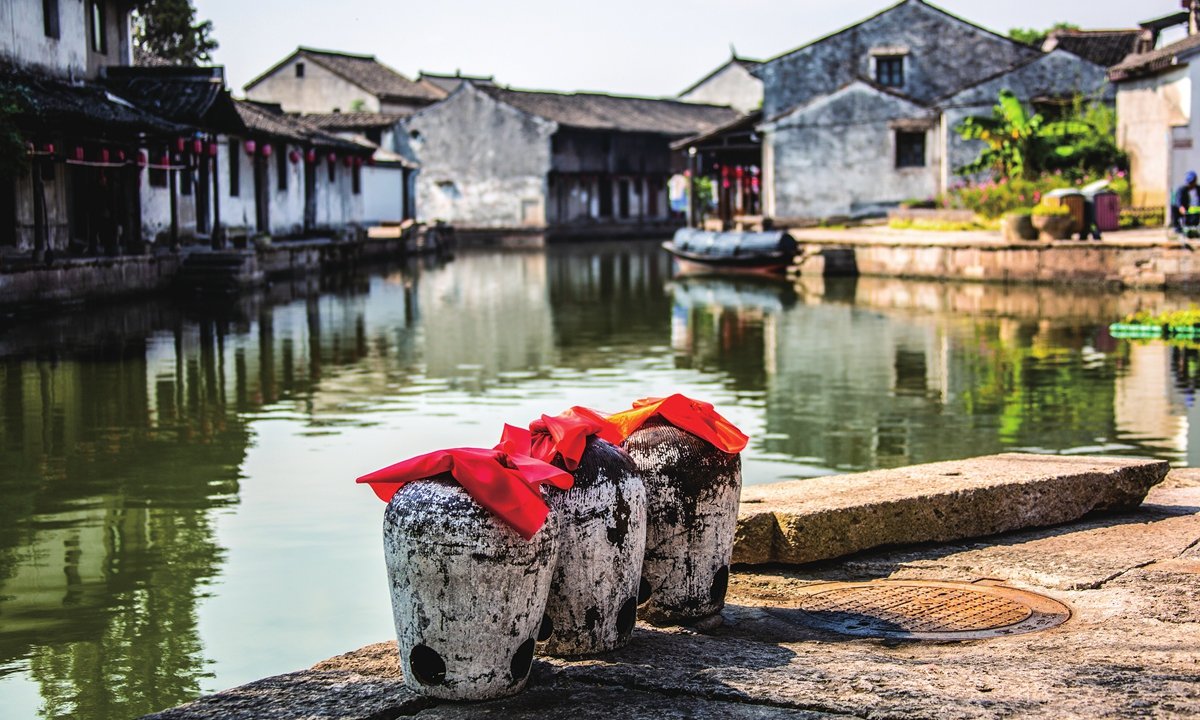

In the heart of East China’s Zhejiang Province lies Shaoxing, a city that comes alive with the aroma of freshly steamed glutinous rice as the Winter Solstice draws near. Here, the time-honored tradition of brewing Shaoxing yellow rice wine, a local specialty, is in full swing. The fragrance of this unique brew, deeply ingrained in the city’s culture, fills the wine workshops and narrow alleys, symbolizing a heritage that has been cherished for millennia.
Shaoxing yellow rice wine, characterized by its distinctive amber hue, has a history stretching over 3,000 years. This ancient beverage stands proudly alongside beer and wine as one of the world’s three oldest alcoholic drinks. For generations, the residents of Shaoxing have interwoven their daily lives with this exquisite wine. In times past, families would bury jars of this wine at a child’s birth, only to unearth them at the child’s wedding, symbolizing prosperity and continuity.
Today, wine jars can commonly be found at the doorsteps of homes in Shaoxing, reflecting the wine’s integral role in daily life, celebrations, and as a cherished gift. More than a beverage, Shaoxing yellow rice wine embodies the spirit and identity of the region.
Tracing its origins to the Shang Dynasty, the art of brewing yellow rice wine has evolved and flourished through the ages, with its techniques being listed as a national intangible cultural heritage in 2006. This recognition reflects the deep cultural significance of this craft, which remains a living tradition in Shaoxing.
The city is renowned as one of the largest production bases of yellow rice wine in China. Even today, locals adhere to traditional brewing methods, a testament to their commitment to preserving this ancient craft. The wine gained international fame a century ago, winning a gold medal at the 1915 Panama-Pacific International Exposition in San Francisco, further solidifying its place in the global cultural landscape.
More than 50 enterprises in Shaoxing are dedicated to the production and operation of yellow rice wine, contributing significantly to the local economy. Wang Jinjin, from a family with five generations of wine brewing experience, emphasizes that winter is the ideal season for crafting this wine, with the best batches produced in mid-winter.
The brewing process is a delicate and intricate one. It begins with soaking rice in the open air for over 12 days, allowing for natural fermentation. After steaming, the rice undergoes cooling and is then mixed with water and wheat distiller yeast in fermentation vats. Covered with woven lids and straw mats, the mixture is left to ferment, with ambient microorganisms playing a crucial role in the process. After initial fermentation, the wine lees are stored in clay jars for extended periods, followed by additional fermentation stages.
The resulting wine, characterized by its rich, mellow taste and golden color, is a product of patience and skill. But Shaoxing’s yellow rice wine is not just about tradition; it’s also about innovation. In an effort to popularize this beverage beyond its traditional uses, the local government established the Shaoxing Rice Wine Town in 2012. This cultural hub, located in the historic Dongpu Town, features exhibition halls, wine workshops, and inns, offering visitors a comprehensive experience of the wine’s history and production.
Wang’s workshop, situated in this town, has embraced modern methods to appeal to a younger audience, including live streaming and online videos to showcase the brewing process. Interactive experiences, such as hands-on brewing and tasting sessions, further engage visitors, allowing them to immerse themselves in the customs surrounding this ancient beverage.
Innovative products like yellow rice wine Xiaolongbao and mooncakes have also emerged, blending tradition with contemporary tastes. These efforts have not only preserved the legacy of Shaoxing yellow rice wine but have also introduced it to new generations, ensuring its continued relevance and appreciation.
In Shaoxing, sipping yellow rice wine is more than just a taste experience; it’s a journey through the rich tapestry of Chinese heritage, where each drop tells a story of tradition, craftsmanship, and cultural pride.
READ MORE: