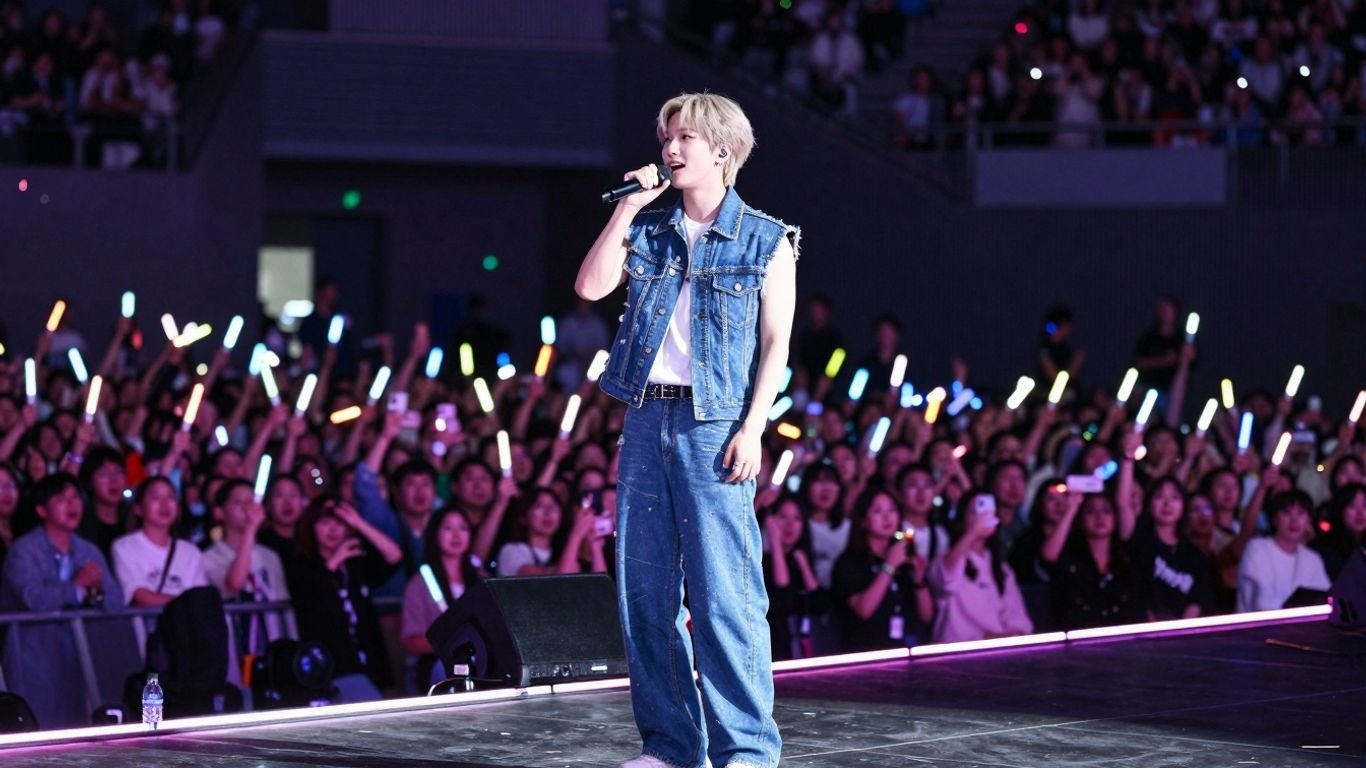

Reports suggest a potential easing of China’s long-standing unofficial ban on Korean pop culture, which has been in place for nearly a decade. This shift could signal a significant change in cultural exchange between the two nations, following years of strained relations.
Potential Resumption of K-Pop Concerts
A Hong Kong-based newspaper, Sing Tao Daily, reported that four major Korean entertainment agencies—JYP Entertainment, SM Entertainment, YG Entertainment, and HYBE—have received inquiries about holding K-pop concerts in China as early as next month. This development has fueled speculation that Beijing may be loosening its “Hallyu ban,” a policy that restricted Korean music, dramas, and films since 2016.
The unofficial ban was implemented in response to South Korea’s deployment of the U.S.-led Terminal High Altitude Area Defense (THAAD) antimissile system. The ban has significantly impacted the South Korean economy, with estimates suggesting losses of nearly $16 billion since its inception.
Diplomatic Undertones
This potential cultural opening comes at a time when China and South Korea are seeking to enhance mutual understanding. Chinese President Xi Jinping, during a state visit in October, called for “healthy and productive people-to-people exchanges.” South Korean President Lee Jae Myung echoed this sentiment, expressing a desire to strengthen cooperation and expand exchanges between the two countries.
While the South Korean presidential office has stated that no plans are finalized, the inquiries to the entertainment agencies suggest a serious consideration of resuming large-scale cultural events. The possibility of a K-pop concert in Beijing is being viewed as a symbolic step toward lifting the restrictions.
Public and Industry Reaction
News of the potential thaw has generated considerable buzz on Chinese social media. Hashtags related to K-pop concerts in China have garnered millions of views on platforms like Weibo. Public reaction appears mixed, with a significant portion of netizens expressing opposition due to concerns over cultural security and political sensitivity, while others show positive interest.
Industry insiders are observing the developments with cautious optimism. A cultural industry official in Beijing noted that such decisions are not solely up to the private sector, indicating that government approval remains crucial. Despite past cancellations, such as the EPEX concert in May, there are ongoing signs of gradual reopening, including performances by other Korean acts and plans for a large-scale concert in Hainan province.