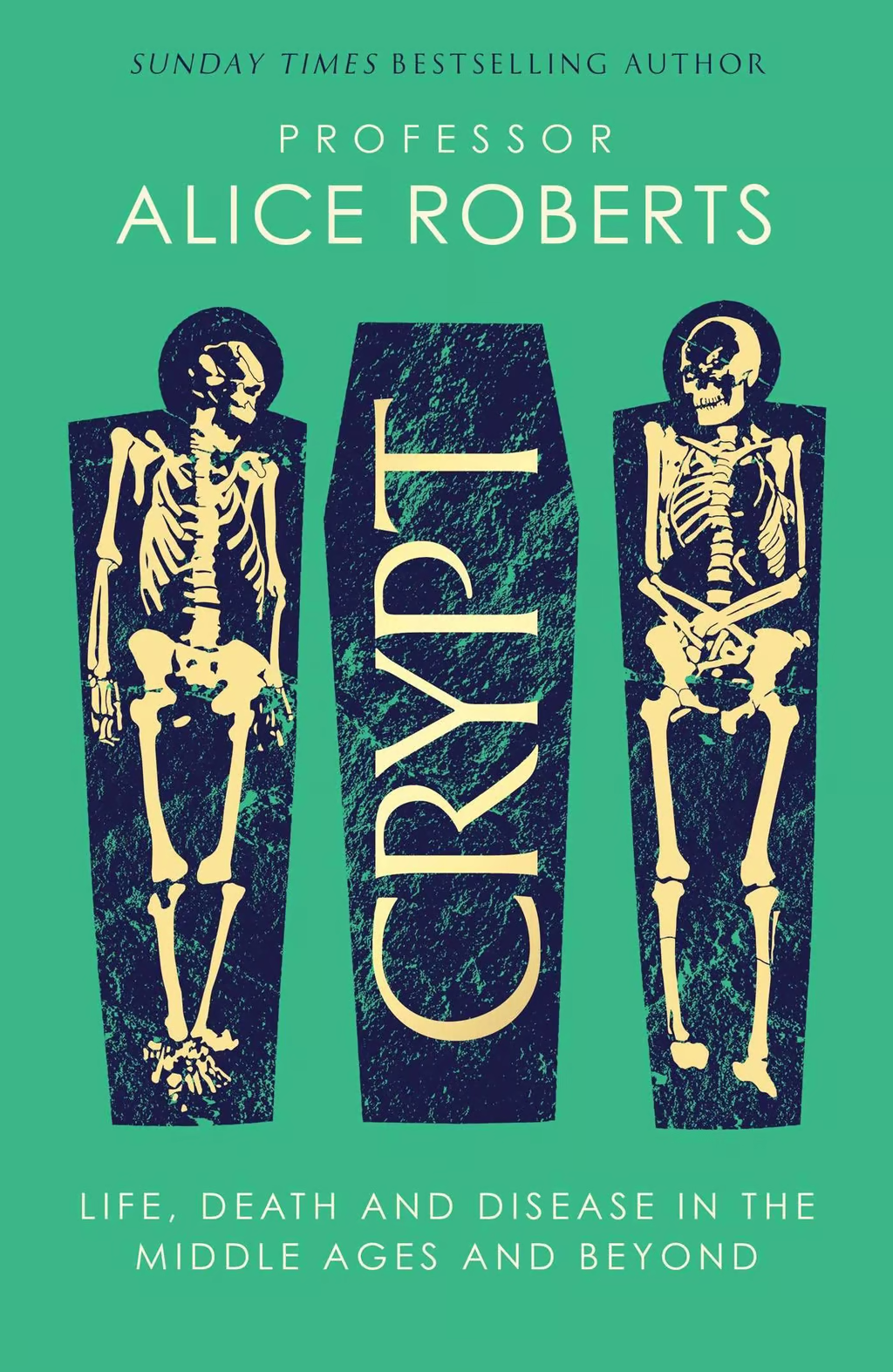

For scientist, author, and television presenter Alice Roberts, bones are more than relics of the past—they are vital clues to understanding human history. As a professor of public engagement in science at Birmingham University and an expert in palaeopathology, Roberts specializes in studying ancient diseases through skeletal remains.
Her latest book, Crypt: Life, Death and Disease in the Middle Ages, explores how osteoarchaeology and palaeogenetics provide a deeper understanding of the lives and health of people from medieval times. Rather than simply supplementing historical records, Roberts argues that these scientific disciplines challenge long-held assumptions, forcing historians to reevaluate the past.
“It’s not just illustrating history or filling in details,” she explains. “It’s about overturning assumptions and gaining new insights through scientific analysis.”
One of the book’s most compelling revelations concerns the Black Death. Traditionally, historians believed that the bubonic plague spread through flea-infested rats. However, palaeogenetic studies have revealed that human body lice also played a significant role in transmitting the disease. Such findings are not just historically significant—they also help modern scientists understand how pandemics evolve and spread.
Roberts describes the process as akin to medical diagnosis. By extracting ancient DNA from skeletons, researchers can analyze not only the victims but also the pathogens that caused their deaths. This method allows scientists to trace the mutations of diseases over centuries, comparing ancient strains with modern ones.
Leprosy, another devastating medieval disease, is a prime example. Osteoarchaeologists can easily identify leprosy in skeletal remains due to its unique effect on facial bones and extremities. Today, DNA testing enables early diagnosis, allowing for treatment before symptoms appear. Roberts highlights how advances in medical science have made it possible to fight diseases that were once untreatable.
“It makes you feel very lucky to be alive in the 21st century, with all its amazing medical science,” she reflects.
Roberts’ research underscores the importance of using science to uncover the realities of the past while providing valuable lessons for the present. By bridging the gap between biology and history, Crypt offers a fascinating look at how diseases have shaped human civilization—and how modern science is helping to fight them.
READ MORE: