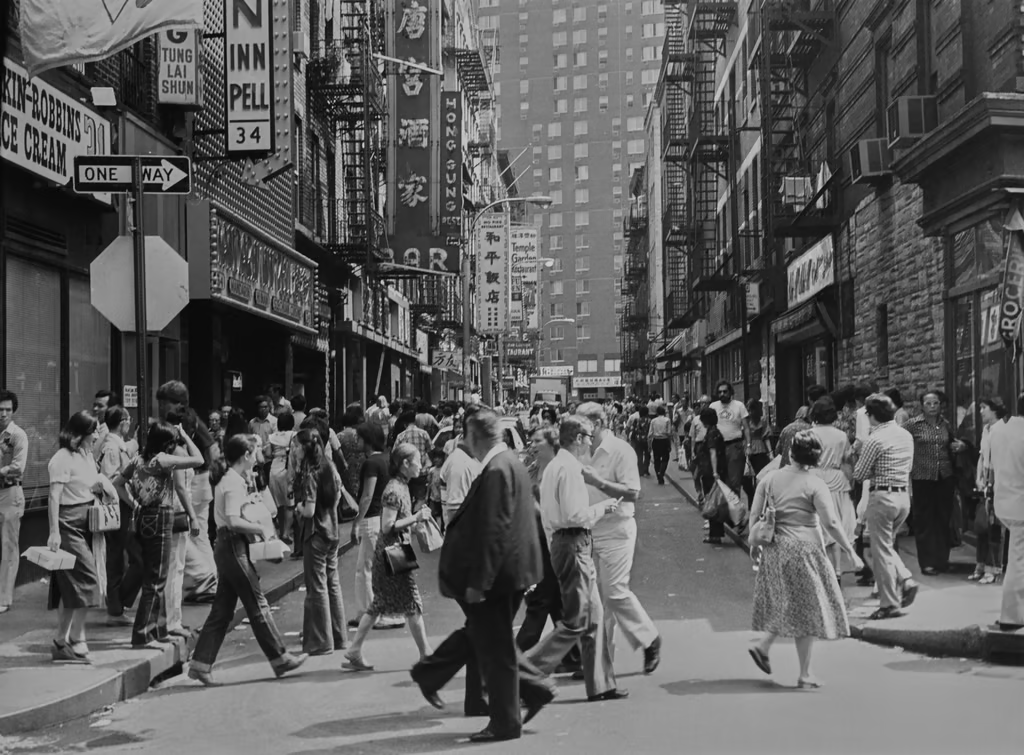

New York City is renowned for its rich cultural diversity, and its Chinese population has played a pivotal role in shaping the city’s identity. Among the most prominent areas housing Chinese communities is Chinatown, which has become an iconic part of Lower Manhattan. Established as one of the earliest Chinese enclaves in the United States, Chinatown’s population grew significantly throughout the 20th century. At its peak, it was home to over 100,000 residents, most of whom came from mainland China’s Guangdong and Fujian provinces, as well as from Hong Kong.
This neighborhood became a bustling center of Chinese culture, filled with markets, restaurants, and businesses that attracted both immigrants and curious visitors alike. Over time, Chinatown became a vibrant, self-sustaining community, with generations of families living and working in the same area. It was a place where immigrants could maintain their traditions while also integrating into American society.
However, recent years have seen a significant shift in the population of Chinatown. According to a report from New York’s Department of Small Business Services, the once-thriving community has seen a steady decline in its population, with estimates now putting the number of residents at less than 60,000. Several factors have contributed to this reduction, including gentrification, the rising cost of living, and a movement of residents to other areas in the city or beyond. Additionally, the neighborhood’s historical role as a gateway for new immigrants has diminished, as newer generations of Chinese Americans move to different boroughs or states in search of affordable housing and better opportunities.
This demographic shift is reflective of broader urban trends in New York City, where long-standing immigrant communities are increasingly feeling the pressure of rising living costs and changing city landscapes. While Chinatown still retains its cultural and historical significance, the population change signals a transformation in how Chinese New Yorkers interact with the city and its evolving identity. The decline of Chinatown’s population is a poignant reminder of the constant shifts happening in cities as they grow, change, and adapt to new challenges.
READ MORE: