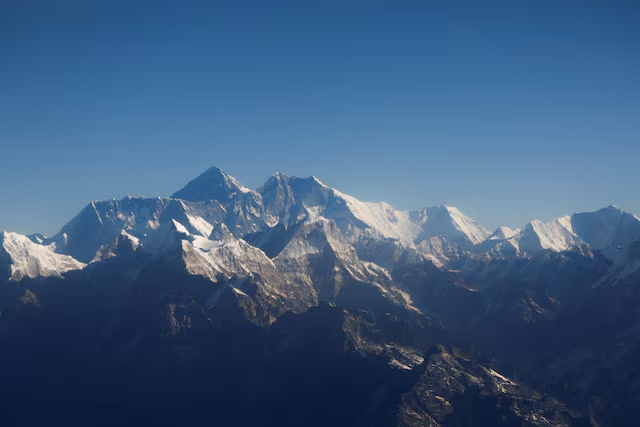

Four British climbers have become the first to summit Mount Everest using Xenon gas, significantly reducing the usual acclimatisation period required to adjust to high altitudes. Traditionally, climbers spend several weeks or even months gradually ascending the mountain to allow their bodies to adapt to the reduced oxygen levels found at extreme heights, which is crucial to avoid life-threatening altitude sickness. However, this team managed to reach the 8,848-meter (29,032-foot) peak in under five days after departing from London, thanks to a new approach involving Xenon gas.
The climbers inhaled Xenon gas in Germany prior to the expedition to aid their acclimatisation. Additionally, they prepared by sleeping in special tents designed to simulate high-altitude conditions at home, helping their bodies get accustomed to the environment before even arriving on Everest. During the climb, they also used supplemental oxygen like other mountaineers to further support their ascent.
Xenon is a colourless, odourless gas present in trace amounts in Earth’s atmosphere. It has known anaesthetic and medical properties. According to Lukas Furtenbach of the Austria-based company Furtenbach Adventures, which organised the expedition, Xenon helps improve acclimatisation and protects the body from altitude sickness and the harmful effects of hypoxia—the low oxygen environment experienced at high altitudes. Furtenbach, an experienced climber with four Everest ascents, explained that while guides have used Xenon before, this is the first time it has been employed by ordinary climbers, or clients.
The use of Xenon has made the climb safer and shorter by helping climbers maintain proper acclimatisation without spending prolonged periods on the mountain. Furtenbach also highlighted the environmental benefits of shorter expeditions, as they generate less waste, require fewer resources, and reduce human impact on the fragile mountain ecosystem. The accumulation of garbage and human waste on Everest has been a growing concern in recent years.
However, not everyone in the climbing community embraces this approach. American climber and guide Adrian Ballinger, known for his work with Alpenglow Expeditions, dismissed the use of Xenon as a “stunt,” saying it does not align with the traditional climbing experience many seek. He emphasized that climbers should choose styles of ascent they feel proud of, leaving the decision to individuals.
During the current climbing season, Nepal has issued permits to 468 climbers aiming to summit Everest, with over 200 already reaching the peak.
READ MORE: