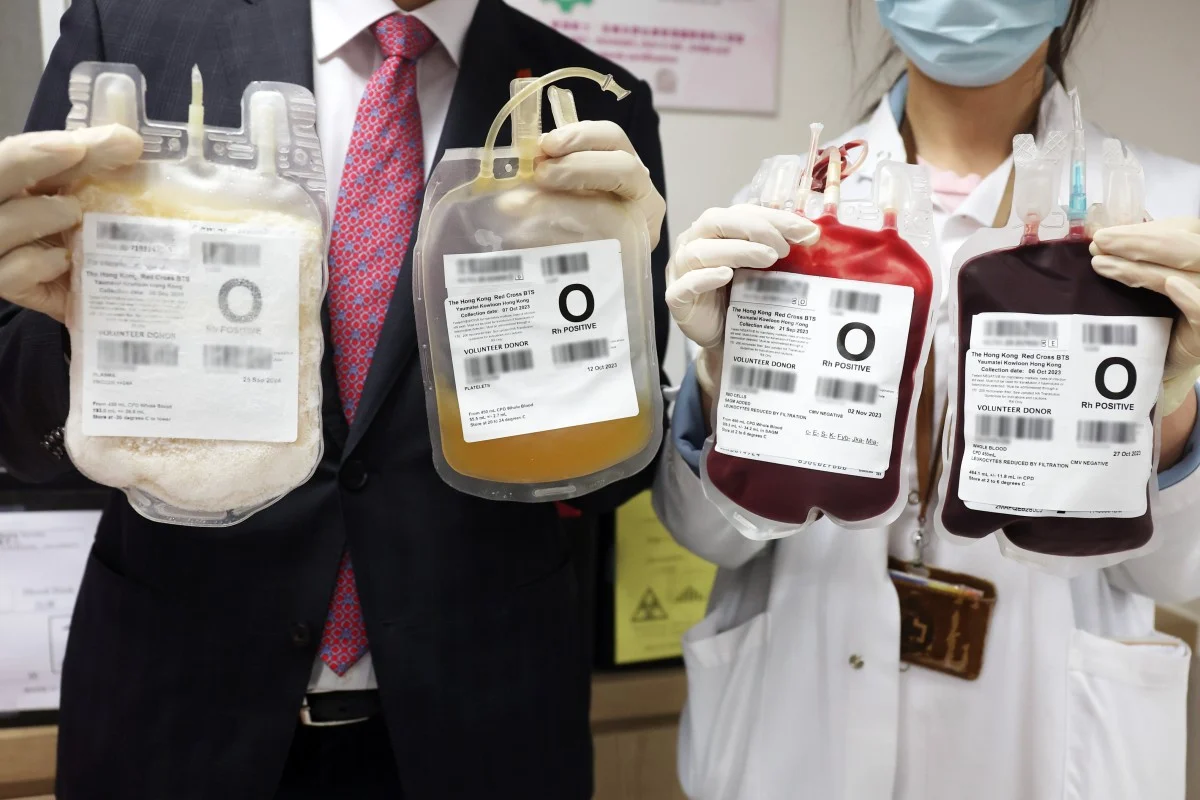

The Hong Kong Red Cross has raised the haemoglobin threshold for female blood donors for the first time in 30 years, reflecting improved donor health and a significant decline in rejections due to low haemoglobin. Starting May 27, the minimum haemoglobin level for female donors will increase from 11.5–12 grams per decilitre (g/dl) to a range of 12 g/dl to 16.5 g/dl. The threshold for male donors will remain unchanged.
Dr. Lee Cheuk-kwong, Chief Executive and Medical Director of the Hong Kong Red Cross Blood Transfusion Service, explained that the change follows a notable reduction in donor deferrals caused by insufficient haemoglobin—from nearly 40,000 in 2015 to 10,000 in 2024. He attributed this improvement largely to a decade-long education and awareness campaign promoting better health and nutrition among donors.
Currently, about 10 out of every 70 donors are rejected daily due to low haemoglobin. With the raised threshold, Dr. Lee estimated around 10 additional female donors might be turned away each day. However, he expects this number to be lower as more people become informed about iron absorption and enhance their diets.
Other common reasons for deferral include recent overseas travel, prescribed medication, and illness such as the flu. Dr. Lee urged the public to focus on dietary choices, highlighting the importance of at least one relaxed, home-cooked meal daily to improve iron intake.
Dr. Jacky Kwong Shun-yin, Head of Blood Collection at the Red Cross, explained haemoglobin’s role in oxygen transport and emphasized iron as its critical component. A Department of Health survey last July found that 17.5% of females aged 15 to 49 suffer from iron deficiency, mainly due to menstruation and childbearing.
In response, the Blood Transfusion Service released “Iron Feast 2.0,” a collection of iron-rich recipes adapted for Hong Kong’s fast-paced lifestyle. Dr. Lee advised simple lifestyle changes, such as avoiding coffee and tea two hours before or after meals, eating seafood, and increasing vitamin C intake, to enhance iron absorption.
The Hong Kong Red Cross collected 215,522 units of blood in 2024, slightly below the 227,334 units collected in 2019 before the pandemic. Dr. Lee anticipates rising blood demand despite improved efficiency in usage and encourages both regular and first-time donors to participate to meet future needs.
READ MORE: