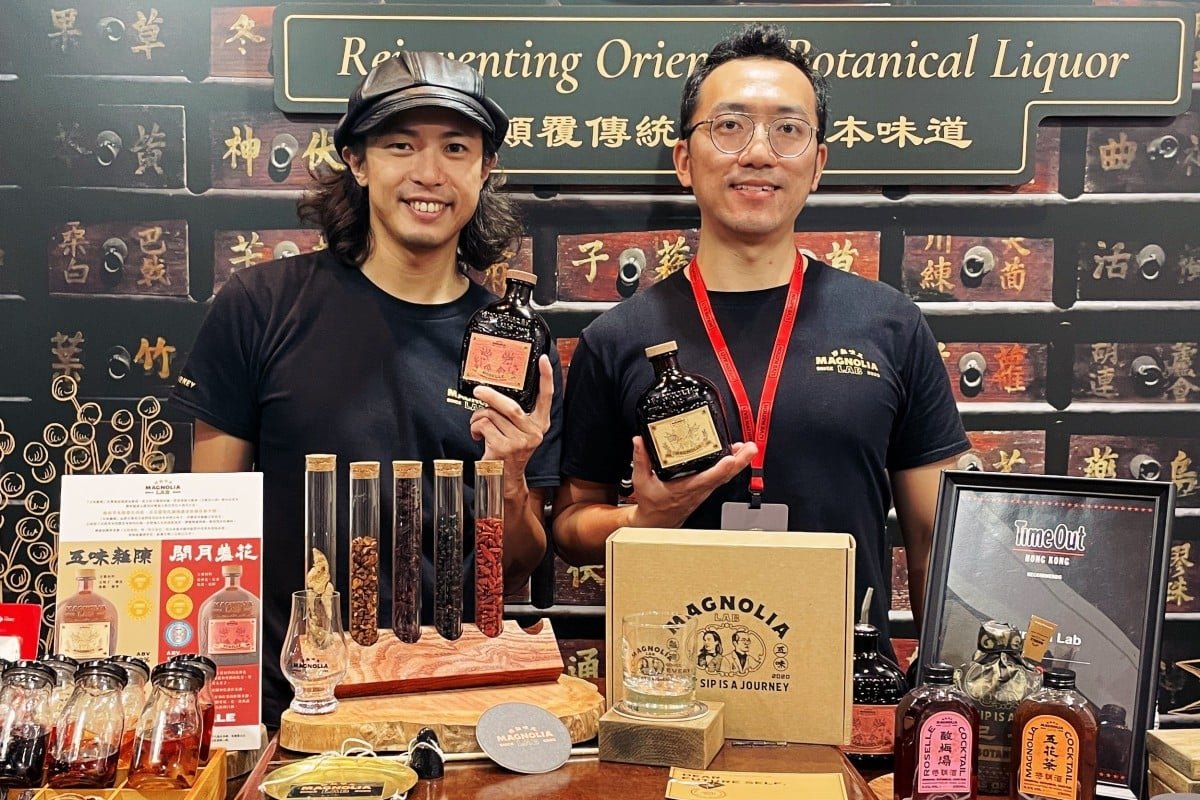

Once a staple in Hong Kong households, medicinal wines—infused with traditional Chinese medicine (TCM) ingredients—have nearly vanished from daily life. These herbal concoctions, once consumed for wellness by people from all walks of life, lined supermarket shelves up through the 1980s and ’90s. Now, a new generation is rediscovering their roots thanks to bartender Dennis Mak and TCM practitioner James Ting, co-founders of Magnolia Lab.
The pair launched the brand in 2019 with the intention of preserving and modernizing Chinese medicinal wines. Inspired by Mak’s childhood memories of his mother infusing her own herbal wine at home—one bottle left to steep for over 20 years—they decided to reintroduce these forgotten elixirs in a more contemporary format.
Mak believes the cultural value of these wines runs deep, and that they deserve a place in today’s drinking culture. “Spirits like gin, tonic, and even Jägermeister all started as medicinal remedies,” he notes. “Why shouldn’t Chinese medicinal wines have the same opportunity for revival?”
Historically, Chinese medicinal wines date back thousands of years, even appearing in writings from the Shang dynasty. During the Ming dynasty, physician Li Shizhen recorded hundreds of recipes that shaped the use of herbal wines in TCM. According to modern practitioners like Samuel To Ching-san, alcohol in these brews enhances the delivery of herbal benefits, aiding in faster absorption and more effective treatment.
Magnolia Lab currently offers two flagship liqueurs: Magnolia and Roselle. Magnolia blends aged tangerine peel, mulberries, sandalwood, and magnolia berries into a bittersweet, earthy spirit. Roselle incorporates jujube, ginger, and dong quai, known for their roles in women’s health and digestion. Both drinks pair well with gin and are designed to appeal to modern palates without sacrificing TCM integrity.
To showcase their products, the duo has hosted pop-ups at venues across Hong Kong, including local bars and even trams. At a recent event, cocktails featured ingredients like goji berry, mulberry, and lavender, seamlessly blending wellness traditions with mixology trends.
Mak hopes to reframe how locals think about these age-old remedies. “Our goal is to reintroduce familiar flavors from Hong Kong’s culture in a format that resonates with today’s drinkers,” he says. “It’s about creating affinity, not nostalgia.”
READ MORE: