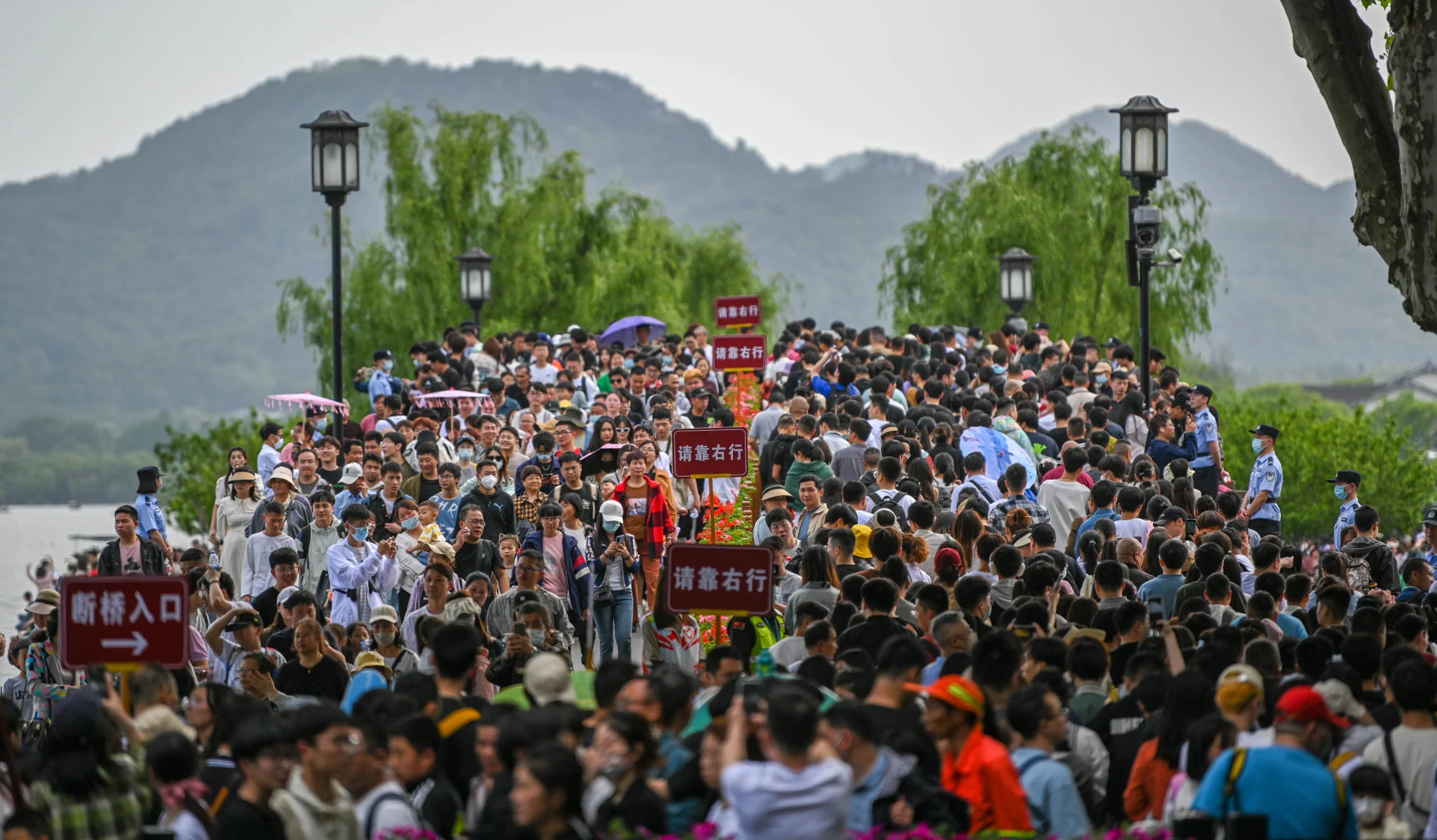

Nearly 10 months after China reopened its borders to international visitors, and almost a year since the lifting of outbound travel warnings for its citizens, the country’s travel and tourism landscape is experiencing a significant transformation. Although international travel to and from China has not yet returned to pre-pandemic levels, there has been a noticeable surge in domestic tourism.
Historically, the travel and tourism sector has been a substantial contributor to China’s economy. In 2019, the industry accounted for 11.6% of the nation’s GDP, employing 82 million people and generating US$1.8 trillion. However, in 2023, these numbers slightly dipped, with the sector contributing 7.8% to the economy and employing approximately 74 million people in an industry valued at US$1.48 trillion.
China’s international travel recovery has been slower compared to the global pace, primarily due to limited airlift capacity and complex visa requirements. The Russian airspace issue, particularly impacting flights from the U.S., has further complicated travel logistics, leading to longer travel times and reduced airlift.
Efforts to boost inbound travel include visa-free entry for travelers from several European countries and Malaysia, along with simplified visa procedures for U.S. tourists. However, outbound Chinese tourists face challenges in obtaining visas, partly due to understaffed embassies and expired passports. These are seen as temporary hurdles, slightly delaying the recovery process.
Domestic travel in China has notably outperformed 2019 levels. Travel data provider OAG reports that domestic airlift capacity in November reached 118% of the 2019 figure. This resurgence is influenced by changing customer behavior, with an increased interest in cultural experiences, scenic beauty, and historical significance.
Travelers are exploring secondary and tertiary cities like Chengdu, Hangzhou, Changsha, and Nanjing, attracted by their lower costs and rich cultural offerings. Key Opinion Leaders (KOLs) on Chinese social media platforms have played a significant role in highlighting cultural and historical aspects of these lesser-known cities.
Post-pandemic, there’s a growing emphasis on sustainable travel and ‘bleisure’ (a blend of business and leisure travel). Younger travelers, in particular, are prioritizing local and organic food choices and eco-friendly transportation. Hotels and other hospitality services are responding by focusing on sustainable practices like reducing plastic use, minimizing food waste, and optimizing energy consumption.
Looking ahead, China’s travel industry is poised for robust growth. The return of international events and an increase in airlift capacity are expected to further drive inbound travel. The industry is forecasted to surpass the United States as the world’s largest travel and tourism economy within a decade, with the sector potentially contributing over 14% to China’s economy and employing 105 million people.
In conclusion, China’s travel and tourism sector is navigating a period of recovery and transformation. While international travel slowly regains momentum, domestic tourism is thriving, influenced by new trends and changing consumer preferences. This resurgence is a testament to the sector’s resilience and adaptability, positioning it for significant growth in the coming years.
READ MORE: