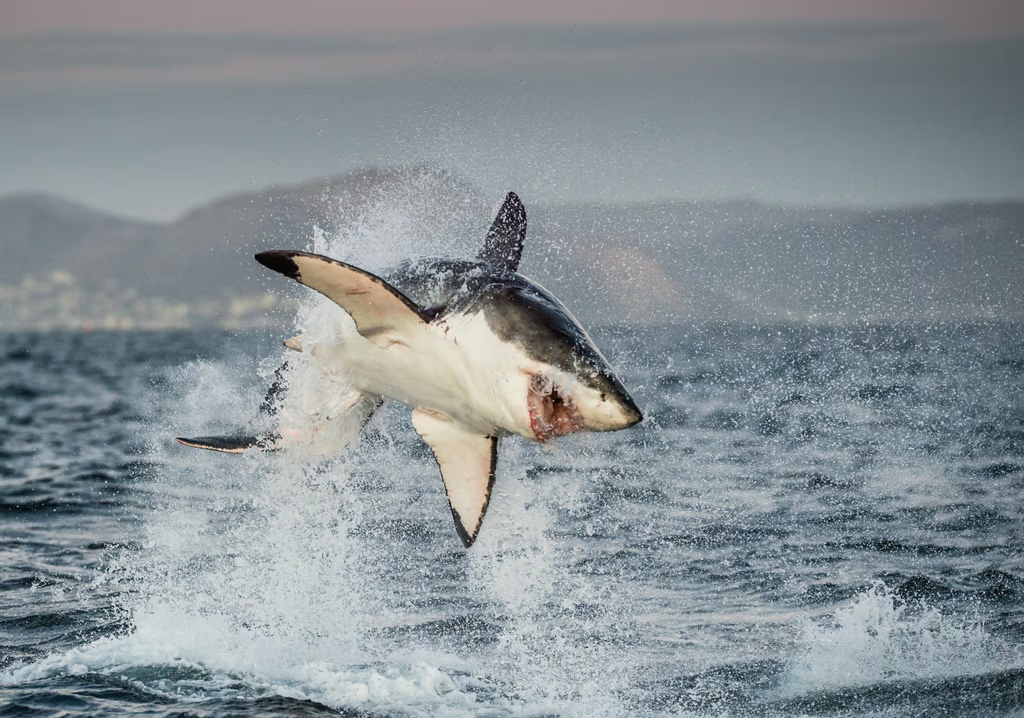

In films like Jaws, sharks are often depicted as ruthless killers, but in reality, shark attacks on humans are extremely rare. According to the International Shark Attack File (ISAF), only 57 unprovoked shark attacks were recorded worldwide in 2022, with just five fatalities. This low risk doesn’t align with the fear many people still feel toward these marine predators.
One reason for this fear is the way sharks are portrayed in popular culture. Species like great white sharks and tiger sharks, with their large bodies and toothy grins, resemble the monsters often depicted in movies. Additionally, the idea of being eaten alive is inherently terrifying, amplifying the fear even though many land animals pose far more danger to humans.
Another factor contributing to shark fear is the mysterious and often unpredictable nature of the ocean. In the water, we lack control and visibility, making us feel vulnerable to unseen threats. While land animals such as snakes or mosquitoes are equally dangerous, we have more control over these situations, and they do not evoke the same primal fear as an underwater predator.
Some shark attacks can result from mistaken identity. Sharks may confuse swimmers or surfers for seals or other prey. For example, animal carcasses disposed of in the ocean can lure sharks closer to shore, where they may misidentify humans as food. Surfers, in particular, are at risk because their boards can resemble seals from below, leading to accidental attacks. Sharks often “test bite” their prey, and while they usually swim away after realizing a human is not their intended target, the initial bite can still cause serious injury.
If you encounter a shark in the water, it’s important to stay calm. Most shark species pose no threat to humans, with only a dozen considered dangerous. The great white, tiger, and bull sharks are the primary species responsible for fatal attacks. When faced with a large shark, avoid sudden movements or splashing, and try to maintain eye contact while slowly swimming away. If a shark attacks, aim for its sensory organs like the eyes or gills, though striking a shark’s nose may be less effective than depicted in movies.
In the end, sharks are not the monstrous predators they are often made out to be. With knowledge and calmness, humans and sharks can coexist safely in the ocean.
READ MORE: