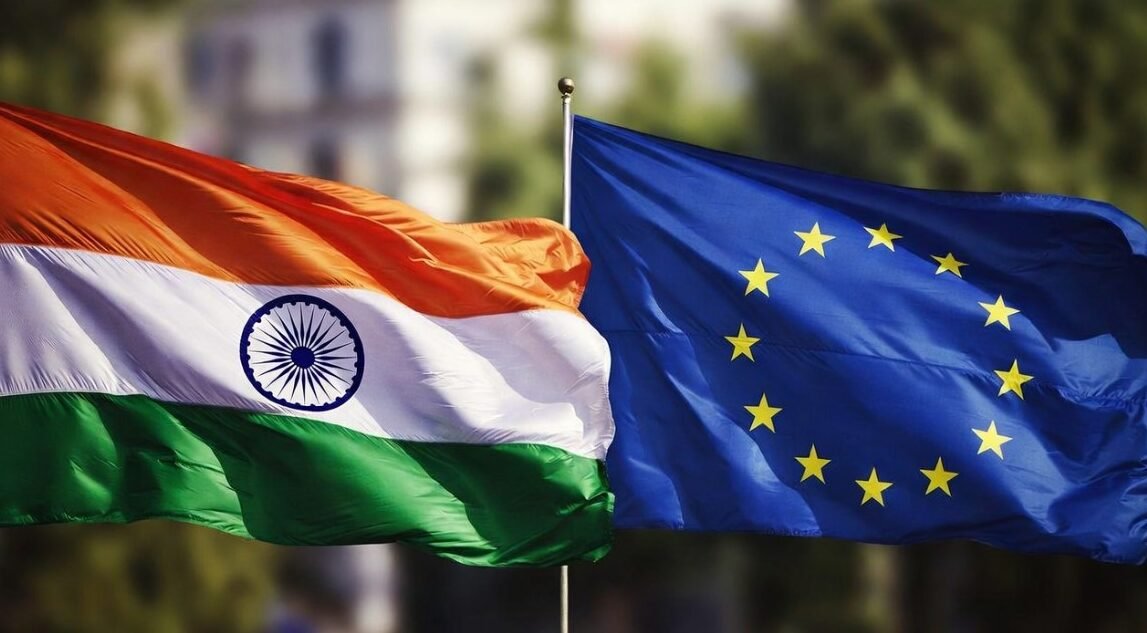

EU leaders have arrived in India for a high-stakes push to finalize a major trade agreement that Brussels believes could transform European access to one of the world’s fastest-growing markets.
European officials described the negotiations as the “mother of all deals,” arguing that a breakthrough would open India’s market far wider to EU companies and help Europe diversify trade relationships at a time of rising global uncertainty. The agreement is expected to cover a wide range of areas including goods, services, investment, and regulatory cooperation, with the aim of reducing barriers that have long limited European expansion in India.
The visit comes as both sides face strong incentives to deepen economic ties. For the EU, India represents a huge opportunity for exports and partnerships in sectors such as manufacturing, technology, energy transition, infrastructure, and pharmaceuticals. For India, a stronger trade framework with Europe could accelerate investment, strengthen supply chains, and expand access to high-end technology and industrial cooperation.
Beyond economics, the deal carries heavy geopolitical symbolism. European officials see closer EU-India alignment as a way to show that global trade and diplomacy still have alternatives in a world increasingly shaped by US-China rivalry and shifting alliances. It also reflects Europe’s broader effort to build strategic partnerships across Asia rather than relying too heavily on traditional transatlantic trade routes.
If signed, the agreement would mark one of the EU’s most significant trade moves in years — and one of the biggest attempts yet to reshape the balance of global commerce through deeper EU-India engagement.