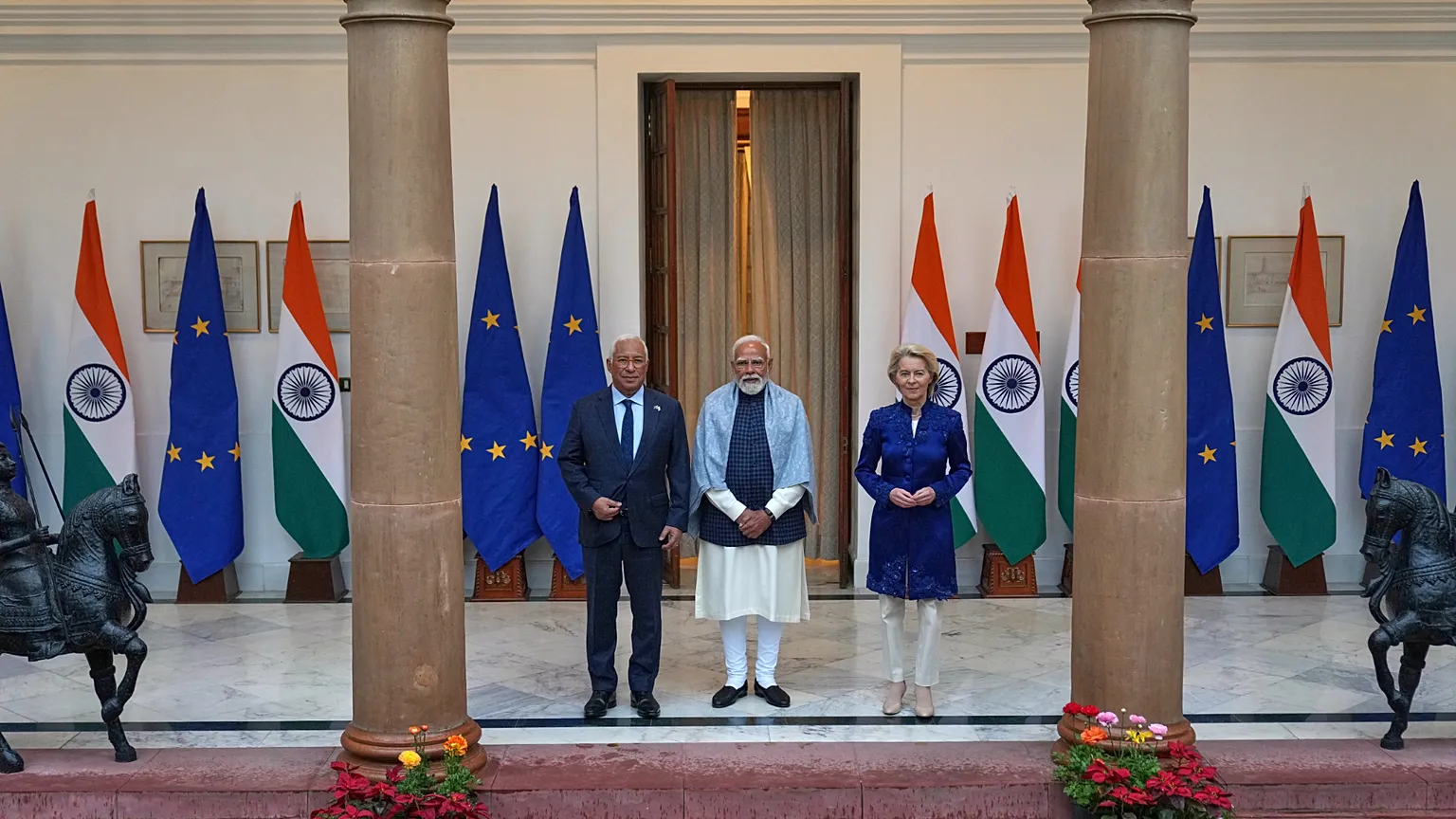

The European Union and India have finalized a long-awaited free trade agreement, closing years of on-and-off negotiations and launching what leaders described as one of the most consequential trade pacts either side has signed.
European Commission President Ursula von der Leyen called it the “mother of all deals,” as the agreement aims to reduce or remove tariffs on 96.6% of traded goods by value and deepen access for services and investment across a combined market of around 2 billion people.
One of the biggest commercial wins for Europe is the phased reduction of India’s steep car import tariffs. Under the deal, tariffs that currently reach 110% are set to fall sharply over time, ultimately dropping to 10% over five years, a shift expected to benefit European automakers and suppliers.
For India, the EU will remove tariffs on the majority of Indian goods at the start of the deal, rising further over the next several years, giving stronger access for exports such as textiles, leather, gems and jewellery, seafood, and pharmaceuticals.
The pact also includes broader cooperation beyond tariffs, including digital trade provisions, sustainability language and dispute-resolution mechanisms. Some sensitive sectors remain protected through quotas or exclusions, reflecting the political limits on both sides.
Ratification is still required, including approvals through EU institutions and India’s internal process, meaning the agreement will not be fully operational immediately.