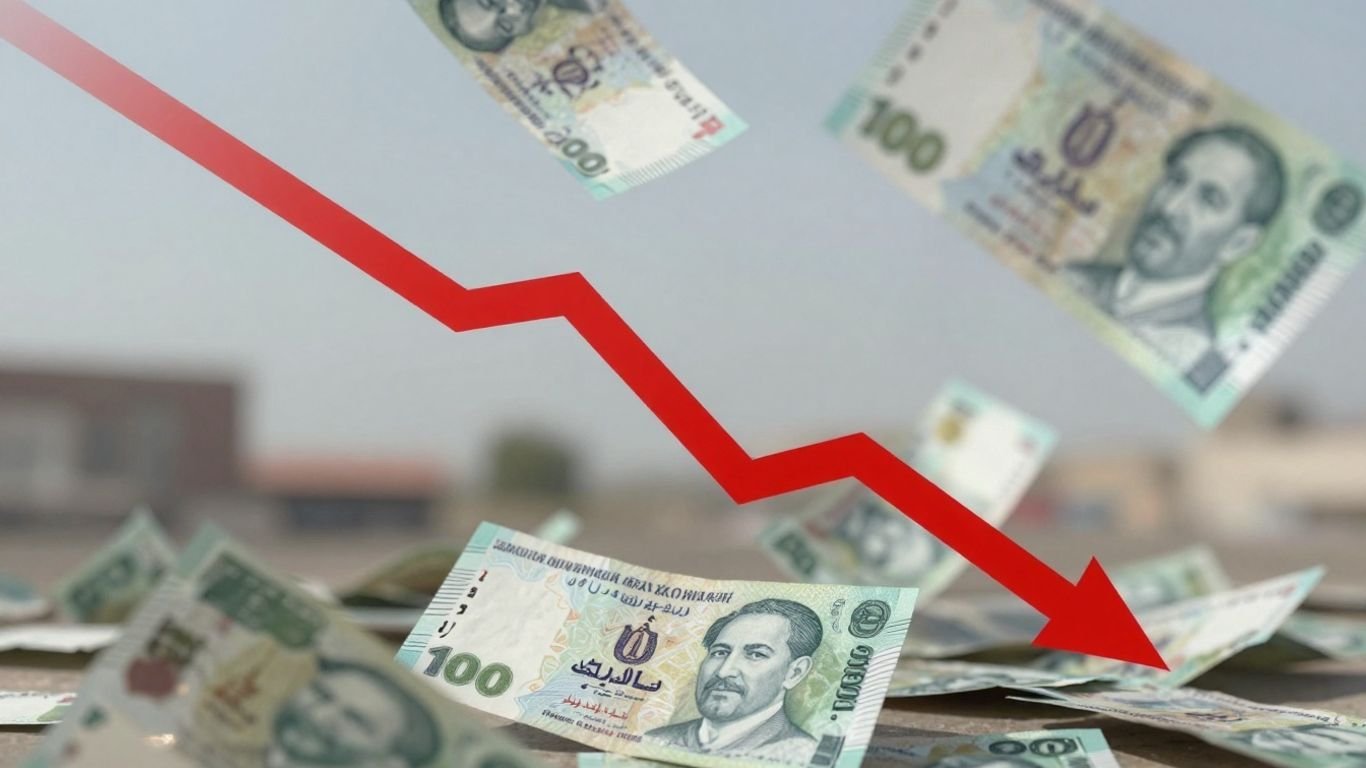

Iran’s currency, the rial, has hit an all-time low against the US dollar, trading at approximately 1.5 million rials per dollar. This significant depreciation comes as the nation grapples with ongoing nationwide protests, fueled by economic hardship, and heightened international tensions. The weakening rial exacerbates the financial struggles of many Iranians, who are already contending with decades of economic mismanagement and international sanctions.
The Iranian rial’s value has seen a dramatic decline, reaching a new low of approximately 1.5 million to the US dollar on the unofficial market. This currency crisis has been a major catalyst for widespread protests that have swept across Iran. Shopkeepers in Tehran’s Grand Bazaar previously closed their stores in protest against the rial’s dwindling value, hyperinflation, and the government’s decision to end certain subsidies for food and fuel.
The demonstrations, which began in late December, quickly spread nationwide, with protesters calling for political change. These protests have been met with a severe crackdown by Iranian security forces. Reports indicate a significant death toll, with varying figures from government sources and human rights organizations. The country also experienced an extensive internet blackout, the longest in its history, during this period.
Adding to the economic instability are escalating tensions with the United States and Israel. The US has increased its military presence in the region, deploying naval assets near Iran. Iranian-aligned groups in the Middle East have signaled their readiness to launch new attacks, potentially in response to threats of military action from the US. Despite the heightened rhetoric, US President Donald Trump has also indicated that diplomacy remains an option.
Iran’s economy has been significantly impacted by international sanctions imposed over its nuclear program. The government has accused external forces of exacerbating the protests, while struggling to address the nation’s ailing economy. In an effort to combat inflation, Iran’s parliament had previously approved a plan to remove four digits from the currency, a process expected to take several years.
Intelligence reports suggest that the Islamic Republic’s grip on power may be at its weakest point since the 1979 revolution. The ongoing protests, initially sparked by economic grievances, have broadened in scope, reflecting deep dissatisfaction with the current regime. The government’s response, including a clampdown on dissent and internet restrictions, has further eroded public confidence. Authorities have reported numerous arrests in connection with the protests.