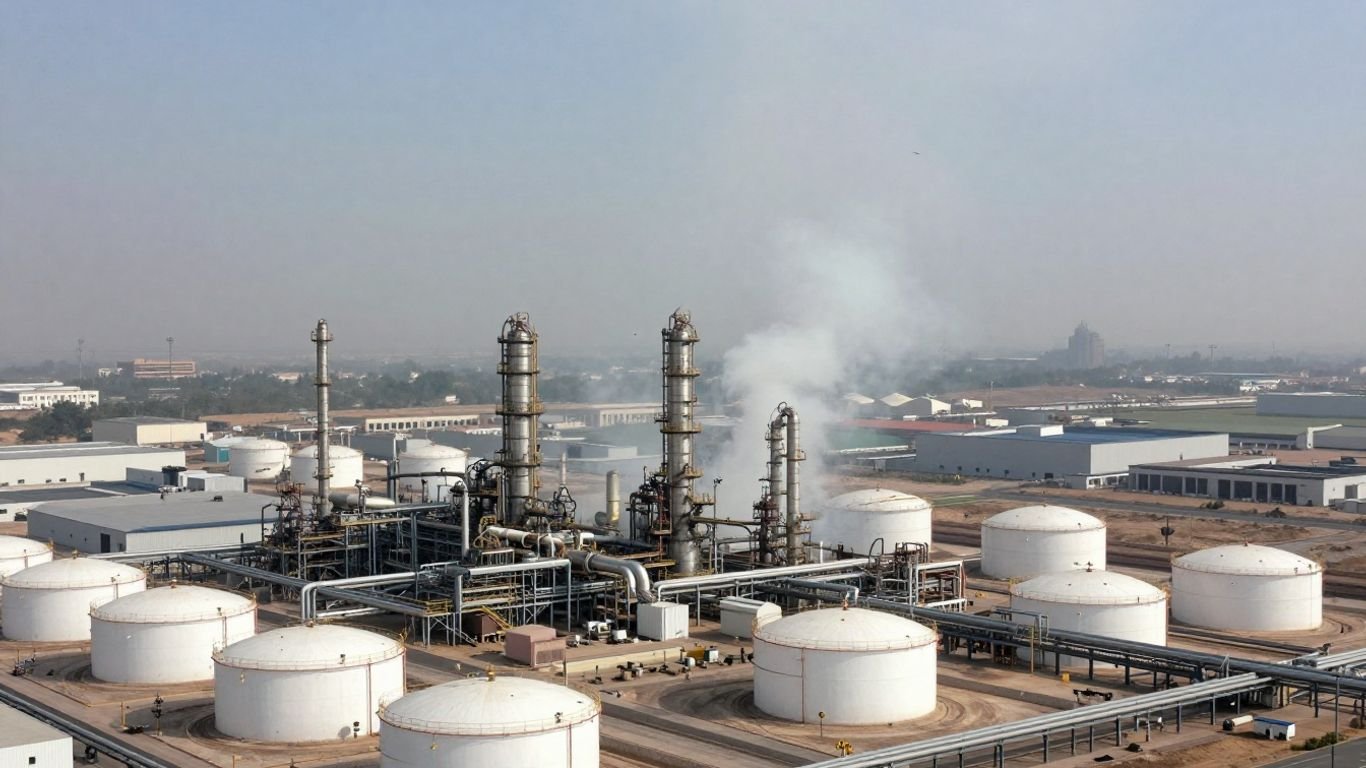

Saudi Arabia’s vital Ras Tanura oil refinery, the kingdom’s largest, has temporarily ceased operations following a drone attack. The incident, which occurred on Monday, has raised concerns about regional energy security and further inflamed the ongoing conflict between Iran and an alliance of the United States and Israel.
Saudi Aramco temporarily shut down its Ras Tanura refinery, located on the Persian Gulf coast, after it was targeted by drones. The closure, implemented as a precautionary measure to assess potential damage, has sent ripples through global energy markets. Gasoil futures experienced an immediate surge in response to the news, highlighting the refinery’s significance as a key supplier of diesel fuel.
The 550,000-barrel-per-day Ras Tanura plant is one of Saudi Arabia’s most critical refining hubs. Its operational halt adds to existing fears of broader disruptions to the region’s energy infrastructure, particularly as the wider conflict intensifies.
The drone strike on the Ras Tanura facility comes at a time of extreme strain for the global oil market. Crude prices have already seen a significant surge, partly due to the paralysis of shipping through the Strait of Hormuz, a vital energy corridor. This latest incident further exacerbates supply concerns.
Reports indicate that the attack is part of a wider exchange of hostilities. The United States and Israel launched missile strikes on targets across Iran, prompting retaliatory attacks from Tehran on Israel and US military bases and other targets in Saudi Arabia, Qatar, the United Arab Emirates, Kuwait, and Bahrain. Saudi Arabia has strongly condemned Iran’s actions, stating that its territory and airspace are not being used for operations against Iran.
While some reports suggest the drones targeted the Ras Tanura facility, Saudi Arabia’s defense ministry announced that it had intercepted incoming aircraft. However, online videos appeared to show thick black smoke rising from the site, indicating that the attack may have had some impact. Even successfully intercepted drones can cause debris that may spark fires or cause injuries.
Iran’s Islamic Revolutionary Guard Corps (IRGC) claimed responsibility for escalating attacks as part of “Operation True Promise.” The intensity of Iran’s retaliation has reportedly surprised officials in Gulf states, who expressed shock at the scale and targeting of the strikes, which some feared were aimed at population centers rather than solely military facilities.
The situation remains volatile, with energy markets bracing for prolonged instability. Any sustained disruption to Gulf exports could significantly tighten global oil supplies, potentially leading to renewed inflationary pressures worldwide.