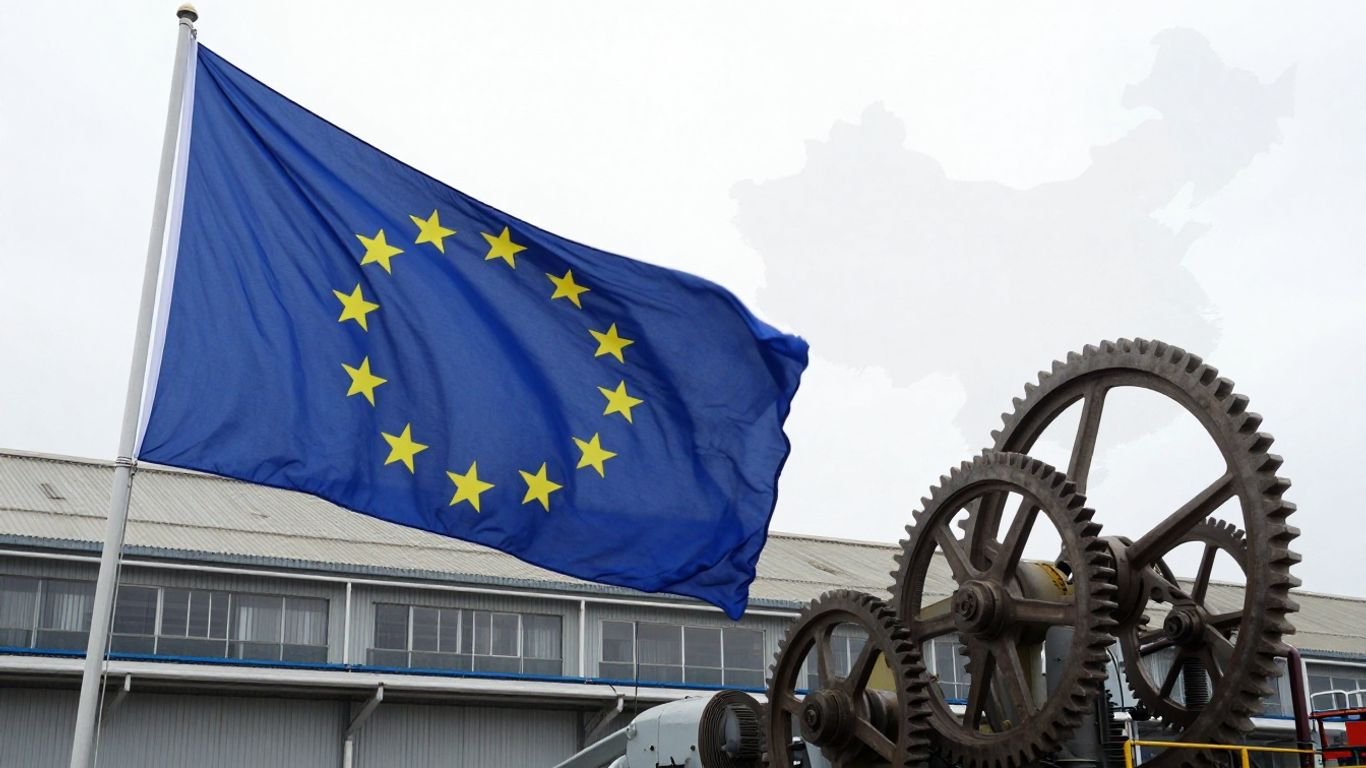

The European Union has officially launched its Industrial Accelerator Act (IAA), a significant legislative initiative aimed at revitalizing European manufacturing. The act seeks to boost domestic production, particularly in clean technology sectors, and reduce the bloc’s dependence on imports, notably from China. This move comes amid increasing global competition and rising energy costs that have strained European industries.
The Industrial Accelerator Act is designed to address mounting pressures on European industry, including intense competition from cheaper imports, particularly from China, and rising carbon prices under the Emissions Trading System (ETS). The legislation aims to create a more favorable environment for “Made in Europe” products, ensuring that European public money contributes to European production and helps maintain the continent’s industrial base and economic sovereignty.
A significant focus of the IAA is on accelerating the production of clean technologies. The hydrogen sector, in particular, is watching the act closely, as it could provide crucial demand support. The act seeks to create predictable markets for clean technologies and their outputs, such as green steel and hydrogen, through demand-side policy measures. This includes the potential creation of “lead markets” to drive demand for sustainable, low-carbon industrial products within Europe.
For the automotive industry, the IAA introduces specific definitions for “European vehicles,” mandating vehicle assembly within the Union and setting local content thresholds for automotive production and critical components. This aims to tackle unfair competition and secure vital manufacturing capacities for European auto suppliers. However, concerns have been raised about the potential for trade loopholes and the need for careful assessment of trusted trade partners to ensure the act’s effectiveness.
Despite its ambitious goals, the IAA has faced scrutiny and delays, reportedly due to internal disagreements over local-content requirements and trade protection. Some critics argue that the act could potentially undermine competitiveness within the EU’s single market, especially given the varying industrial frameworks across member states. Additionally, certain strategic sectors have been excluded from the act’s scope, leading to concerns about lower ambition for Europe’s industrial transformation. The effectiveness of the IAA will depend on its implementation, including clear criteria, robust enforcement, and financial support mechanisms for European industries.