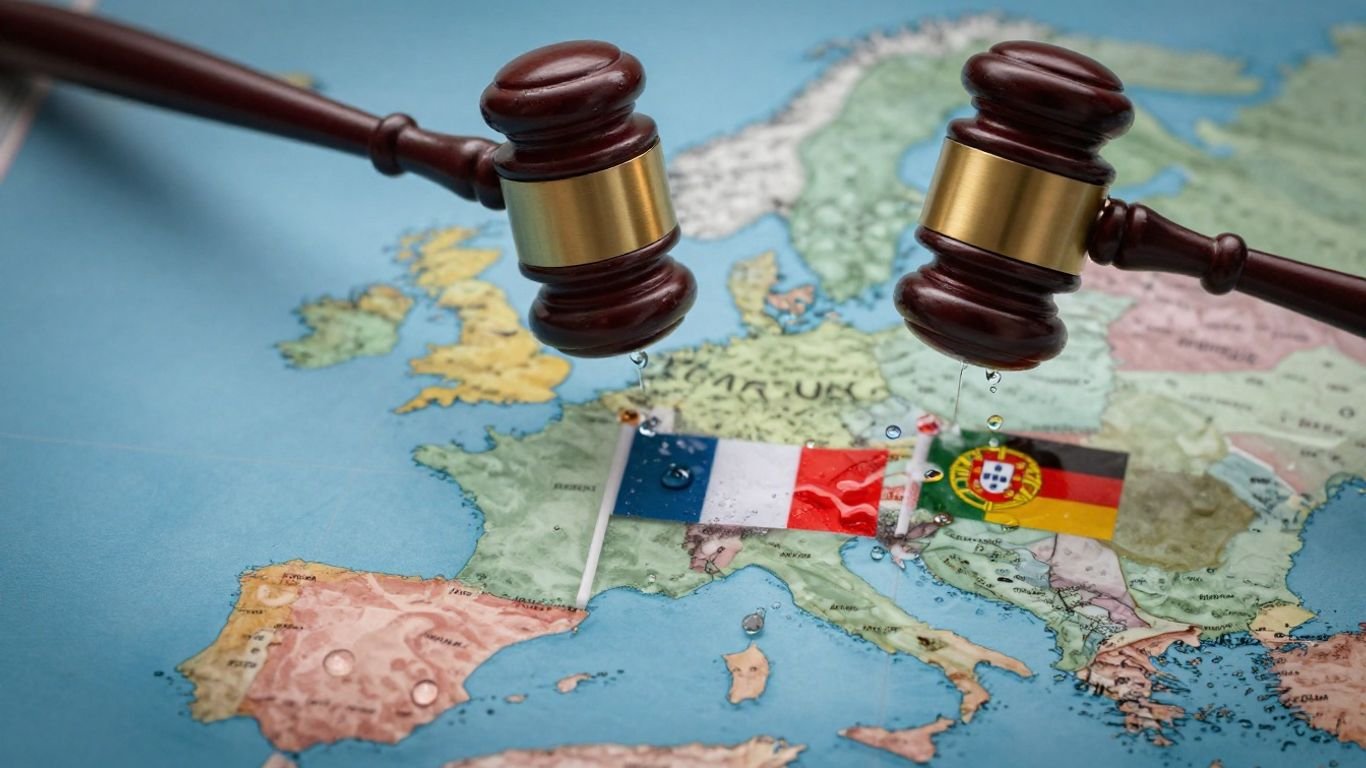

The European Commission has initiated infringement actions against France, Germany, and Portugal for failing to fully implement key EU water legislation. These actions underscore the EU’s commitment to safeguarding water quality and ensuring the resilience of water resources across member states.
The European Commission has opened an infringement procedure against France for not fully transposing provisions of the Water Framework Directive. Specifically, French legislation reportedly fails to adequately assess the ecological quality of heavily modified water bodies, such as rivers altered by hydropower installations. The assessment does not sufficiently consider factors like fish populations and river continuity, potentially leading to incomplete evaluations of these vital water resources. France has been given two months to respond to the Commission’s concerns.
Germany has received a letter of formal notice for failing to correctly transpose the recast Drinking Water Directive, which became mandatory in January 2023. This updated directive aims to enhance drinking water safety by strengthening quality standards and addressing emerging pollutants like microplastics and endocrine disruptors. It also seeks to reduce water losses in distribution networks. The Commission has identified shortcomings in Germany’s transposition of provisions related to risk assessments and public access to water monitoring data. Germany also has a two-month period to rectify these issues.
In Portugal’s case, the Commission has issued a reasoned opinion regarding the implementation of the Water Framework Directive. The directive mandates Member States to establish and periodically review programmes of measures for each river basin district to ensure good environmental status. The Commission contends that Portuguese legislation does not adequately require authorities to conduct regular reviews of control measures and related permits, particularly those concerning water abstraction and other activities impacting water status. Following an initial notice in May 2025, the Commission found Portugal’s response unsatisfactory, and the country now has two months to take corrective action before the case could be referred to the Court of Justice of the European Union.
These actions highlight the EU’s ongoing efforts to ensure consistent application of environmental legislation across all member states, crucial for protecting public health and ecosystems.