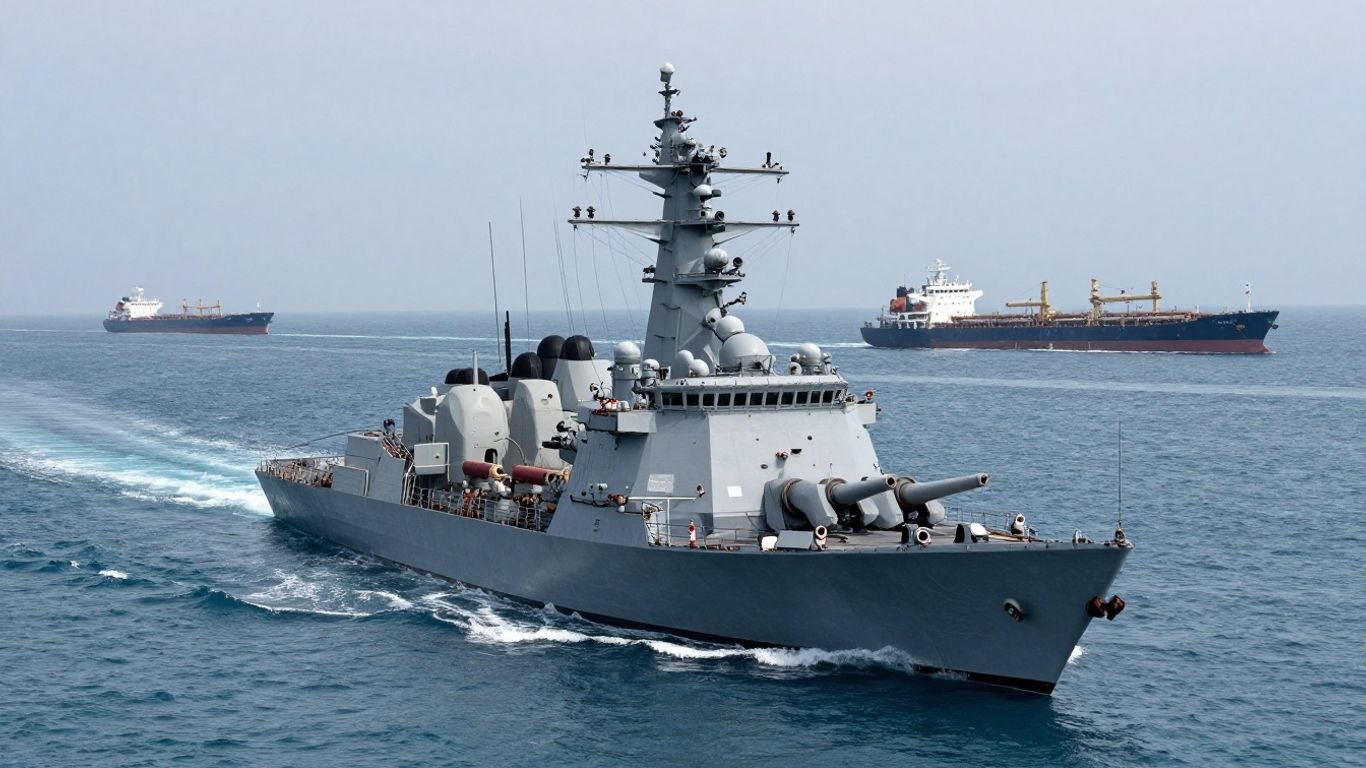

President Donald Trump announced an immediate U.S. naval blockade of the Strait of Hormuz following the failure of high-stakes peace talks with Iran. The move escalates tensions in the region after negotiations in Pakistan concluded without an agreement on key issues, including Iran’s nuclear ambitions.
President Trump declared that the United States Navy would commence blockading the Strait of Hormuz “effective immediately.” In a social media post, he accused Iran of “extortion” and stated that the U.S. Navy would interdict any vessel in international waters that had paid a toll to Iran. Trump also indicated that U.S. forces would begin clearing mines allegedly placed by Iran in the strait.
The announcement came after more than 21 hours of negotiations in Islamabad, Pakistan, between U.S. and Iranian officials failed to yield an agreement. Vice President J.D. Vance, leading the U.S. delegation, cited Iran’s refusal to commit to abandoning its nuclear ambitions as the reason for the talks’ breakdown. Vance stated that Iran “chose not to accept our terms” and that the U.S. presented a “final and best offer.”
Iranian officials, however, suggested that while progress was made on several fronts, significant differences remained, particularly concerning nuclear policy, sanctions, and control of the Strait of Hormuz. They criticized the U.S. for “excessive demands” and a lack of trust.
The blockade raises concerns about potential military escalation and its impact on global energy markets. The Strait of Hormuz is a critical chokepoint, through which approximately one-fifth of the world’s oil supply passes. Analysts warn that Iran might view the blockade as an act of war.
While President Trump claimed that other countries, including the United Kingdom, would send minesweepers to assist the U.S. effort, the UK government has not publicly confirmed participation in a blockade, though they are working on plans to ensure passage through the strait. Some U.S. lawmakers have expressed bewilderment over the blockade strategy, questioning its effectiveness in reopening the strait.
Iran’s navy chief dismissed Trump’s blockade threat as “ridiculous,” asserting that Iranian naval forces are monitoring U.S. movements in the region. Iran’s chief negotiator stated that the nation “will not bow to any threats” and is prepared to respond to logic or force.
Experts predict that oil prices are likely to climb due to the blockade, exacerbating existing supply chain issues and contributing to inflation. The disruption to oil transports could have significant ripple effects on fuel and food prices globally.