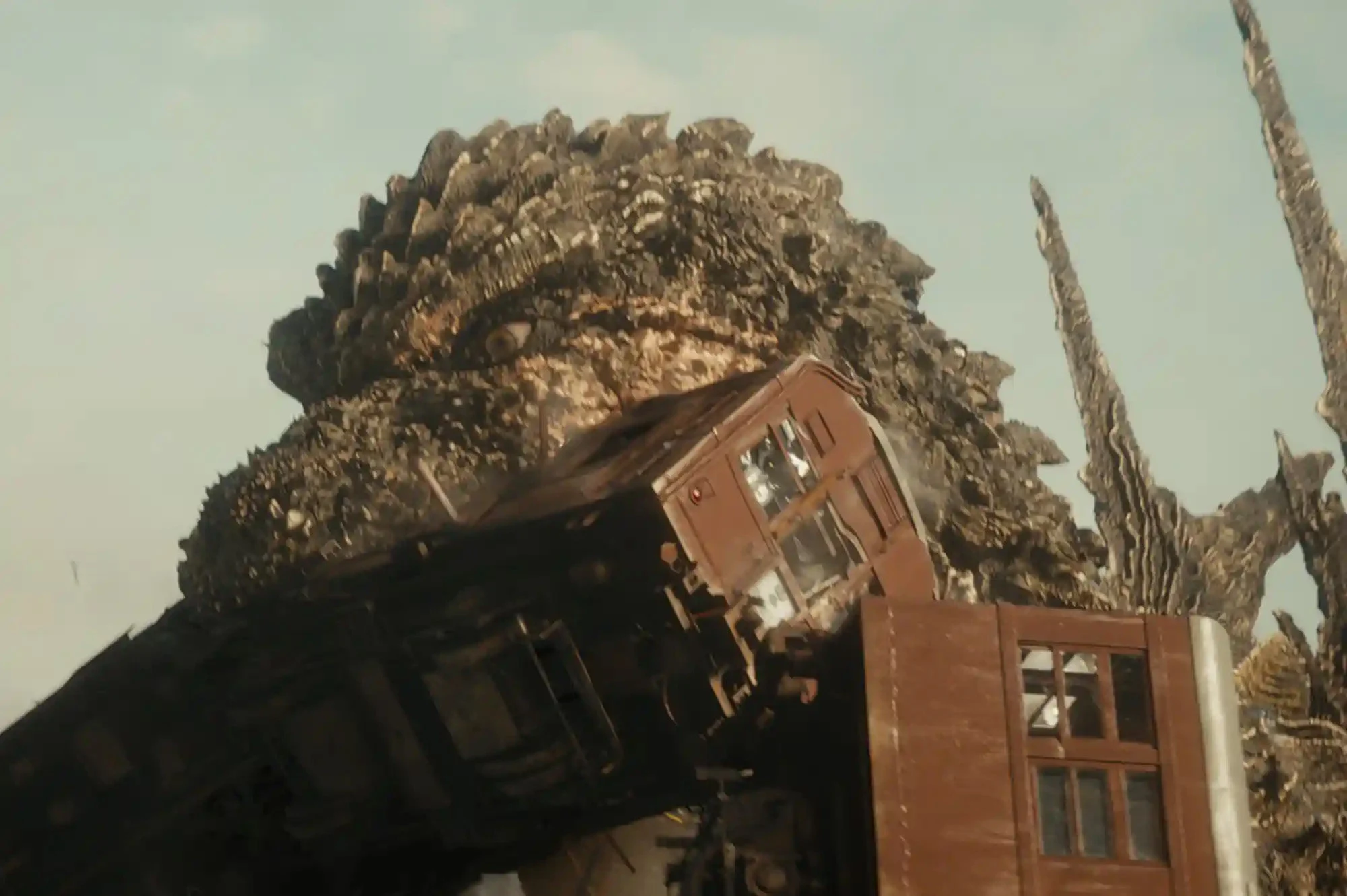

‘Godzilla Minus One’, the 37th film in the renowned Japanese Godzilla franchise and the 33rd produced by Toho Studios, offers a fresh perspective by setting its narrative in the late 1940s. Directed and written by Takashi Yamazaki, known for his prowess in visual effects, the film skillfully intertwines the devastation of post-World War II Japan with the awe-inspiring terror of Godzilla.
The story revolves around Koichi Shikishima (Ryunosuke Kamiki), a former kamikaze pilot grappling with the shame of surviving the war. Living with Noriko (Minami Hamabe) and a baby found amidst rubble, Koichi’s struggle with self-worth is a central theme. His journey towards redemption begins with a job on a minesweeper, leading to a fateful encounter with Godzilla. An homage to Spielberg’s Jaws, the film captures the crew’s valiant yet futile attempts to deter Godzilla using sea mines, only to provoke the monster’s wrathful march towards Tokyo.
‘Godzilla Minus One’ stands apart as a standalone chapter in a franchise celebrated for its reinvention. The film pays tribute to Ishiro Honda’s original 1954 masterpiece, particularly during the destruction of Ginza, where Godzilla retraces a path of havoc synonymous with the series. Composer Naoki Sato reinvigorates Akira Ifukube’s classic score, adding to the film’s nostalgic resonance.
Echoes of the 2001 film ‘Godzilla, Mothra and King Ghidorah: Giant Monsters All-Out Attack’ are evident, where Godzilla symbolizes the vengeful spirits of Japan’s war dead. This historical layer adds depth to the narrative, exploring themes of national identity and the legacy of war.
The film has sparked debates over its perceived pro-military stance. However, it also portrays its characters as critical of governmental policies that led to senseless wartime sacrifices. Their united stand against Godzilla symbolizes a voluntary fight against a clear and present danger, contrasting with their past compelled military service. This shift is highlighted through some of the most intense and visually stunning confrontations in the franchise’s history.
‘Godzilla Minus One’ is more than a mere monster movie; it is a reflection on Japan’s historical trauma and a quest for redemption in the face of overwhelming adversity. The film’s blend of a poignant historical backdrop with the thrill of kaiju battles makes it a unique and significant addition to the Godzilla saga.
READ MORE: