
On December 3, Chinese President Xi Jinping embarked on a notable journey from Shanghai to Beijing, making a significant stop at the New Fourth Army Memorial Hall in Yancheng, Jiangsu Province. This visit was more than a ceremonial gesture; it served as a powerful reminder of China’s rich historical and cultural heritage.
Yancheng holds a special place in Chinese history, particularly in the context of the New Fourth Army’s role during the anti-Japanese war. In January 1941, a pivotal moment occurred following the Southern Anhui Incident, when the Communist Party of China’s Central Military Commission issued an order to reestablish the headquarters of the New Fourth Army in Yancheng. This strategic move marked a crucial phase in the army’s independent operations in Central China’s enemy-occupied territories under the Party’s leadership. Yancheng subsequently became the epicenter of political, military, and cultural activities during this tumultuous period.
The New Fourth Army Memorial Hall, situated on Jianjun East Road in Yancheng, stands as a testament to these historical events. Inaugurated in 1986, it is the only comprehensive museum in China that encapsulates the New Fourth Army’s history. Its architecture, shaped like the Chinese character for “four” and adorned with the “N4A” emblem, reflects its deep historical significance. The museum’s two granite bas-reliefs, shaped like flags, artistically represent the New Fourth Army’s rebirth.
This hall houses over 10,000 relics and documents, spread across seven exhibition sections in a 9,000 square meter area. Notable items include Chen Yi’s document box, Liu Shaoqi’s desk, and correspondences between army leaders. These artifacts not only symbolize Yancheng’s role as the New Fourth Army’s rebirth site but also embody the united spirit of military and civilians during difficult times.
President Xi’s visit highlighted the New Fourth Army Anthem exhibition, a collection of hundreds of songs that served as morale-boosting anthems and bear witness to the army’s revolutionary spirit.
Yancheng, beyond its historical significance, is also known for its unique natural beauty and cultural richness. It is the largest prefecture-level city in Jiangsu and notably, the only one in China without mountains. The city is renowned for its extensive coastline, vast tidal flats, and diverse wetland ecosystems, earning it titles like the Oriental Wetland and the City of a Hundred Rivers.
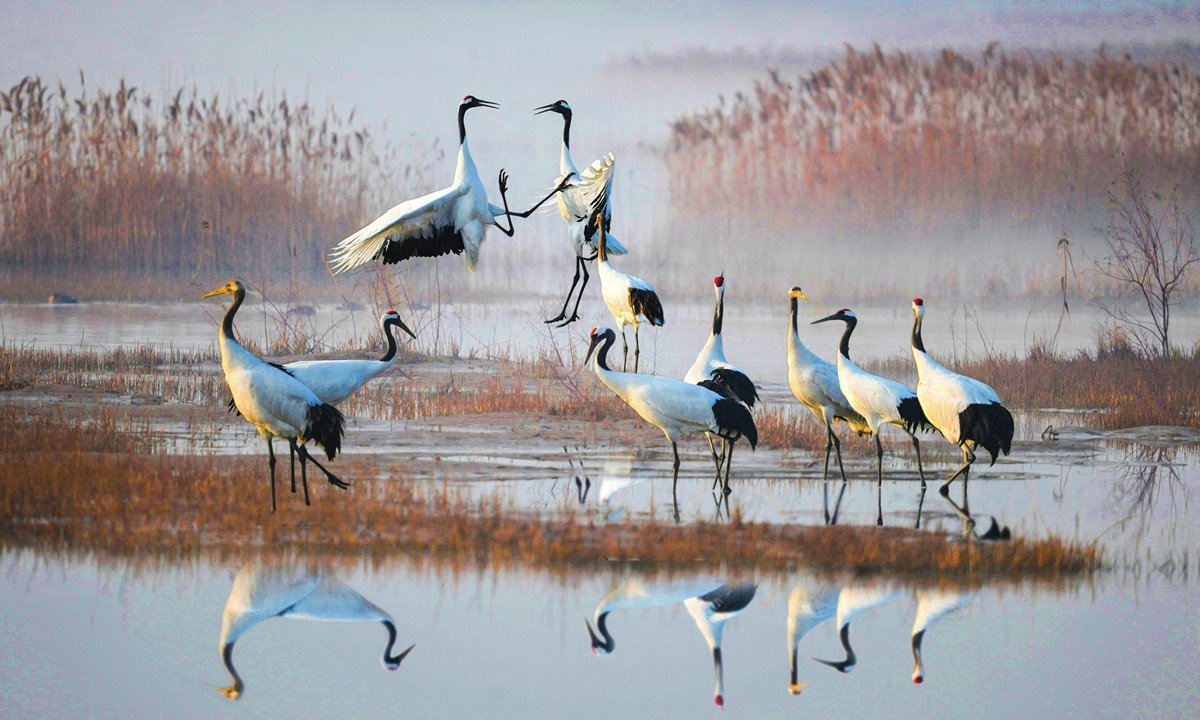
With a coastline stretching 582 kilometers and encompassing over 769,700 hectares of wetlands, Yancheng is a vital habitat for migratory birds. Each year, the city becomes a winter haven for over three million birds, earning it the nickname “an international airport for birds.” The Jiangsu Yancheng Wetland Rare Birds National Nature Reserve, the world’s largest wintering ground for red-crowned cranes, and the Dafeng Elk National Nature Reserve, home to the largest population of elks globally, are among its ecological treasures.
Culinary enthusiasts will find Yancheng a delightful destination, with local specialties like Dongtai’s fish soup noodles, Jianhu’s lotus root powder dumplings, and braised goose offering a taste of the region’s “land of fish and rice” heritage.
Yancheng’s fusion of historical depth, natural splendor, and cultural richness makes it an undiscovered gem. While it may have been overlooked in the past, its intrinsic value, akin to a “bright pearl,” is increasingly gaining recognition, drawing visitors and historians alike to explore and appreciate its multifaceted charm.
READ MORE: