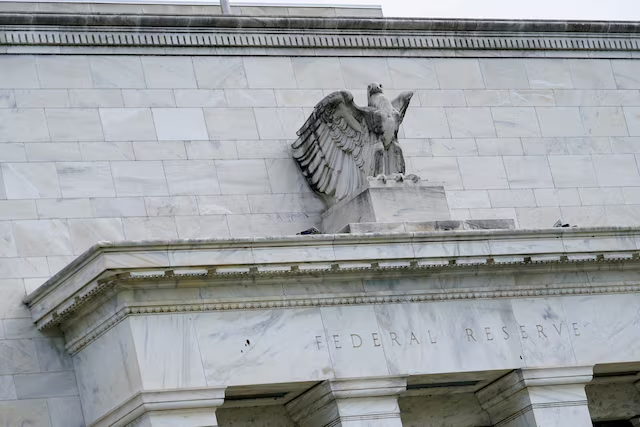

Federal Reserve officials have signaled that they are prepared to initiate a series of interest rate cuts, with the first likely to be a 25-basis-point reduction at their upcoming policy meeting in mid-September. This shift follows a period of aggressive rate hikes aimed at combating inflation, which has since slowed, while concerns about a cooling labor market have grown.
The Fed has kept its benchmark borrowing rate within the 5.25%-5.50% range since July 2023, following an 18-month campaign of rate hikes triggered by surging inflation. With inflation now significantly lower than its mid-2022 peak, policymakers are turning their focus to supporting job growth as unemployment rises and monthly job gains decrease.
Fed officials, including New York Fed President John Williams and Governor Christopher Waller, have emphasized the need to reduce the degree of restrictiveness in monetary policy. Speaking at a Council on Foreign Relations event, Williams said it is appropriate to reduce the federal funds rate, while Waller suggested he could support back-to-back or larger rate cuts if the data indicates further deterioration in the labor market.
The unemployment rate has increased to 4.2%, up from 3.5% when the Fed paused rate hikes, while monthly job growth has slowed significantly. Data from the June-August period shows that monthly job gains have averaged 116,000, a level that many economists believe is insufficient to keep pace with population growth.
Fed Chair Jerome Powell had already sparked speculation about the size of future rate cuts when he stated, “the time has come” to ease policy. Analysts now widely expect the central bank to kick off a series of cuts, beginning with a 25-basis-point reduction at the September meeting, and are open to larger cuts if economic conditions continue to worsen.
Despite the cooling job market, Fed officials, including Waller, emphasized that the economy is not headed for a recession, and inflation is on track to reach the central bank’s 2% target. Core personal consumption expenditures (PCE) inflation has slowed to an annualized rate of 1.7% over the past three months.
While further cuts may be necessary, economists warn against overly aggressive reductions, as a larger cut could signal that the economy is in more trouble than it actually is. “The employment market is slowing, but the sky is not falling,” said Eugenio Aleman, chief economist at Raymond James, cautioning against sending the wrong message to markets with a larger rate cut.
READ MORE: